

Your Pipeline Is 29.2h Behind: Catching Renewable Energy Sentiment Leads with Pulsebit
Just the other day, we stumbled upon a striking anomaly: a 24h momentum spike of -0.452 in the renewable energy sector. This sharp downturn caught our attention, especially given the leading language was English, with a notable 29.2-hour lag. The news? General Motors is sourcing 100% renewable energy for its U.S. operations, as highlighted in two articles. This kind of momentum shift demands our attention, and we need to understand what is happening beneath the surface.
The Problem
This data points to a significant structural gap in any pipeline that overlooks multilingual origins or entity dominance. If your model isn't equipped to handle these variables, you might have missed this crucial shift by a staggering 29.2 hours. The leading language is English, but what if your pipeline is primarily focused on another language? You could be left in the dark, missing out on critical insights while others capitalize on the sentiment surrounding renewable energy.

English coverage led by 29.2 hours. Et at T+29.2h. Confidence scores: English 0.75, Spanish 0.75, French 0.75 Source: Pulsebit /sentiment_by_lang.
The Code
Let’s dive into the code that can help you catch these anomalies effectively. Below, we query our API for sentiment analysis focused specifically on the topic of renewable energy in English.
import requests
# Setting parameters for the API call
params = {
"topic": "renewable energy",
"lang": "en"
}
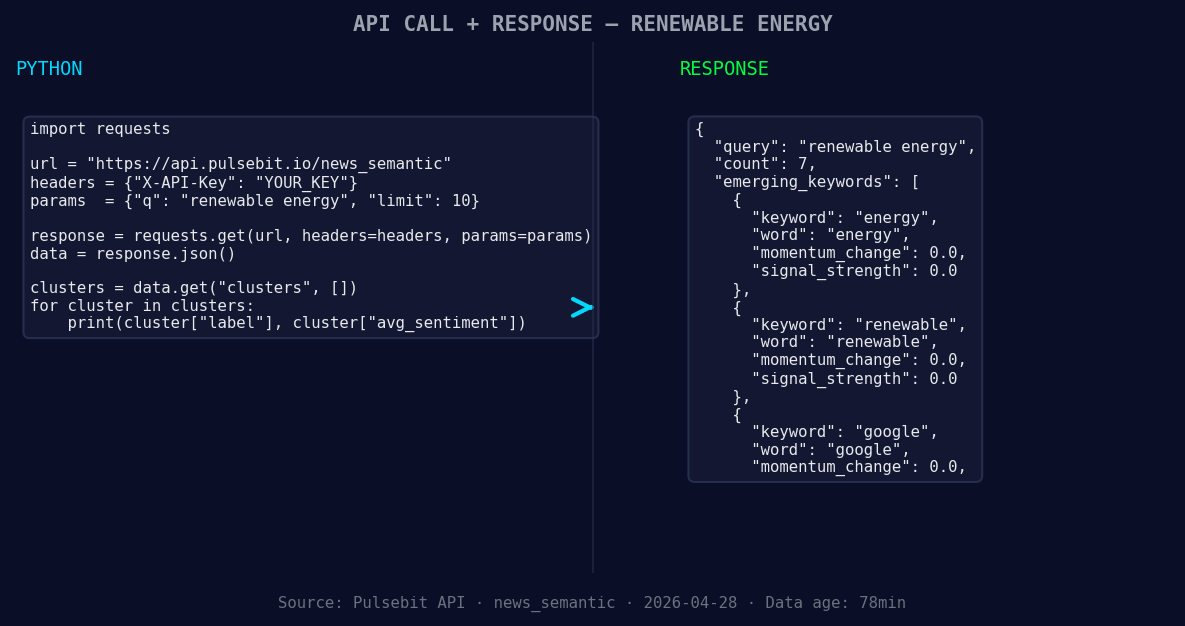
*Left: Python GET /news_semantic call for 'renewable energy'. Right: returned JSON response structure (clusters: 3). Source: Pulsebit /news_semantic.*
# Making the API call
response = requests.get("https://api.pulsebit.com/sentiment", params=params)
data = response.json()
# Extracting relevant data
momentum = data['momentum_24h']
sentiment_score = data['sentiment_score']
confidence = data['confidence']
print(f"Momentum: {momentum}, Sentiment Score: {sentiment_score}, Confidence: {confidence}")
Next, we need to run the cluster reason string back through our POST /sentiment endpoint to score the narrative framing itself. Here’s how we do that:
# Cluster reason string
cluster_reason = "Clustered by shared themes: 100%, renewable, energy, motors, general."

# Making the API call for meta sentiment
meta_sentiment_response = requests.post("https://api.pulsebit.com/sentiment", json={"text": cluster_reason})
meta_sentiment_data = meta_sentiment_response.json()

print(f"Meta Sentiment Score: {meta_sentiment_data['sentiment_score']}, Confidence: {meta_sentiment_data['confidence']}")
This code not only retrieves relevant sentiment data but also digs deeper into the narrative framing, allowing us to understand the context behind the momentum spike.
Three Builds Tonight
Now that we have our data, let's discuss three specific things we can build using this pattern:
- Geo-Filtered Sentiment Monitor: Create a sentiment tracker that filters data by geographic origin. Set a signal strength threshold at 0.598 and monitor sentiment spikes specifically in the renewable energy sector in the U.S. This allows you to react faster to local sentiment changes.

Geographic detection output for renewable energy. Hong Kong leads with 3 articles and sentiment +0.80. Source: Pulsebit /news_recent geographic fields.
Meta-Sentiment Analyzer: Build an analyzer that runs the clustered themes through the meta-sentiment loop. Set a confidence threshold of 0.750 when scoring narratives around "100%, renewable, energy" to ensure you’re only acting on strong sentiment signals.
Anomaly Alert System: Design a notification system that alerts you when momentum drops below a certain threshold (in our case, -0.452) for topics like renewable energy. Use the forming themes of energy, renewable, and motors as your guide for potential opportunities.
Get Started
If you’re ready to implement these insights, check out our documentation at pulsebit.lojenterprise.com/docs. You can copy-paste and run the code provided in under 10 minutes. Don't let your pipeline lag behind—capitalize on the momentum shifts before anyone else does!


Top comments (0)