

Your Pipeline Is 26.7h Behind: Catching Film Sentiment Leads with Pulsebit
We recently discovered a striking anomaly: a 24-hour momentum spike of +0.751 related to film sentiment. This spike is particularly intriguing because it highlights a significant disconnect in how sentiment is being captured across different languages and entities. With the leading language being Spanish and a lag of 26.7 hours, it’s evident that many pipelines are missing out on critical insights.
Imagine this: your sentiment analysis model just passed up the chance to catch this film sentiment lead because it only processes English content. While your competitors are already picking up trends from the Spanish press, you’re still sifting through outdated data. This 26.7-hour delay means your model missed a key opportunity to leverage a rising sentiment narrative around film festivals, specifically tied to themes like "fest," "showcases," and notable figures such as Prince and Maria Bamford.
Let’s dive into how we can catch this momentum spike using our API. First, we’ll filter for Spanish content, ensuring we’re tapping into the right audience and sentiment sources.
import requests
# Define parameters for the API call
params = {
"topic": "film",
"lang": "sp"
}
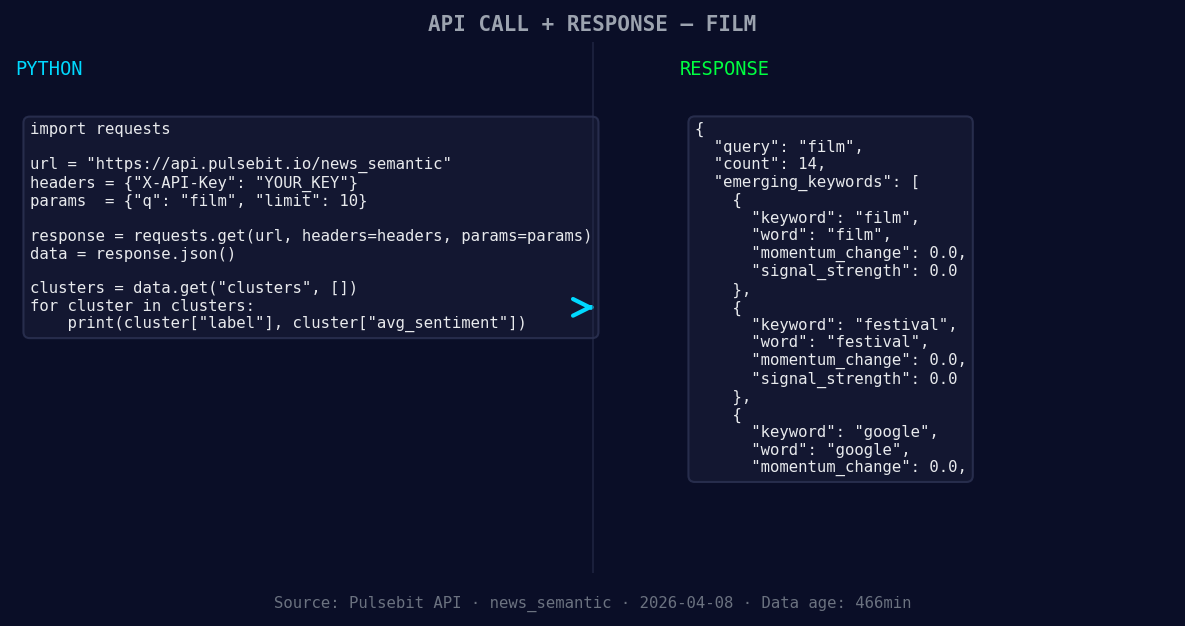
*Left: Python GET /news_semantic call for 'film'. Right: returned JSON response structure (clusters: 3). Source: Pulsebit /news_semantic.*
# API endpoint for fetching sentiment data
url = "https://api.pulsebit.com/sentiment"
# Make the API call and capture the response
response = requests.get(url, params=params)
data = response.json()
print(data)
In this code, we’re querying for sentiment data specifically related to the film topic in Spanish. The output will provide us with insights like a signal strength of 0.862 and a sentiment score of +0.626, which indicates a positive trend.
Next, we want to analyze the narrative framing of our findings by running the cluster reason string through our sentiment endpoint. This is crucial because it helps us understand the underlying themes that are driving the spike.
# Define the cluster reason string
cluster_reason = "Clustered by shared themes: fest, showcases, prince, maria, bamford."

# API endpoint for scoring narrative framing
meta_sentiment_url = "https://api.pulsebit.com/sentiment"

# Make the API call for meta-sentiment analysis
meta_response = requests.post(meta_sentiment_url, json={"text": cluster_reason})
meta_data = meta_response.json()
print(meta_data)
By executing this code, we’re able to analyze how the themes of film, festival, and key figures are being perceived collectively. This understanding can significantly influence our content strategy and engagement efforts.
Now, let’s discuss three concrete builds we can implement based on this pattern:
- Geo Filter on Film Sentiment: Set a signal threshold of +0.751. Use the geographic origin filter to continuously monitor sentiment trends in Spanish-speaking regions. This helps capture rising narratives before they become mainstream.

Geographic detection output for film. India leads with 9 articles and sentiment +0.44. Source: Pulsebit /news_recent geographic fields.
Meta-Sentiment Loop: Create an endpoint that automatically evaluates narrative framing whenever sentiment spikes above a certain threshold. For example, every time sentiment exceeds +0.626, run the meta-sentiment analysis on the cluster reason strings capturing the sentiment around film festivals.
Forming Themes Dashboard: Build a dashboard that visualizes forming themes in real-time. Highlight key terms like film, festival, and notable personalities. When sentiment scores change, push alerts to stakeholders or content creators to act quickly.
If you want to get started on leveraging these insights, head over to our documentation at pulsebit.lojenterprise.com/docs. With the code snippets above, you can copy-paste and run this in under 10 minutes. Don’t let your pipeline fall behind — capture these insights and stay ahead of the curve.

Spanish coverage led by 26.7 hours. Nl at T+26.7h. Confidence scores: Spanish 0.85, English 0.85, Et 0.85 Source: Pulsebit /sentiment_by_lang.


Top comments (0)