

Your Pipeline Is 20.3h Behind: Catching Artificial Intelligence Sentiment Leads with Pulsebit
We recently uncovered a striking anomaly: a 24h momentum spike of +0.475 in the context of artificial intelligence sentiment. This particular spike, coupled with the leading language being English and a 20.3-hour lead over the dominant narrative, highlights a critical gap in sentiment tracking. The cluster story, "Chinese firms trail US peers in AI adoption due to corporate culture: ex-OpenAI," points to a significant theme that has emerged in the last day, yet it remains overshadowed by mainstream narratives.
Your model missed this by 20.3 hours. If you’re not handling multilingual origins or entity dominance effectively, you might be left behind in detecting critical trends. The prevailing theme around AI adoption in China, as highlighted in the articles processed, signals a shift that could impact strategic decisions in your pipeline.

English coverage led by 20.3 hours. Da at T+20.3h. Confidence scores: English 0.85, Spanish 0.85, French 0.85 Source: Pulsebit /sentiment_by_lang.
To catch this spike and leverage it in your analyses, we can utilize our API to filter by language and assess sentiment dynamically. Here’s the Python code that gets us there:
import requests
# Define parameters for the API call
topic = 'artificial intelligence'
score = -0.190
confidence = 0.85
momentum = +0.475
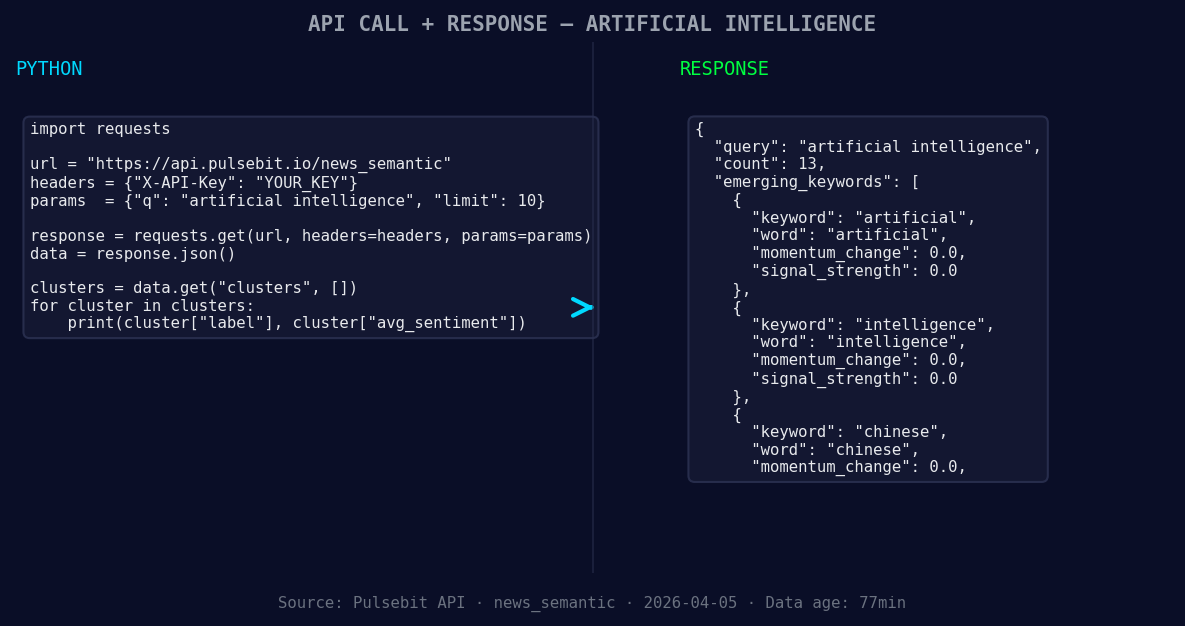
*Left: Python GET /news_semantic call for 'artificial intelligence'. Right: returned JSON response structure (clusters: 3). Source: Pulsebit /news_semantic.*
# Query by language/country using param "lang": "en"
response = requests.get("https://api.pulsebit.com/v1/sentiment", params={
"topic": topic,
"lang": "en"
})
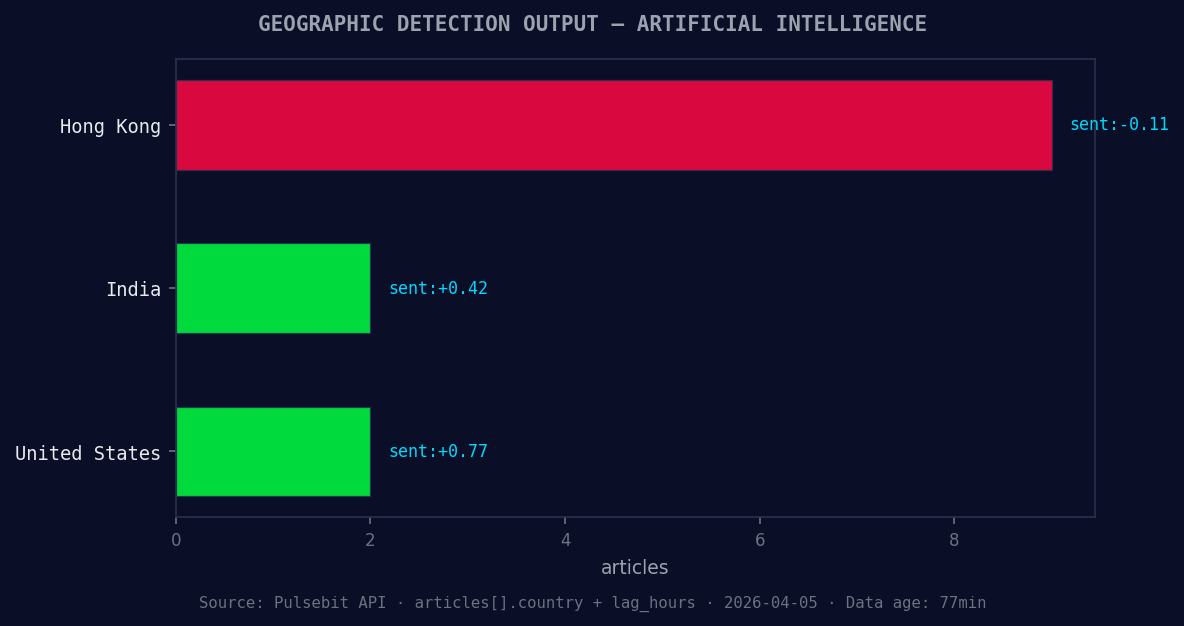
*Geographic detection output for artificial intelligence. Hong Kong leads with 9 articles and sentiment -0.11. Source: Pulsebit /news_recent geographic fields.*
# Process the response
data = response.json()
print(data)
# Meta-sentiment moment: run the cluster reason string back through POST /sentiment
cluster_reason = "Clustered by shared themes: chinese, kass, peers, adoption, corporate."
meta_response = requests.post("https://api.pulsebit.com/v1/sentiment", json={
"text": cluster_reason
})
# Process the meta sentiment response
meta_data = meta_response.json()
print(meta_data)
This code snippet captures the essence of our findings in real-time. The first part queries sentiment data specifically in English, ensuring that we only consider the relevant narratives. The second part sends the cluster reason string back for sentiment analysis, allowing us to score the narrative framing itself. This is crucial for identifying how such themes are perceived and whether they align with the sentiment spike we observed.
Now, let’s explore three specific builds you can implement using this pattern:
Real-Time Alert System: Set a threshold for sentiment momentum spikes. For instance, any spike above +0.400 in the "artificial intelligence" topic should trigger an alert. Use the geo filter in your query to focus on English language articles, ensuring you capture the most relevant insights.
Meta-Sentiment Dashboard Widget: Create a dashboard widget that visualizes the narrative sentiment based on the cluster themes. For instance, track how the themes of "chinese," "kass," and "peers" evolve over time. Use the meta-sentiment loop to score these narratives dynamically, providing you with a continuously updated perspective.
Sentiment Comparison Tool: Build a tool that compares sentiment scores across different geographical regions. For example, assess how sentiments around AI adoption differ between China and the US. Use the geo filter to segment your analysis, then evaluate how themes like "artificial," "intelligence," and "chinese" resonate within these distinct contexts.
With these implementations, you can ensure that your pipeline is not only current but also capable of adapting to emerging trends in the rapidly evolving landscape of artificial intelligence.
To get started, visit pulsebit.lojenterprise.com/docs. You can copy-paste the provided code and run it in under 10 minutes to catch sentiment leads just like we did.


Top comments (0)