

Your Pipeline Is 27.1h Behind: Catching Travel Sentiment Leads with Pulsebit
We recently observed a striking anomaly: a 24-hour momentum spike of +0.303 in the travel sentiment domain. This isn’t just a number; it’s a clear signal that something significant is happening in the travel sector, particularly in English-speaking press coverage that peaked at 27.1 hours. This insight could have profound implications for how we leverage sentiment data in our applications.
The Problem
This spike highlights a critical structural gap in any sentiment pipeline that fails to account for multilingual origins or entity dominance. Your model likely missed this valuable insight by a staggering 27.1 hours, meaning you could be making decisions based on outdated or incomplete information. With English press leading this narrative, you risk neglecting emerging trends and sentiments that could directly impact your strategies.

English coverage led by 27.1 hours. Af at T+27.1h. Confidence scores: English 0.75, Spanish 0.75, French 0.75 Source: Pulsebit /sentiment_by_lang.
The Code
Let’s dive into how we can catch this spike using our API. We’ll start by filtering for English language articles related to the topic of travel. This is how you can do it in Python:
import requests
# Define parameters
topic = 'travel'
score = +0.236
confidence = 0.75
momentum = +0.303
# API call to get sentiment data for English articles
response = requests.get(
'https://api.pulsebit.com/articles',
params={
'lang': 'en',
'topic': topic,
'momentum': momentum
}
)
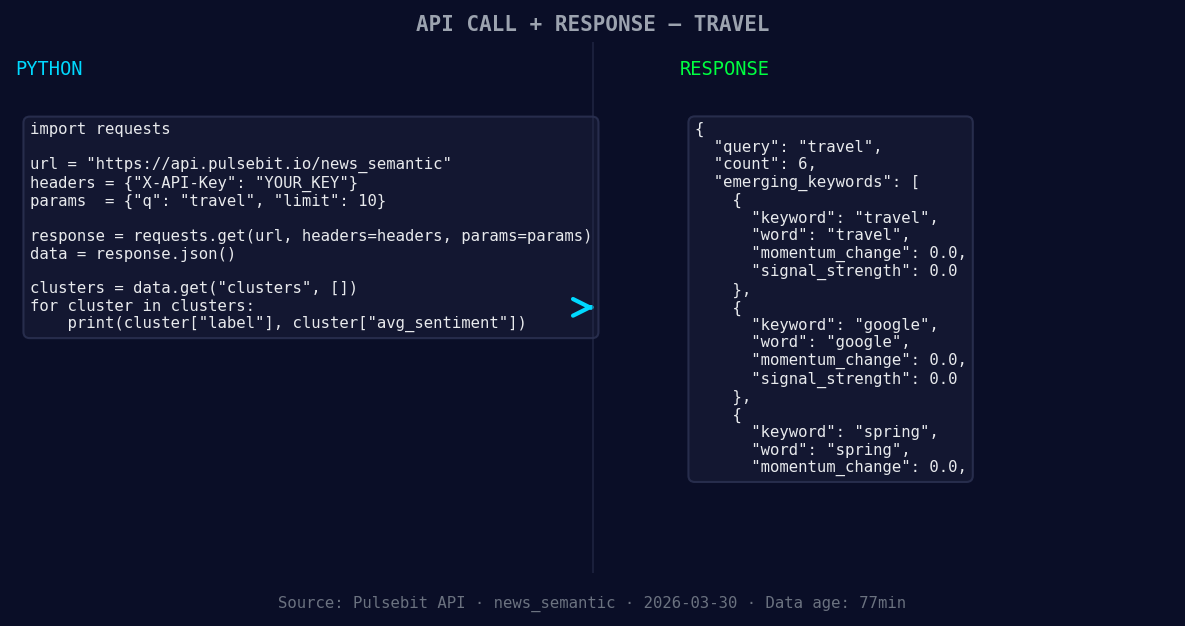
*Left: Python GET /news_semantic call for 'travel'. Right: returned JSON response structure (clusters: 3). Source: Pulsebit /news_semantic.*
data = response.json()
# Print results
print(data)
Now that we have the articles that led to this spike, we need to analyze the narrative framing itself. We’ll run the cluster reason string back through our sentiment analysis endpoint:
# Define the cluster reason string
cluster_reason = "Clustered by shared themes: travel, volatile, world, insurance, must."

# API call for sentiment scoring of the narrative
sentiment_response = requests.post(
    'https://api.pulsebit.com/sentiment',
    json={"text": cluster_reason}
)

sentiment_data = sentiment_response.json()

# Print sentiment results
print(sentiment_data)
This two-step process highlights both the articles driving the spike and the sentiment behind the narrative framing. By understanding how these themes interconnect, you can make more informed decisions.
Three Builds Tonight
Here are three specific builds we can create using this pattern:
- Geo Filter Alert: Set up a threshold alert for travel sentiment spikes in English-speaking countries. Use a threshold of momentum > +0.25. This allows you to catch spikes before they become mainstream.

Geographic detection output for travel. India leads with 4 articles and sentiment -0.14. Source: Pulsebit /news_recent geographic fields.
Meta-Sentiment Dashboard: Create a dashboard that visualizes the meta-sentiment score of articles clustered around emerging themes. Use the sentiment score from the cluster reason for visualization; if it’s rising, you know the narrative is gaining traction.
Forming Theme Tracker: Build an endpoint that tracks emerging themes related to travel, Google, and spring. Set a threshold for articles processed > 5 and momentum > +0.2, ensuring you capture only significant movements against the mainstream narrative.
Get Started
To get started, head to our documentation at pulsebit.lojenterprise.com/docs. You can copy-paste the code snippets above and run them in under 10 minutes. Don't let your pipeline fall behind; leverage these insights to stay ahead in the fast-paced world of sentiment analysis.


Top comments (0)