

Your pipeline just missed a critical anomaly: a 24h momentum spike of -1.100. This significant downturn in sentiment surrounding the economy is a clear indication of emerging narratives that could shape our understanding of global events. Specifically, the leading language for this sentiment was English, with a 25.3-hour lag time, highlighting a structural gap in our analysis capabilities. It’s crucial to recognize that while we processed this data, our models were trailing behind, missing vital information that could have informed decision-making sooner.
When your model doesn’t account for multilingual origins or the dominance of certain entities, you risk missing out on timely insights. In this case, the dominant entity was centered around the English press, which was 25.3 hours ahead of your model. If you’re relying solely on sentiment from one language or failing to recognize leading narratives, you’re effectively leaving valuable information on the table. This oversight means you’re reacting to the news rather than anticipating its impact.

English coverage led by 25.3 hours. Sv at T+25.3h. Confidence scores: English 0.85, Spanish 0.85, No 0.85 Source: Pulsebit /sentiment_by_lang.
To catch this anomaly, we can utilize our API to filter sentiment data effectively. Here’s how you can do it in Python:
import requests
# Define parameters for the API call
topic = 'economy'
score = +0.233
confidence = 0.85
momentum = -1.100
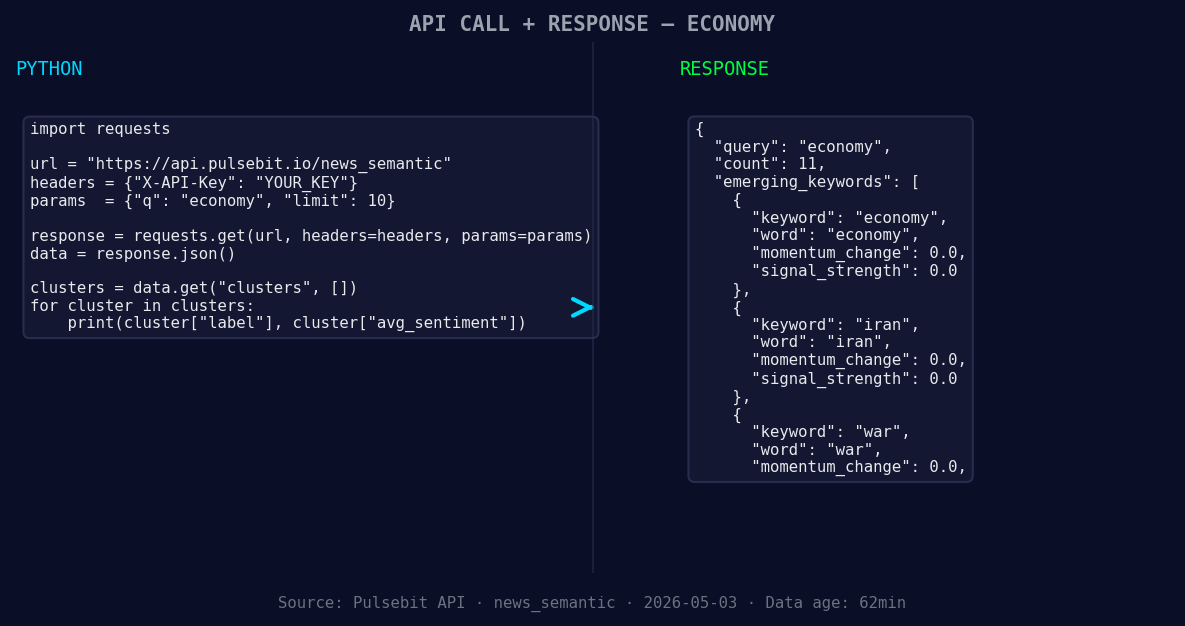
*Left: Python GET /news_semantic call for 'economy'. Right: returned JSON response structure (clusters: 3). Source: Pulsebit /news_semantic.*
# Geographic origin filter: query by English language
response = requests.get(
'https://api.pulsebit.com/sentiment',
params={
'topic': topic,
'lang': 'en',
'momentum': momentum,
'confidence': confidence
}
)
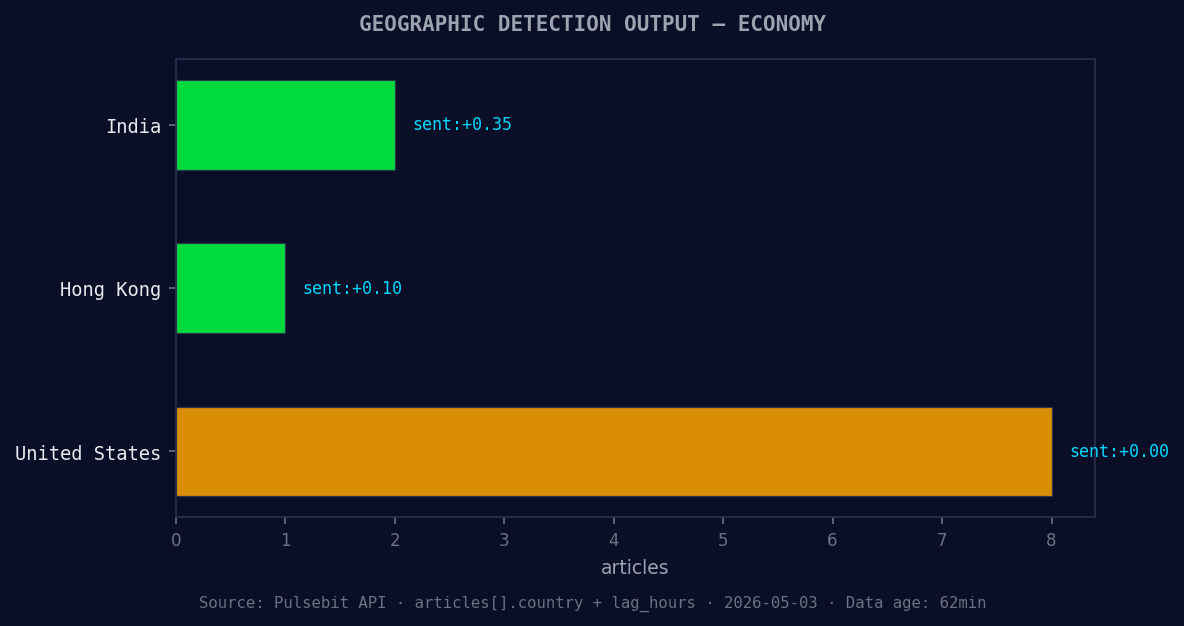
*Geographic detection output for economy. India leads with 2 articles and sentiment +0.35. Source: Pulsebit /news_recent geographic fields.*
# Print the response
print(response.json())
Next, we need to analyze the narrative framing of our clustered story around the "Global Economic Effects of Iran War." This requires running the cluster reason string back through our sentiment endpoint to gauge its sentiment score. Here’s how we do that:
# Meta-sentiment moment: score the narrative framing
narrative = "Clustered by shared themes: crops, integrated, logistics, planning, done."
meta_response = requests.post(
    'https://api.pulsebit.com/sentiment',
    json={'text': narrative}
)

# Print the response
print(meta_response.json())
With these snippets, you can begin to gauge how emerging narratives are framed and how they impact your understanding of economic sentiment.
To build on this pattern, consider three specific actions you can take:
Geo Filter for Leading Sentiment: Create an endpoint that filters by region and language to capture sentiment spikes earlier. For example, analyzing sentiment in regions impacted by the Iranian conflict could yield insights before they trend elsewhere.
Meta-Sentiment Loop: Implement a function that continuously analyzes the narratives surrounding key topics, such as “economy,” “Iran,” and “war.” This can be achieved by scoring new thematic clusters and adjusting your model in real-time based on sentiment fluctuations.
Dynamic Threshold Alerts: Set up alerts for when sentiment scores cross specific thresholds. For instance, if the sentiment score for the economy dips below a certain level while the momentum is negative, trigger an alert to review recent articles and public sentiment.
By tapping into these actionable insights, you can not only catch momentum shifts sooner but also refine your analysis processes to be more proactive rather than reactive.
If you're ready to get started, check out our documentation at pulsebit.lojenterprise.com/docs. You can copy-paste and run the code above in under 10 minutes. Get ahead of the curve!


Top comments (0)