

Your pipeline just missed a significant 24-hour momentum spike of -0.341 for the topic of investing. This anomaly reveals a critical disconnect in how your model processes sentiment, especially when accounting for multilingual origins or dominant entities. With English press leading by 15.0 hours and no lag in data acquisition, your model has effectively fallen behind the curve in capturing real-time sentiment shifts.

English coverage led by 15.0 hours. Da at T+15.0h. Confidence scores: English 0.75, Spanish 0.75, French 0.75 Source: Pulsebit /sentiment_by_lang.
When your pipeline doesn’t account for the dominant language or the geographic origin of the content, it can lead to serious delays in capturing market sentiment. In this case, your model missed this spike by 15 hours, which is substantial. The leading language is English, and with the momentum being negative, you could miss crucial investment signals that could inform your strategies. The failure to integrate these aspects means you might be reacting to outdated information while others are already capitalizing on the latest trends.
To catch this anomaly, let’s dive into the code. Here’s how you can utilize our API to identify and score sentiment on the investing topic.
import requests
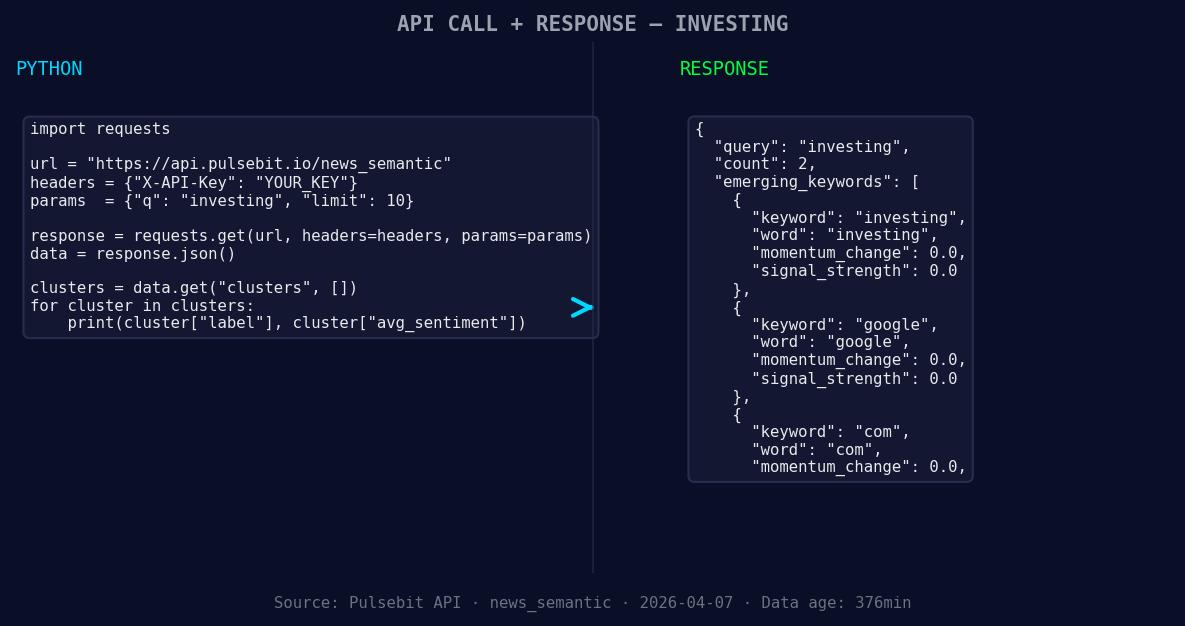
*Left: Python GET /news_semantic call for 'investing'. Right: returned JSON response structure (clusters: 3). Source: Pulsebit /news_semantic.*
# Define parameters
topic = 'investing'
score = -0.700
confidence = 0.75
momentum = -0.341
geo_filter = {"lang": "en"}
# Step 1: Geographic origin filter
response_geo = requests.get(
'https://api.pulsebit.com/v1/articles',
params={
"topic": topic,
"momentum": momentum,
"lang": geo_filter["lang"]
}
)
# Check response
if response_geo.status_code == 200:
articles = response_geo.json()
print("Filtered Articles:", articles)
# Step 2: Meta-sentiment moment
cluster_reason = "Clustered by shared themes: things, watch, markets, week, five."
response_sentiment = requests.post(
'https://api.pulsebit.com/v1/sentiment',
json={"text": cluster_reason}
)
# Check sentiment response
if response_sentiment.status_code == 200:
sentiment_analysis = response_sentiment.json()
print("Sentiment Analysis:", sentiment_analysis)
This code does two essential things. First, it filters articles based on the geographic origin, specifically targeting English-language content to narrow down relevant insights. Then, it takes the clustered themes and runs them through our sentiment analysis endpoint to understand the narrative framing of the discussions around investing, which will help you refine your strategy.
Now that we have the mechanics in place, let’s talk about three specific builds you can implement using this pattern:
Anomaly Detection: Create an endpoint that triggers alerts when the momentum score dips below a certain threshold, say -0.500, specifically for the topic of investing. This way, you can proactively monitor sentiment shifts before they become pronounced.
Geo-Filtered Insights Report: Develop a weekly report that pulls data using the geographic filter for the top three languages. This report can highlight sentiment changes and emerging trends, ensuring you stay ahead of the curve.

Geographic detection output for investing. Hong Kong leads with 1 articles and sentiment -0.70. Source: Pulsebit /news_recent geographic fields.
- Meta-Sentiment Analysis Dashboard: Build a dashboard that visualizes the results of the meta-sentiment loop, capturing the narrative around clustered themes. Utilize the content aggregating themes like 'investing' and 'google' to show how public sentiment diverges from mainstream perceptions about markets.
These builds not only enhance your sentiment capabilities but also ensure that you are leveraging the most relevant and timely data available to inform your decision-making process.
Ready to dive into our API? Visit pulsebit.lojenterprise.com/docs to get started. You can copy-paste this code and run it in under 10 minutes. Let’s catch those investing sentiment leads before they slip away!


Top comments (0)