

Your Pipeline Is 21.5h Behind: Catching World Sentiment Leads with Pulsebit
We just uncovered a fascinating anomaly in our data: a 24h momentum spike of +0.703. This spike indicates a surge in positive sentiment around the topic of "world," and it’s particularly noteworthy given the context. The leading language for this sentiment is English, which has a lag of only 21.5 hours. If your model isn’t equipped to handle these nuances, you may be missing critical insights that can shape your strategies and decisions.
Let’s be clear: your model missed this by 21.5 hours. This suggests a structural gap in any pipeline that doesn’t account for the multilingual origins of sentiment or the dominance of specific entities in the landscape. With the leading story focusing on the visual media industry, it’s evident that there’s a need to adjust how we assess and filter sentiment data to capture these emerging narratives before they gain traction.

English coverage led by 21.5 hours. Et at T+21.5h. Confidence scores: English 0.95, French 0.95, Spanish 0.95 Source: Pulsebit /sentiment_by_lang.
Here’s how we can catch this anomaly using our API. First, we’ll filter for the geographic origin by specifying the language as English. Here’s the code snippet to do that:

Geographic detection output for world. India leads with 17 articles and sentiment -0.05. Source: Pulsebit /news_recent geographic fields.
import requests
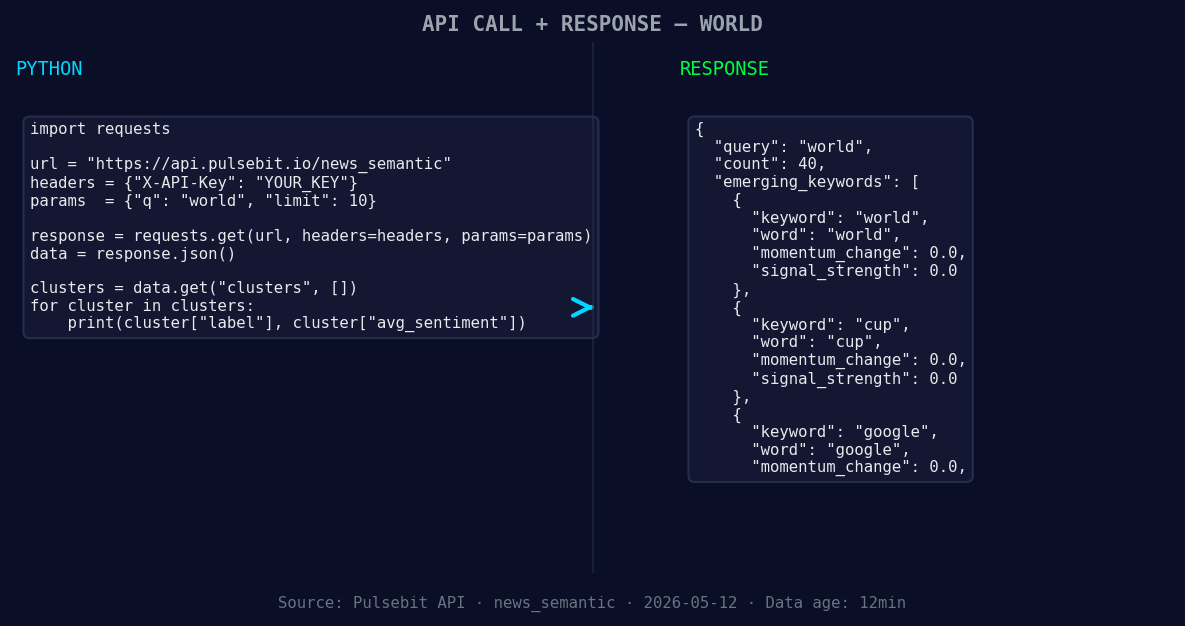
*Left: Python GET /news_semantic call for 'world'. Right: returned JSON response structure (clusters: 3). Source: Pulsebit /news_semantic.*
url = "https://api.pulsebit.io/v1/sentiment"
params = {
"topic": "world",
"score": -0.022,
"confidence": 0.95,
"momentum": +0.703,
"lang": "en"
}
response = requests.get(url, params=params)
data = response.json()
print(data)
Next, we’ll take the narrative framing itself and run it through our sentiment endpoint to get a better grasp of how the themes are clustering. Here’s how we can do that:
cluster_reason = "Clustered by shared themes: visual, media, industry, shaping, world."
sentiment_response = requests.post(url, json={"text": cluster_reason})
sentiment_data = sentiment_response.json()
print(sentiment_data)
Now that we’ve set the stage, let’s talk about three specific builds you can work on tonight using this data:
Geo-filtered Sentiment Snapshot: Create an endpoint that regularly pulls sentiment data filtered by geographic origin. Use the parameters
lang: "en"to catch spikes in English content, particularly around the "world" topic. This can help you identify trending narratives before they peak.Meta-Sentiment Analysis: Build a function that continuously evaluates the narrative framing of clustered themes like "visual, media, industry." Use the output from the sentiment analysis to refine your understanding of how these themes interact. This could be particularly useful in the case of the forming themes: world(+0.00), cup(+0.00), google(+0.00) vs mainstream.
Dynamic Alert System: Implement a dynamic alert system that triggers notifications when momentum spikes exceed a certain threshold, such as +0.700. This will allow you to respond in real-time to significant shifts in sentiment, especially around key topics like the visual media industry.
If you want to get started, visit pulsebit.lojenterprise.com/docs. You can copy-paste the above code and run it in under 10 minutes to integrate these insights into your existing systems. Don’t let your pipeline lag behind—capture sentiment leads as they happen!


Top comments (0)