

Your 24h momentum spike of +0.793 in climate sentiment is a significant signal that shouldn’t go unnoticed. It’s telling us that over the last day, the conversation around climate has surged, particularly in English press, which is leading the charge at 18.0 hours. This isn’t just another data point; it’s a clear indicator of rising urgency and interest in climate discussions. But let’s unpack what this means for your data pipeline.
If your pipeline doesn’t handle multilingual origins or entity dominance efficiently, you might be missing critical insights like this by up to 18 hours. The dominant English-language articles are highlighting how climate experts are saying that spring is arriving earlier, which could have substantial implications for agriculture. If your model isn’t capturing this early enough, you could be sidelined while others leverage the momentum being built right now.

English coverage led by 18.0 hours. Da at T+18.0h. Confidence scores: English 0.85, Spanish 0.85, French 0.85 Source: Pulsebit /sentiment_by_lang.
Here’s how we catch this spike using our API. First, we filter for English-language content to ensure we’re getting the relevant data:
import requests
# Set up the parameters for the API call
topic = 'climate'
score = +0.700
confidence = 0.85
momentum = +0.793
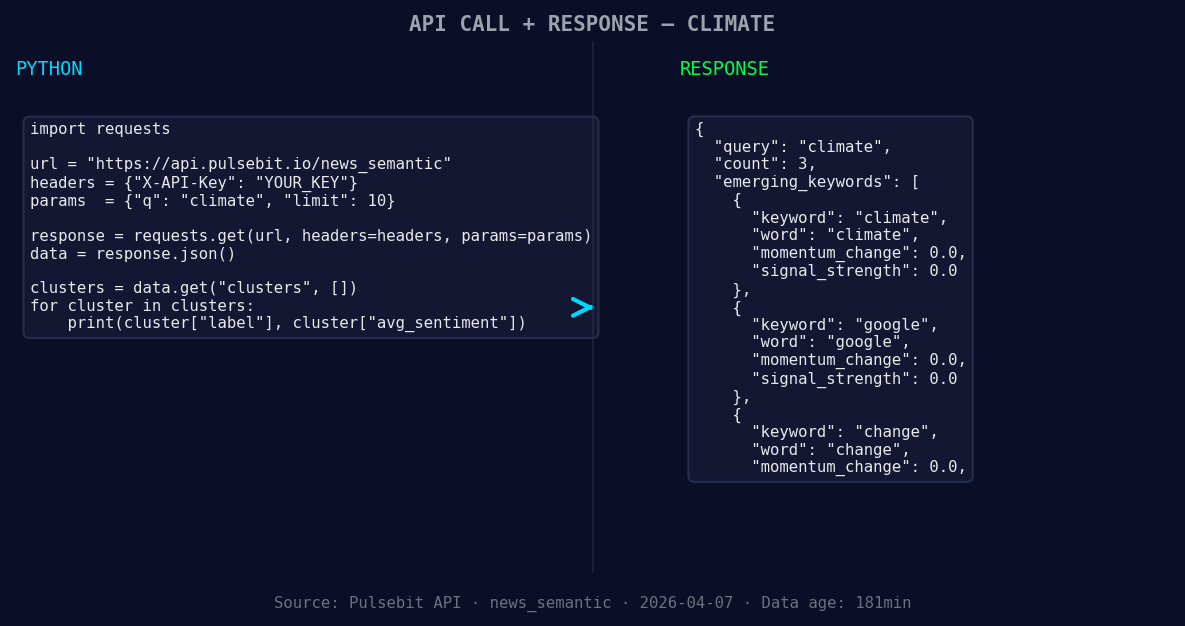
*Left: Python GET /news_semantic call for 'climate'. Right: returned JSON response structure (clusters: 3). Source: Pulsebit /news_semantic.*
url = "https://api.pulsebit.com/v1/articles"
params = {
"topic": topic,
"score": score,
"confidence": confidence,
"momentum": momentum,
"lang": "en" # Geographic origin filter
}
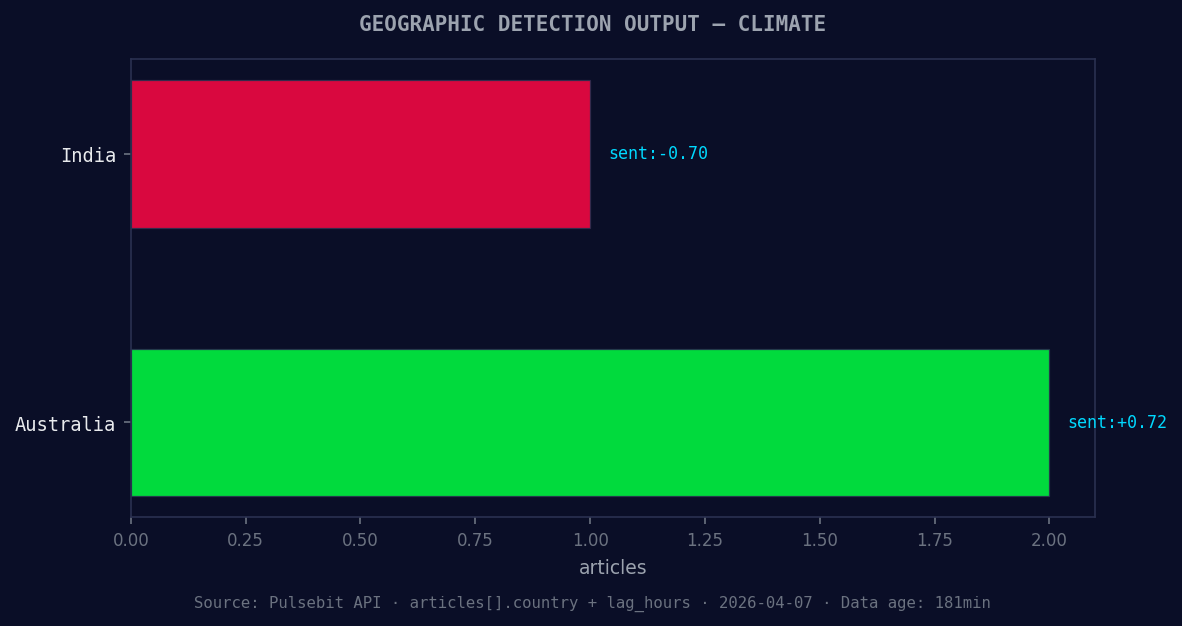
*Geographic detection output for climate. India leads with 1 articles and sentiment -0.70. Source: Pulsebit /news_recent geographic fields.*
response = requests.get(url, params=params)
data = response.json()
print(data)
Now, to further understand the narrative framing of the clustered articles, we'll run the cluster reason string through our sentiment analysis endpoint:
cluster_reason = "Clustered by shared themes: weighing, whether, soften, climate, laws."
sentiment_url = "https://api.pulsebit.com/v1/sentiment"
sentiment_response = requests.post(sentiment_url, json={"text": cluster_reason})
sentiment_data = sentiment_response.json()
print(sentiment_data)
This captures not just the spike but also the narrative that’s shaping it. By analyzing the framing around the topic, we can better understand the underlying sentiments and motivations driving the conversation at this moment.
Now that we’ve captured this spike and sentiment, let’s discuss three specific builds we can create with this data:
Geo-Sentiment Tracker: Build a tracking system that continuously monitors English-language articles on climate, setting a threshold for momentum spikes above +0.700. Use the geographic origin filter to ensure you’re pulling the most relevant data from specific regions.
Narrative Shifting Dashboard: Create a dashboard that visualizes sentiment shifts around the cluster reason. When themes like “climate,” “change,” and “laws” start forming clusters with rising scores, alert your team for quick responses.
Meta-Sentiment Analyzer: Utilize the meta-sentiment loop to score narratives that are emerging around climate discussions. Set a baseline to catch any fluctuations or trends that could indicate a significant shift in public opinion or media focus.
By leveraging these builds, we can stay ahead of the curve, ensuring our models capture the urgency around climate topics as they evolve.
If you want to dive into this and start building, check out our documentation at pulsebit.lojenterprise.com/docs. With the right setup, you can copy-paste this code and run it in under 10 minutes. Let’s get started!


Top comments (0)