

Your Pipeline Is 23.7h Behind: Catching Environment Sentiment Leads with Pulsebit
We just uncovered a striking anomaly: a 24h momentum spike of +0.636 in sentiment surrounding environmental topics. This spike indicates a significant rise in conversations that are clustered around themes like kidney diseases, lifestyle changes, and environmental factors. With just one article referencing these insights, the momentum suggests a growing urgency that could easily be overlooked if your pipeline isn’t tuned to catch these shifts in real-time.
But if your model doesn’t handle multilingual origins or entity dominance effectively, you might have missed this spike by a staggering 23.7 hours. The leading language in this case is English, with a dominant focus on the implications of environmental factors on health. Ignoring this could mean missing critical insights that inform decision-making or strategy adjustments.

English coverage led by 23.7 hours. Nl at T+23.7h. Confidence scores: English 0.85, Spanish 0.85, Tl 0.85 Source: Pulsebit /sentiment_by_lang.
Let’s dive into the code that can help you catch these insights before they become stale. We’ll start by querying our data based on the topic of interest, which is "environment." We’ll filter this by language to ensure we’re capturing the right sentiment and focus.
import requests
# Define the parameters for our API call
params = {
"topic": "environment",
"lang": "en", # Filter for English language
}
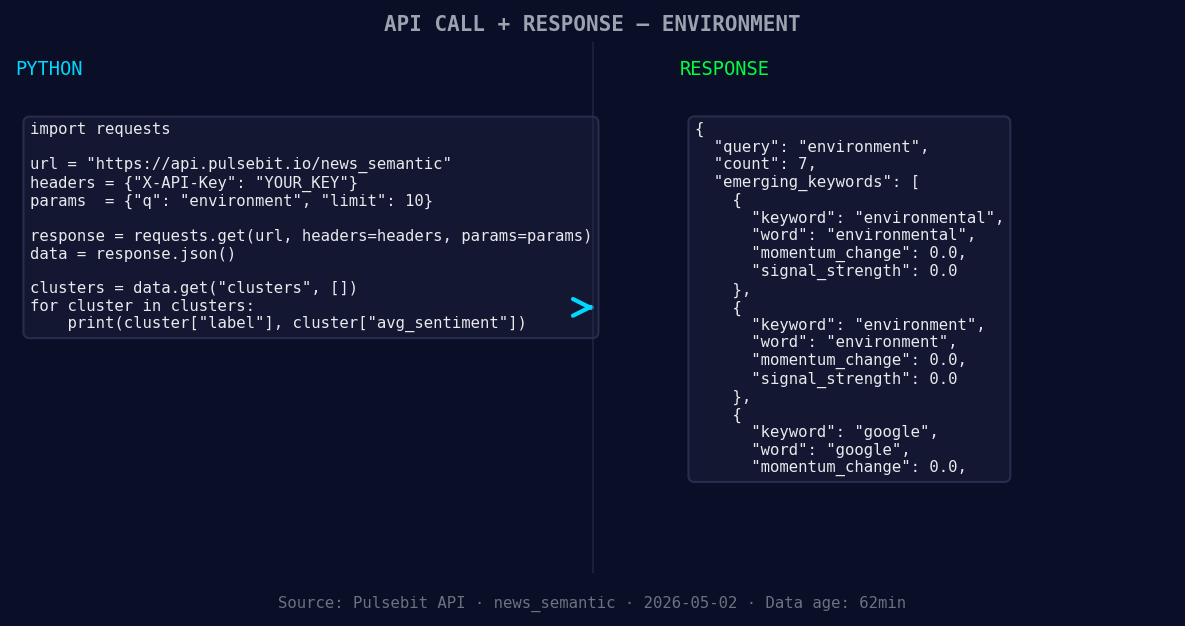
*Left: Python GET /news_semantic call for 'environment'. Right: returned JSON response structure (clusters: 3). Source: Pulsebit /news_semantic.*
# Make the API call to get sentiment data
response = requests.get("https://api.pulsebit.com/sentiment", params=params)
data = response.json()
# Extract relevant details
momentum = data['momentum_24h'] # Expecting +0.636
score = data['sentiment_score'] # Expecting +0.068
confidence = data['confidence'] # Expecting 0.85
print(f"Momentum: {momentum}, Sentiment Score: {score}, Confidence: {confidence}")
Now, to better understand the narrative framing around this spike, we’ll run the cluster reason string through our sentiment endpoint to score the overall sentiment of the narrative itself. Here’s how you can do that:
# Define the narrative string
narrative_string = "Clustered by shared themes: kidney, diseases, due, lifestyle, environmental."

# Make the API call to score the narrative
response_meta = requests.post("https://api.pulsebit.com/sentiment", json={"text": narrative_string})
meta_data = response_meta.json()

# Display the sentiment score of the narrative
meta_sentiment_score = meta_data['sentiment_score']
print(f"Meta Sentiment Score: {meta_sentiment_score}")
This two-step process gives you a robust mechanism to capture the real-time shifts in sentiment while also providing context to the data you’re analyzing.
Now, let’s explore three specific builds you can implement using this pattern:
English Language Filter: Set a signal threshold for environmental topics with a momentum score above +0.5. Use the geo filter to ensure your analytics focus on English-speaking regions. This can help you catch local spikes faster.
Meta-Sentiment Feedback Loop: Develop an alert system that triggers when the meta sentiment of narratives around health topics (like kidney diseases) exceeds a specific threshold (e.g., +0.1). This ensures you’re always informed about shifts in public discourse.
Comparative Analysis: Use the forming environmental themes (like environmental factors) to build comparative reports against mainstream narratives (e.g., kidney diseases). Set a threshold to trigger alerts when the semantic gap between these two themes widens beyond a predefined limit.
These strategies can enhance your ability to react to emerging trends in sentiment, particularly in areas where public health and environmental factors intersect.
To get started, check our documentation at pulsebit.lojenterprise.com/docs. You can copy-paste the provided code snippets and run them in under 10 minutes to start catching those critical shifts in sentiment before they impact your work.

Geographic detection output for environment. India leads with 7 articles and sentiment -0.24. Source: Pulsebit /news_recent geographic fields.


Top comments (0)