

Your Pipeline Is 10.8h Behind: Catching Biotech Sentiment Leads with Pulsebit
We’ve recently uncovered a fascinating anomaly in our data: a 24-hour momentum spike of -1.075 in the biotech sector. This spike highlights a significant drop in sentiment, suggesting that something is shifting in the narratives surrounding biotech. The leading language for this sentiment is English, with a notable 10.8-hour lead time. This suggests that if your pipeline isn’t handling multilingual origins or entity dominance effectively, you’re already behind the curve.

English coverage led by 10.8 hours. No at T+10.8h. Confidence scores: English 0.85, Spanish 0.85, French 0.85 Source: Pulsebit /sentiment_by_lang.
When your model fails to account for dominant entities or the nuances of multilingual data, you miss critical shifts in sentiment. In this case, your model missed this -1.075 momentum spike by a staggering 10.8 hours, potentially jeopardizing your ability to respond to shifts in the biotech landscape. The leading language of English indicates that crucial conversations are happening in a space you may not be fully leveraging, especially when the narrative is clustered around a specific theme: "Big Pharma Is Thinking Small on Deals."
To catch these insights, you can leverage our API effectively. Here’s how to do it in Python:
import requests
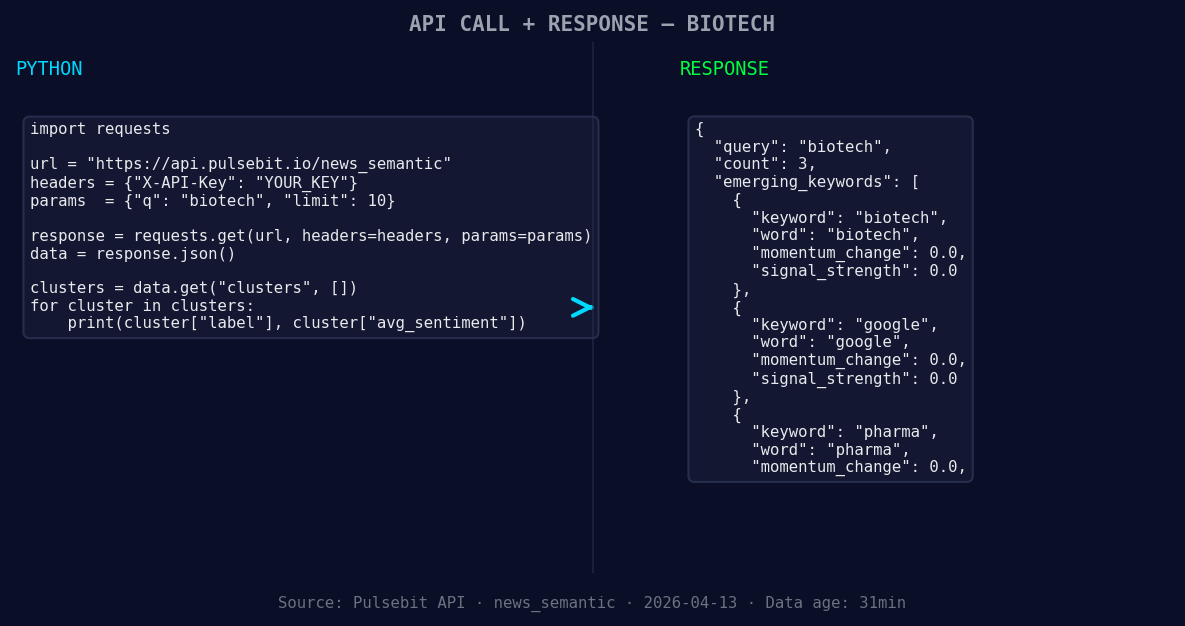
*Left: Python GET /news_semantic call for 'biotech'. Right: returned JSON response structure (clusters: 3). Source: Pulsebit /news_semantic.*
# Step 1: Geographic origin filter for biotech sentiment
url = "https://api.pulsebit.com/v1/sentiment"
params = {
"topic": "biotech",
"lang": "en"
}
response = requests.get(url, params=params)
biotech_data = response.json()
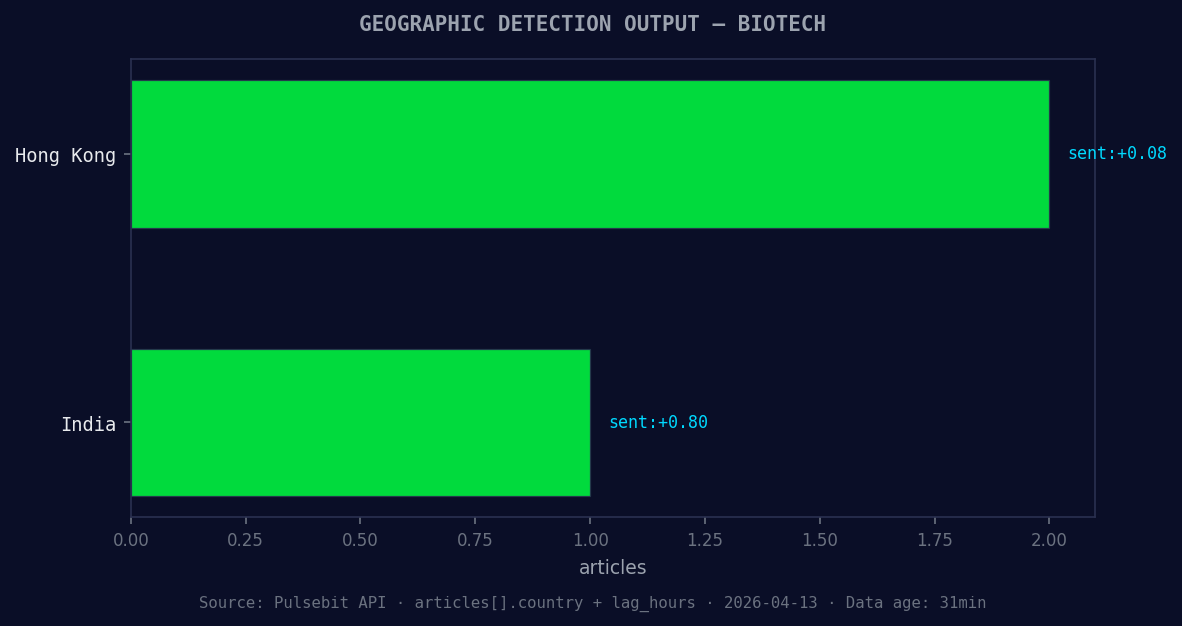
*Geographic detection output for biotech. Hong Kong leads with 2 articles and sentiment +0.08. Source: Pulsebit /news_recent geographic fields.*
# Step 2: Meta-sentiment moment
cluster_reason = "Clustered by shared themes: pharma, thinking, small, deals, that’s."
meta_sentiment_url = "https://api.pulsebit.com/v1/sentiment"
meta_response = requests.post(meta_sentiment_url, json={"text": cluster_reason})
meta_sentiment_data = meta_response.json()
print(biotech_data)
print(meta_sentiment_data)
In this code, we first query for sentiment data on the topic of "biotech" while filtering for English-language articles. This step ensures we're only processing relevant sentiment data. Next, we run the cluster reason string through the sentiment endpoint to score the narrative framing itself. This allows us to understand not just the sentiment of the articles, but also the overarching themes driving that sentiment.
Here are three specific builds we can implement based on this anomaly:
Biotech Sentiment Alert: Set a threshold for momentum spikes at -1.0. Whenever the score dips below this threshold, trigger an alert to your team. This will ensure you’re always informed of critical shifts in sentiment.
Cluster Narrative Scoring: Use the meta-sentiment scoring mechanism to identify narratives that cluster around key themes. Whenever you detect a similarity in framing — like "pharma, thinking, small" — score it for sentiment and prioritize articles that align with high-confidence narratives.
Geo-Filter Insights Dashboard: Build a dashboard that visualizes sentiment trends over time, filtered by geographic origin. Use the English language filter to highlight how sentiments differ across regions, particularly focusing on biotech, pharma, and Google. This will give you deeper insights into localized sentiment changes.
If you want to dive in and start leveraging these insights for your models, check out our documentation at pulsebit.lojenterprise.com/docs. You can copy-paste the code above and run it within 10 minutes to start catching these momentum shifts.


Top comments (0)