

Your Pipeline Is 18.0h Behind: Catching Culture Sentiment Leads with Pulsebit
We've just uncovered a striking anomaly: a 24-hour momentum spike of +0.237 in cultural sentiment. This spike is particularly intriguing because it is fueled by discussions around "Trans Women and Internet Culture." The leading language for this burst of activity is English, with a precise 18-hour lead. That means your model most likely missed this cultural shift by 18 hours—leaving you behind in a fast-evolving conversation.
The Problem
When your pipeline isn't equipped to handle multilingual origins or recognize dominant entities, it can miss critical shifts like this one. An 18-hour lag in recognizing a momentum spike in sentiment means you're working with outdated data. In this case, the leading narrative is rooted in English press, which highlights a specific cultural dialogue on trans issues. If your model is solely relying on historical data and failing to tap into real-time sentiment streams, you risk falling out of touch with the very conversations that are shaping public opinion.

English coverage led by 18.0 hours. Sv at T+18.0h. Confidence scores: English 0.85, Da 0.85, Spanish 0.85 Source: Pulsebit /sentiment_by_lang.
The Code
To catch this kind of momentum spike, we can utilize our API effectively. Below is a Python code snippet that demonstrates how to filter by language and query for sentiment analysis on the identified cluster reason:
import requests
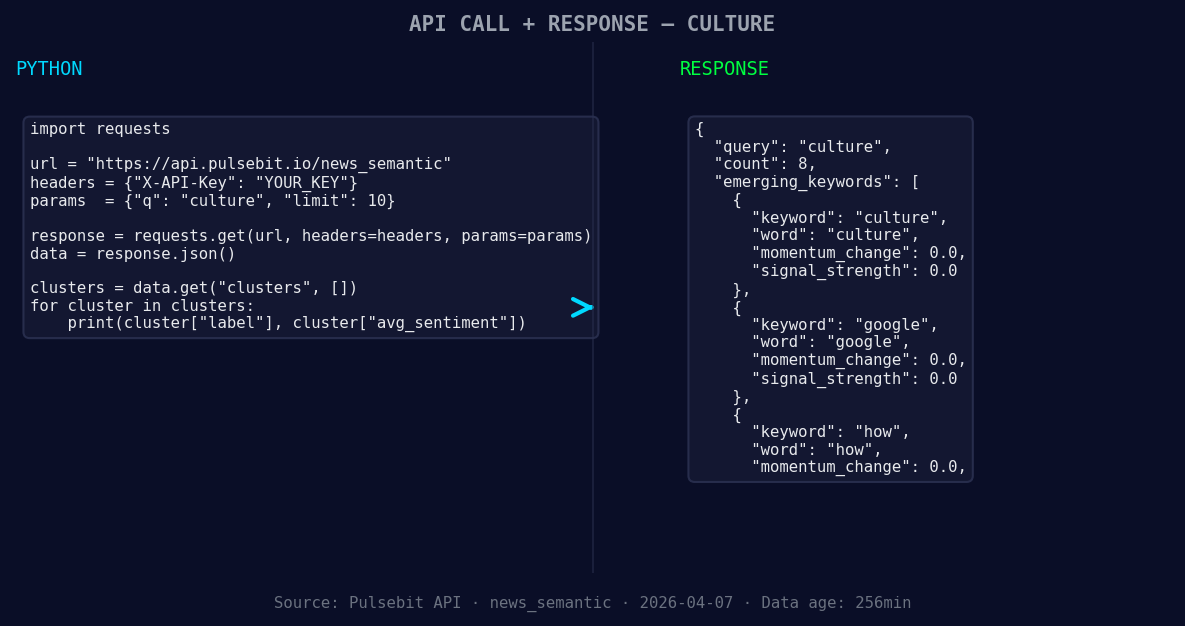
*Left: Python GET /news_semantic call for 'culture'. Right: returned JSON response structure (clusters: 3). Source: Pulsebit /news_semantic.*
# Define your parameters
topic = 'culture'
score = +0.595
confidence = 0.85
momentum = +0.237
lang = 'en'
# Geographic origin filter
url = f"https://api.pulsebit.com/v1/sentiment?topic={topic}&lang={lang}"
response = requests.get(url)
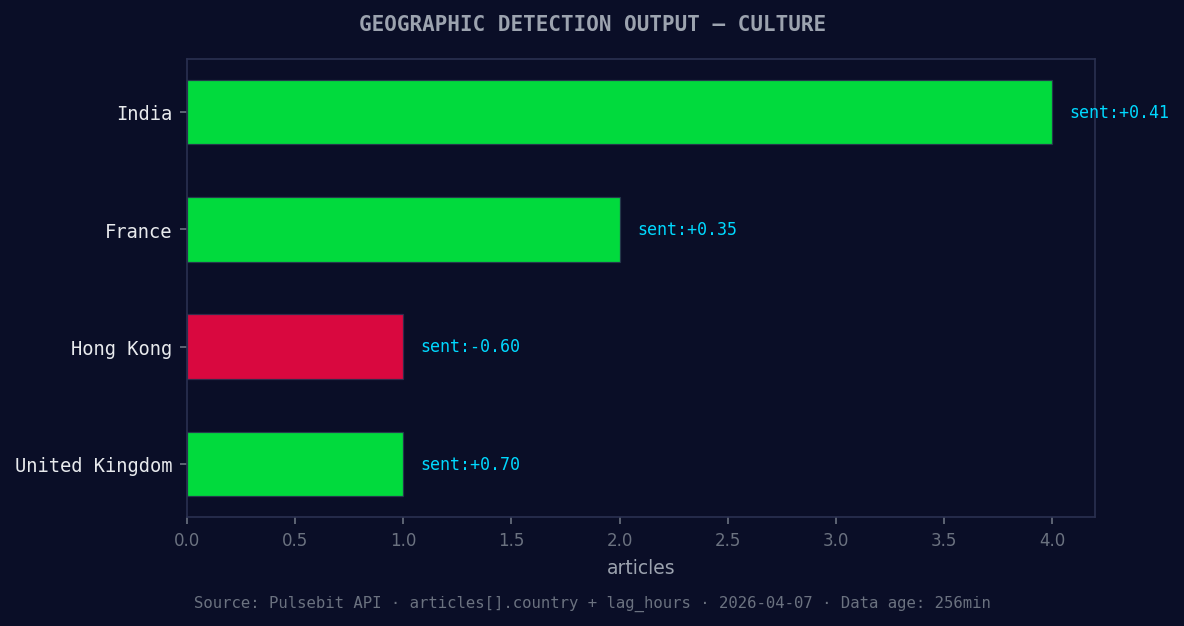
*Geographic detection output for culture. India leads with 4 articles and sentiment +0.41. Source: Pulsebit /news_recent geographic fields.*
if response.status_code == 200:
data = response.json()
print(data)
# Meta-sentiment moment
cluster_reason = "Clustered by shared themes: women, viral, trans, conversation, internet."
sentiment_response = requests.post("https://api.pulsebit.com/v1/sentiment", json={"text": cluster_reason})
if sentiment_response.status_code == 200:
sentiment_data = sentiment_response.json()
print(sentiment_data)
This code does two critical things: first, it filters sentiment data based on our specified topic and language. Second, it takes the cluster reason and runs it through another endpoint to score its narrative framing. This dual approach is what makes our discovery powerful.
Three Builds Tonight
With this new knowledge, here are three specific things we can build:
Geo-Filtered Sentiment Dashboard: Create a dashboard that visualizes sentiment trends specifically for the English-speaking audience. Use the geographic origin filter to monitor spikes in cultural discussions, e.g.,
momentum > +0.200.Meta-Sentiment Analysis Tool: Build a tool that allows users to input cluster reasons and get sentiment scores in real-time. This could be particularly useful for brands wanting to gauge public perception around sensitive topics like gender and identity. Use the meta-sentiment loop to continuously refine your narrative understanding.
Alert System for Cultural Trends: Set up an alert system that triggers when momentum spikes exceed a certain threshold (e.g., momentum > +0.200) in topics like culture, gender, and social issues. This would help you stay ahead of mainstream narratives and allow for proactive engagement.
Get Started
To dive deeper, check out our documentation at pulsebit.lojenterprise.com/docs. You can copy-paste and run this code in under 10 minutes to start catching those cultural sentiment leads before they slip away.


Top comments (0)