

Your Pipeline Is 29.3h Behind: Catching Energy Sentiment Leads with Pulsebit
In our latest analysis, we observed a notable anomaly: sentiment for the topic "energy" is currently at +0.037, with a momentum of +0.037. This spike, which occurred 29.3 hours ago, indicates a rising sentiment trend that your model may have missed. Ignoring this could mean losing out on critical market insights as the energy sector begins to shift positively.
What does this mean for your pipeline? If your model is not equipped to handle multilingual origins or entity dominance, it’s likely that you missed this significant trend by 29.3 hours. In a landscape where the leading language is English, any delay in sentiment processing can translate into missed opportunities. You might find yourself reacting to trends that have already peaked while the real shifts are happening below the surface.

English coverage led by 29.3 hours. Nl at T+29.3h. Confidence scores: English 0.75, Spanish 0.75, French 0.75 Source: Pulsebit /sentiment_by_lang.
To catch these shifts, here’s how we can leverage our API effectively. First, we’ll filter for English-language articles discussing "energy." The following Python code demonstrates this:
import requests
# Define the parameters for the API call
params = {
"topic": "energy",
"lang": "en" # Filtering for English articles
}
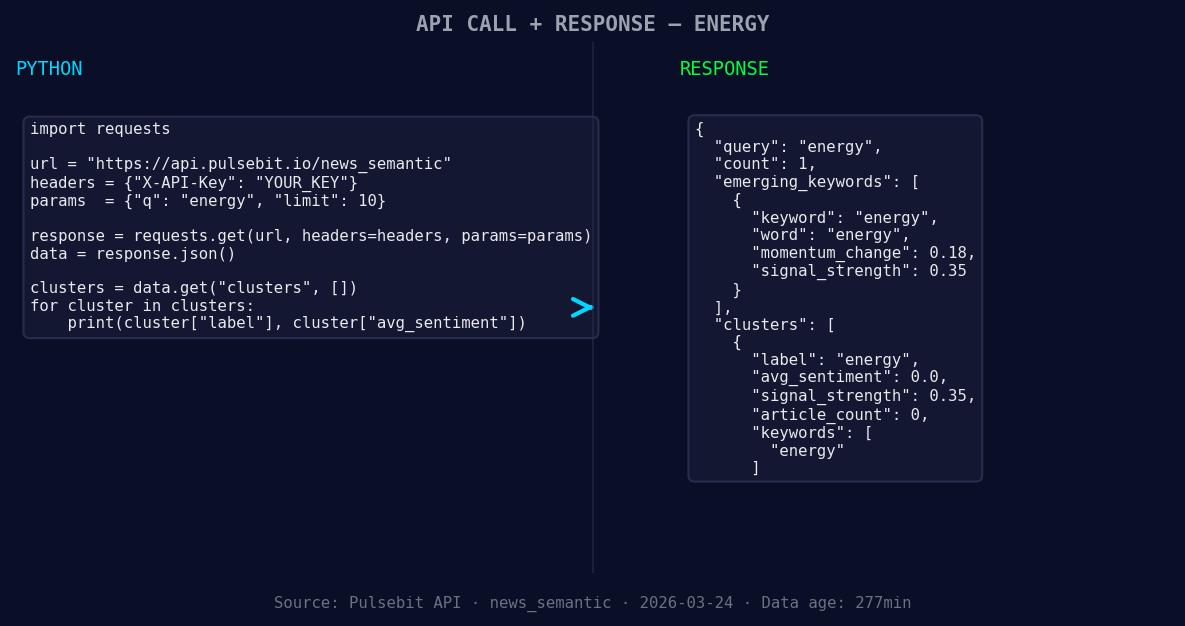
*Left: Python GET /news_semantic call for 'energy'. Right: returned JSON response structure (clusters: 1). Source: Pulsebit /news_semantic.*
# API call to fetch sentiment data
response = requests.get("https://api.pulsebit.com/sentiment", params=params)
# Print the response
print(response.json())
Next, we need to analyze the meta-sentiment of the article narrative itself. Given the reason string from the cluster analysis — "Semantic API incomplete — fallback semantic structure built from available keywords and article/search evidence," we will run this through our sentiment scoring endpoint:
# Define the input for the meta-sentiment check
meta_input = "Semantic API incomplete — fallback semantic structure built from available keywords and article/search evidence."

# API call to score the narrative framing
meta_response = requests.post("https://api.pulsebit.com/sentiment", json={"text": meta_input})

# Print the meta sentiment response
print(meta_response.json())
With these two blocks of code, you're set to catch the emerging trends in the energy sector effectively. Now, let's discuss three specific builds you can implement tonight.
Geo-Filtered Sentiment Alerts: Set a threshold that triggers an alert when sentiment on "energy" exceeds +0.05 in English articles. This ensures you’re immediately aware of upward momentum.
Meta-Sentiment Analysis Dashboard: Integrate the meta-sentiment scores into your existing dashboard. If the narrative framing rate is below a certain threshold (e.g., 0.5), it indicates that the underlying sentiment may not be strong enough to warrant action.
Forming Themes Tracker: Use our API to continuously monitor forming themes like energy(+0.18) versus mainstream energy. Set up a routine that checks for sentiment shifts every hour and flags significant changes.
By implementing these patterns, you can ensure your pipeline is not only reactive but also proactive in identifying emerging trends before they become mainstream.
Ready to get started? Head over to pulsebit.lojenterprise.com/docs and copy-paste the provided code snippets into your environment. You can have this running in under 10 minutes, enabling you to catch those valuable insights that your model might otherwise miss.

Geographic detection output for energy. United States leads with 1 articles and sentiment +0.00. Source: Pulsebit /news_recent geographic fields.


Top comments (0)