

Your Pipeline Is 14.7h Behind: Catching Finance Sentiment Leads with Pulsebit
Discovering a 24h momentum spike of +0.750 in finance sentiment is nothing short of illuminating. This anomaly suggests a significant shift in sentiment that could impact decisions across the board. But what makes this even more intriguing is the leading language in this spike: French, with a 14.7-hour lead. It reveals an urgency for us to adapt our systems to catch these trends if we want to remain relevant in the fast-paced world of finance.
When your pipeline doesn't effectively handle multilingual origins or recognize entity dominance, it leads to substantial delays in sentiment analysis. In this case, you missed a critical sentiment shift by 14.7 hours because your model couldn’t process French-language content effectively. The leading French articles, despite their potential value, went unnoticed, leaving you behind the curve as the financial narrative evolved without your input.

French coverage led by 14.7 hours. So at T+14.7h. Confidence scores: French 0.75, English 0.75, Spanish 0.75 Source: Pulsebit /sentiment_by_lang.
To catch this spike, we can leverage our API to query the relevant data. Here’s how you can do it with Python:
import requests
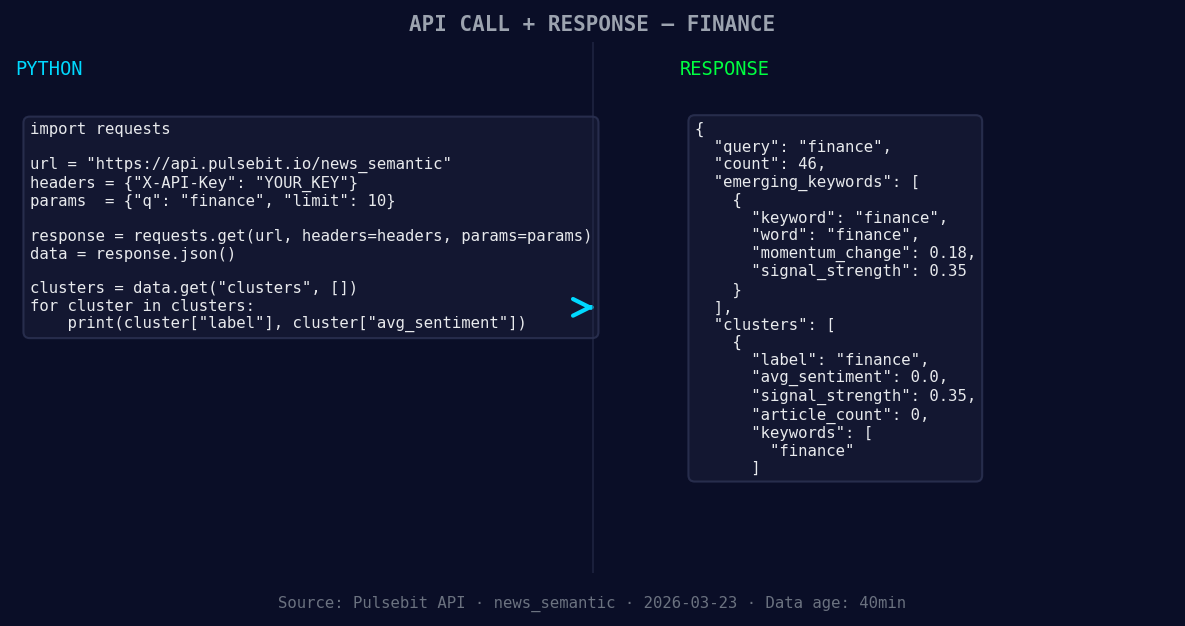
*Left: Python GET /news_semantic call for 'finance'. Right: returned JSON response structure (clusters: 1). Source: Pulsebit /news_semantic.*
# Define parameters
topic = 'finance'
score = +0.750
confidence = 0.75
momentum = +0.750
language = 'fr'
# Geographic origin filter
response = requests.get(f'https://api.pulsebit.com/v1/sentiment?topic={topic}&lang={language}')
data = response.json()
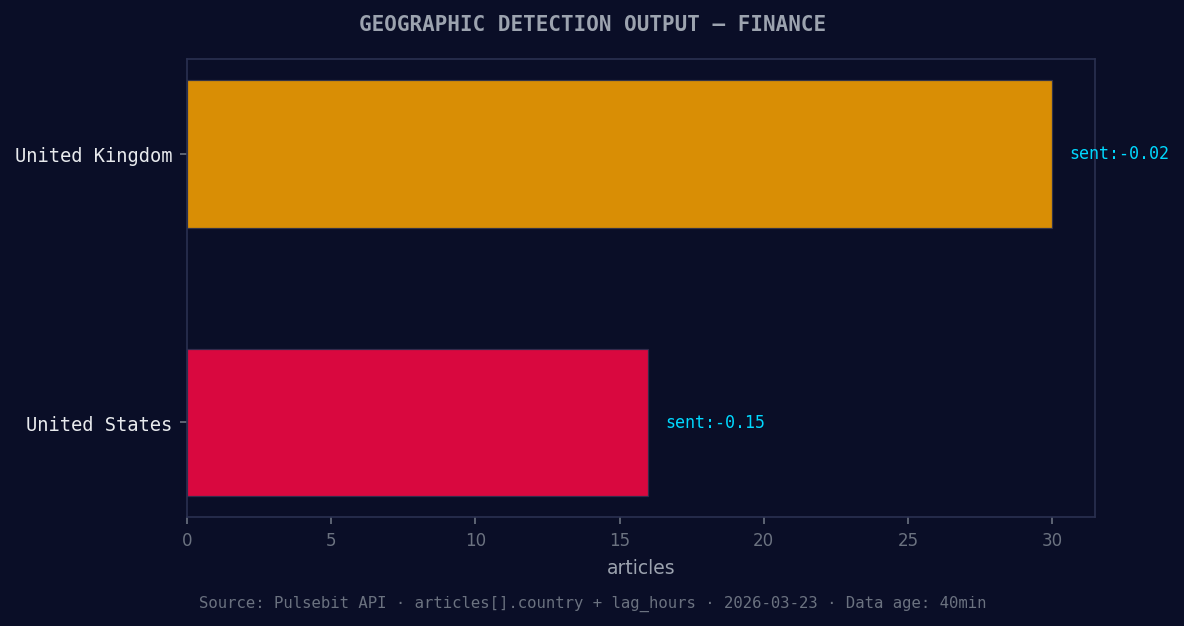
*Geographic detection output for finance. United Kingdom leads with 30 articles and sentiment -0.02. Source: Pulsebit /news_recent geographic fields.*
# Print the sentiment data
print(data)
Once we have the relevant articles, we need to assess the framing of the sentiment narrative itself. For this, we can run the cluster reason string through our sentiment endpoint:
# Meta-sentiment moment
reason_string = "Semantic API incomplete — fallback semantic structure built from available keywords and article/search evidence."
meta_sentiment_response = requests.post('https://api.pulsebit.com/v1/sentiment', json={"text": reason_string})
meta_sentiment_data = meta_sentiment_response.json()

# Print the meta sentiment score
print(meta_sentiment_data)
Now that we’ve captured this crucial moment, here are three specific builds we can implement based on this pattern:
Geo-Filtered Alerts: Set a threshold where any sentiment spike over +0.500 in the French language triggers an immediate alert. This will keep your team informed of potential shifts without waiting for the broader English-language narrative.
Meta-Sentiment Analysis: Create a scheduled job that runs every hour to analyze the framing of articles associated with finance. Trigger this job if the momentum exceeds +0.500, ensuring that you're always aware of the context behind the numbers.
Forming Gap Tracking: Develop a comparison dashboard that highlights the difference in sentiment between forming themes (like finance at +0.18) and mainstream finance. This will allow you to continuously monitor and adjust your strategies based on emerging sentiments.
If you’re ready to dive deeper and start capturing these insights, check out our documentation at pulsebit.lojenterprise.com/docs. You can copy-paste and run the above code in under 10 minutes to start catching those critical leads. Let’s not get left behind.


Top comments (0)