

Your pipeline just missed a critical alert: a 24h momentum spike of -0.436 in cybersecurity sentiment. This isn’t just a number; it signifies a notable shift in sentiment regarding cybersecurity themes, especially tied to Nigeria's digital landscape. With a leading language of English, press coverage peaked at 21.2 hours ago, indicating a significant delay in how your model processes incoming data. In an industry where timing is everything, this lag could lead to missed opportunities or worse, unforeseen risks.
The structural gap this presents is stark. Your model, which likely operates on a single language or geographic filter, could be blind to emerging trends and sentiment shifts in non-English speaking regions. With English leading the conversation, your system missed this by over 21 hours, depriving you of timely insights into Nigeria's growing cyber risk narrative. This is not just about data processing; it’s about understanding the multi-faceted nature of global sentiment.

Geographic detection output for cybersecurity. India leads with 2 articles and sentiment +0.40. Source: Pulsebit /news_recent geographic fields.
We can catch these critical shifts using our API. Here’s how you can write a Python script to identify these anomalies. First, we’ll filter based on the geographic origin to get relevant sentiment data:
import requests
# Set parameters for the API call
params = {
'topic': 'cybersecurity',
'score': -0.350,
'confidence': 0.85,
'momentum': -0.436,
'lang': 'en' # Filtering for English language
}
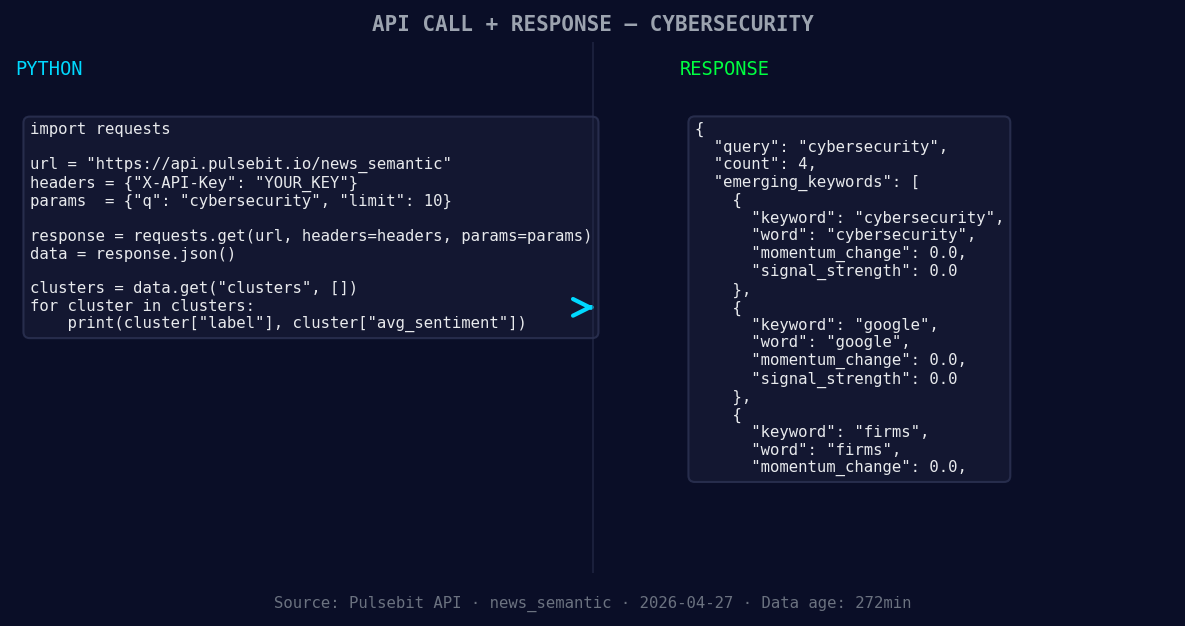
*Left: Python GET /news_semantic call for 'cybersecurity'. Right: returned JSON response structure (clusters: 3). Source: Pulsebit /news_semantic.*
# Make the API call
response = requests.get('https://api.pulsebit.com/sentiment', params=params)
data = response.json()
print(data)
Once we have the relevant articles, we can run the cluster story through our sentiment endpoint to evaluate the framing of the narrative itself. Here’s how to do that:
# Cluster reason string to analyze
cluster_reason = "Clustered by shared themes: trust, digital, nigeria:, deficit, cyber."

# Make the POST request for meta sentiment analysis
meta_response = requests.post('https://api.pulsebit.com/sentiment', json={'text': cluster_reason})
meta_data = meta_response.json()

print(meta_data)
These two API calls will help you capture not just the sentiment around cybersecurity but also how the narrative is being shaped by the pressing issues in Nigeria.
Now that we’ve caught this sentiment spike, here are three specific builds you can leverage tonight:
Geo-Specific Alerting System: Set a threshold for momentum spikes, say anything below -0.400, specifically for English language articles. Use the geographic filter to isolate content from Nigeria. This can help you track urgent cybersecurity developments in real time.
Meta-Sentiment Dashboard: Create a dashboard that runs the meta-sentiment loop every hour. Focus on articles clustered around themes like trust and digital transformation. If sentiment shifts significantly, it can trigger alerts for further investigation.
Sentiment Divergence Analysis: Compare the sentiment scores of topics like cybersecurity and Google against mainstream narratives. For instance, if cybersecurity sentiment is falling while Google sentiment remains neutral or positive, it might indicate a looming risk that needs immediate attention.
By implementing these builds, you can ensure your pipeline stays responsive and insightful, especially in the fast-evolving landscape of cybersecurity.
Ready to get started? Check out our documentation at pulsebit.lojenterprise.com/docs. You can copy-paste the code snippets above and run them in under 10 minutes. Let’s catch those critical shifts together!

English coverage led by 21.2 hours. Nl at T+21.2h. Confidence scores: English 0.85, Spanish 0.85, French 0.85 Source: Pulsebit /sentiment_by_lang.


Top comments (0)