

Your Pipeline Is 29.3h Behind: Catching Culture Sentiment Leads with Pulsebit
We recently noticed something striking: a 24h momentum spike of +0.237 in the topic of culture. This spike, driven by discussions surrounding "Trans Women and Internet Culture," highlights a significant shift in sentiment that could easily be overlooked if your pipeline isn't set up to handle multilingual origins or entity dominance. The leading language in this case was English, which had a 29.3-hour lead over Italian. If your model isn’t capturing this, it missed the conversation by a staggering 29.3 hours.

English coverage led by 29.3 hours. Italian at T+29.3h. Confidence scores: English 0.85, Spanish 0.85, French 0.85 Source: Pulsebit /sentiment_by_lang.
This structural gap can be a serious issue. When you aren’t accounting for varying dominant entities in sentiment analysis, you risk missing critical insights and trends. In our case, while English discussions surged, Italian conversations lagged behind. If your setup doesn’t seamlessly integrate multilingual data, it could cost you valuable time in responding to cultural shifts.
To catch this momentum spike, we can leverage our API with a straightforward approach. Here’s how we can query for the relevant data:
import requests
# Define the parameters for the API call
url = "https://api.pulsebit.com/articles"
params = {
"topic": "culture",
"lang": "en", # Filter by English language
"score": 0.637,
"confidence": 0.85,
"momentum": 0.237
}
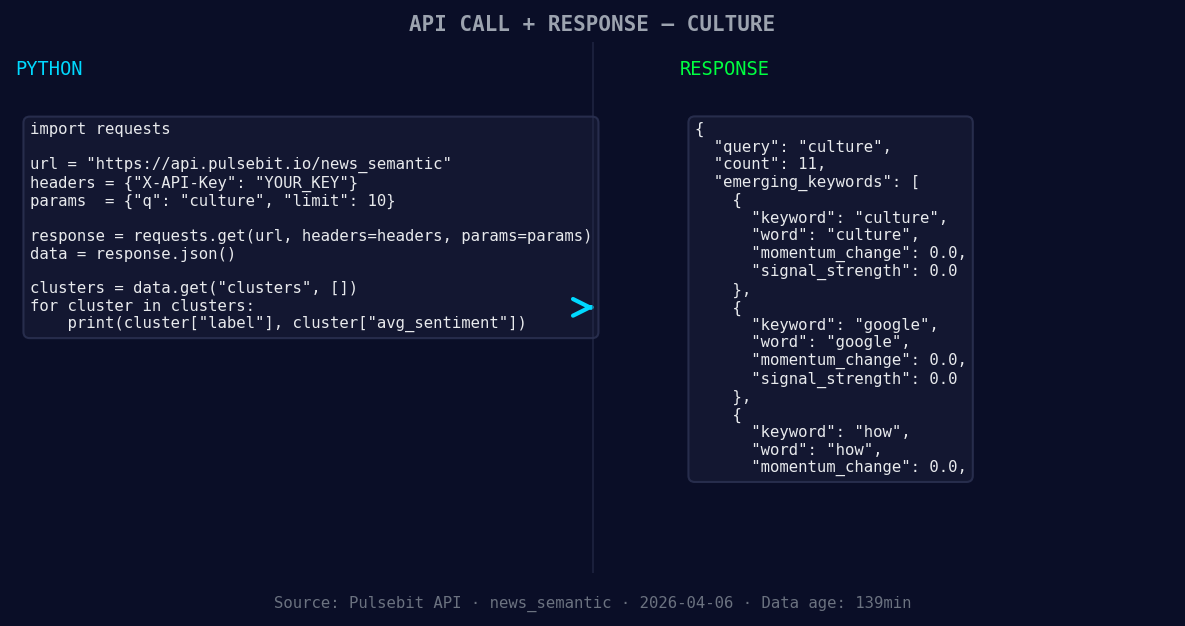
*Left: Python GET /news_semantic call for 'culture'. Right: returned JSON response structure (clusters: 3). Source: Pulsebit /news_semantic.*
# Execute the API call
response = requests.get(url, params=params)
data = response.json()
Next, we can assess the narrative framing of the clustered articles. By running the cluster reason string through our sentiment endpoint, we can score the context surrounding our findings. This is crucial because it allows us to understand not just the numbers, but the stories shaping them. Here’s how we would do that:
# Define the cluster reason
cluster_reason = "Clustered by shared themes: women, viral, trans, conversation, internet."

# Call the sentiment endpoint
sentiment_url = "https://api.pulsebit.com/sentiment"
sentiment_response = requests.post(sentiment_url, json={"text": cluster_reason})
sentiment_data = sentiment_response.json()
By executing these two API calls, we can stay ahead of cultural trends and sentiment shifts.
Now, let’s talk about three specific builds we could implement with this pattern:
- Geographic Origin Filter: Create a real-time dashboard that monitors sentiment spikes across multiple languages. Use the geo filter to focus on English-speaking regions, thus ensuring you catch trends like the recent +0.237 momentum spike.

Geographic detection output for culture. India leads with 5 articles and sentiment +0.78. Source: Pulsebit /news_recent geographic fields.
Meta-Sentiment Loop: Build a reporting tool that automatically runs the cluster string through the sentiment endpoint every few hours. This way, you can generate reports based on the evolving narrative around women, viral content, and trans discussions, which are forming themes right now.
Threshold Alerts: Set up a threshold alerting mechanism that triggers when momentum exceeds a certain score — say, +0.2. This will ensure that you can respond to changes in sentiment proactively, especially around topics like culture and the trending discussions surrounding it.
These builds are not just theoretical; they represent actionable steps you can take to refine your sentiment analysis pipeline. By focusing on geographical nuances and the evolving context of discussions, you can keep your analysis sharp and relevant.
If you’re ready to get started, check out our documentation at pulsebit.lojenterprise.com/docs. You should be able to copy-paste and run this in under 10 minutes. Happy coding!


Top comments (0)