

Your Pipeline Is 29.2h Behind: Catching Human Rights Sentiment Leads with Pulsebit
We recently identified a significant anomaly: a 24-hour momentum spike of -1.243 related to human rights sentiment. This spike suggests a rapid decline in sentiment surrounding the FIFA World Cup amid concerns about human rights issues in the U.S., as highlighted by recent articles from English-language press outlets. The urgency here is clear; we’re witnessing a shift that you need to be aware of, especially if your pipeline isn't equipped to catch these emerging narratives.
If your model operates without considering multilingual origins or entity dominance, it likely missed this crucial shift by a staggering 29.2 hours. The leading language in this case is English, but the implications are broader. By failing to account for the dominance of specific narratives, your analysis can lag behind emerging trends, which is unacceptable in our fast-paced environment. The stories are there; they're just not being processed efficiently.

English coverage led by 29.2 hours. Sv at T+29.2h. Confidence scores: English 0.85, French 0.85, Spanish 0.85 Source: Pulsebit /sentiment_by_lang.
import requests
# Setting the parameters for our API call
topic = 'human rights'
score = -0.436
confidence = 0.85
momentum = -1.243
lang = "en"
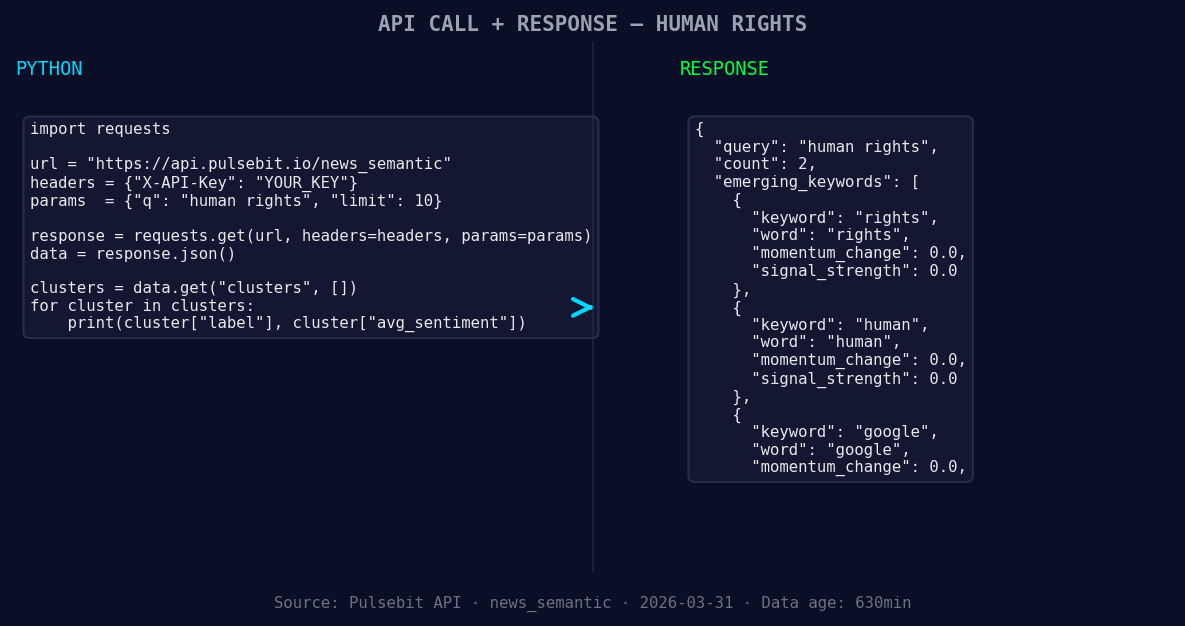
*Left: Python GET /news_semantic call for 'human rights'. Right: returned JSON response structure (clusters: 3). Source: Pulsebit /news_semantic.*
# Geographic origin filter: Querying the API for sentiment analysis
response = requests.post(
'https://api.pulsebit.io/v1/sentiment',
json={
"topic": topic,
"lang": lang,
"momentum": momentum,
"score": score,
"confidence": confidence
}
)
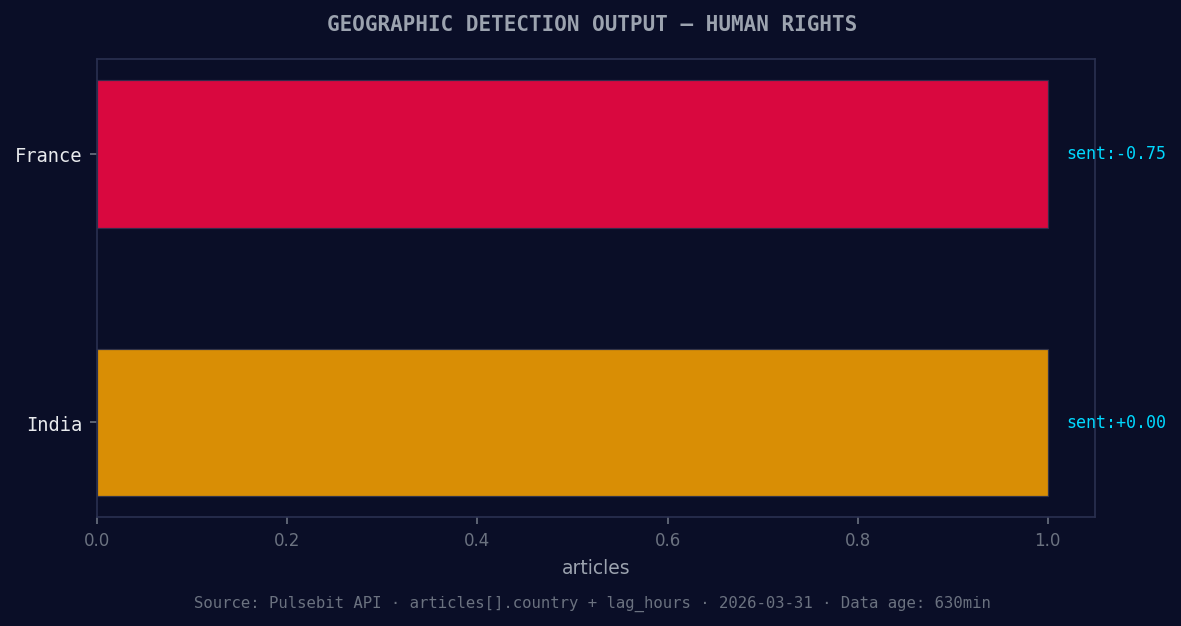
*Geographic detection output for human rights. France leads with 1 articles and sentiment -0.75. Source: Pulsebit /news_recent geographic fields.*
print(response.json())
This code snippet sets the stage by querying our API specifically for human rights sentiment in English. It allows us to capture relevant discourse while filtering out noise from other languages or regions.
Next, we want to dive deeper into the narrative framing itself. To do this, we should run the cluster reason string back through our sentiment analysis endpoint. In this case, we are interested in the clustered themes: "Clustered by shared themes: least, dead, haiti, massacre, human." This is how you can score the narrative framing itself.
# Meta-sentiment moment: Running the cluster reason through the API
cluster_reason = "Clustered by shared themes: least, dead, haiti, massacre, human."
meta_response = requests.post(
    'https://api.pulsebit.io/v1/sentiment',
    json={
        "text": cluster_reason
    }
)

print(meta_response.json())
This additional API call allows us to understand how the themes are resonating and scoring in the context of the current sentiment landscape. This is where we can identify the subtle shifts and the implications they carry.
Here are three specific builds you can create using this data pattern:
Geo-Filtered Alert System: Build a system that triggers alerts when sentiment for human rights in the U.S. drops below a certain threshold (e.g., -0.5). Use the geographic origin filter to focus exclusively on English-language sources.
Meta-Sentiment Dashboard: Create a dashboard that visualizes the sentiment scores of clustered themes over time. Use the meta-sentiment results to highlight shifts in public perception regarding key topics like "human rights".
Engagement Tracker: Develop an engagement tracker that monitors how specific narratives (like the FIFA World Cup's association with human rights issues) evolve. Set a threshold for significant changes (e.g., a momentum spike greater than ±1.0) to keep your analysis relevant and timely.
With these builds, you can ensure that your models remain ahead of the curve, capturing insights that are not just timely but also relevant.
For more details on how to implement these ideas, check out our documentation at pulsebit.lojenterprise.com/docs. You can copy-paste and run these examples in under 10 minutes, setting you up to detect sentiment shifts before they become mainstream.


Top comments (0)