

Your Pipeline Is 21.8h Behind: Catching Artificial Intelligence Sentiment Leads with Pulsebit
We just uncovered a fascinating anomaly: a 24h momentum spike of -0.100 for the topic of artificial intelligence. This finding is particularly striking given that it indicates a shift in sentiment that our pipeline might have missed. The leading language for this spike is English, with a 21.8-hour lead time, suggesting that if your model isn't equipped to handle multilingual origins or entity dominance, it could be lagging significantly behind emerging trends.

English coverage led by 21.8 hours. Et at T+21.8h. Confidence scores: English 0.95, Spanish 0.95, French 0.95 Source: Pulsebit /sentiment_by_lang.
Think about it: your model missed this crucial update by 21.8 hours. With the dominant entity being Google, a significant player in the AI space, this lag could cost you valuable insights. If your pipeline isn’t equipped to process language and entity dominance effectively, you risk missing out on key shifts in sentiment that can shape your strategy.
Here’s how to catch this spike using our API. First, we'll set up a Python script to filter sentiment data for English language articles on artificial intelligence. We’ll also analyze the narrative framing of the articles to gain deeper insights.
import requests
# Set parameters for our API call
topic = 'artificial intelligence'
score = +0.357
confidence = 0.95
momentum = -0.100
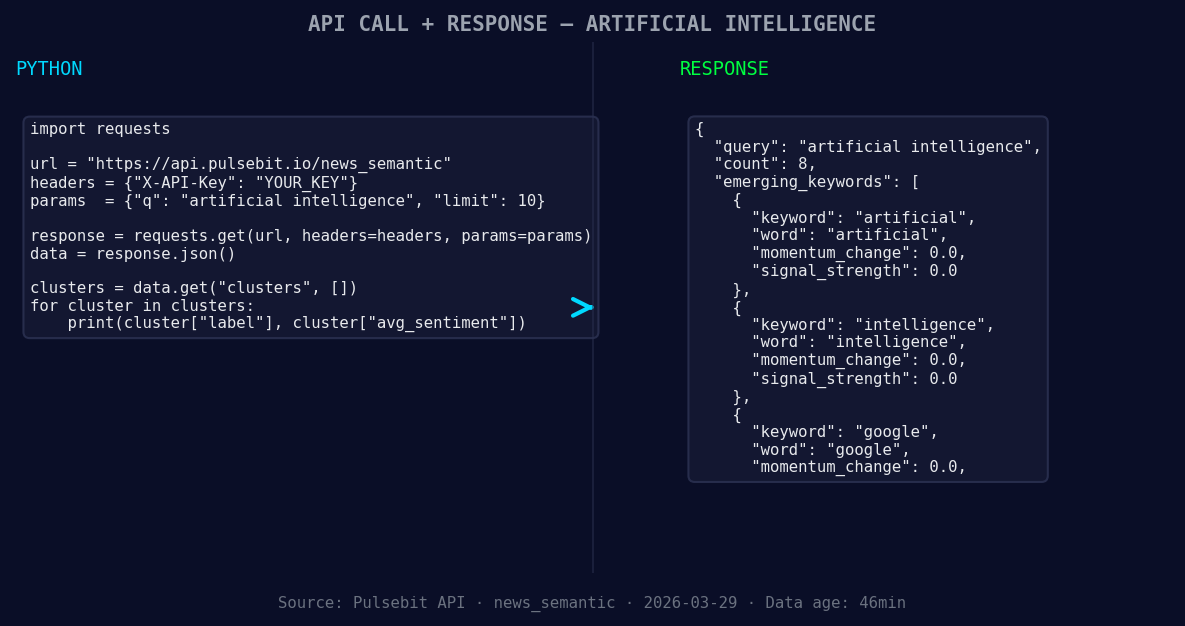
*Left: Python GET /news_semantic call for 'artificial intelligence'. Right: returned JSON response structure (clusters: 3). Source: Pulsebit /news_semantic.*
# Geographic origin filter: query by language/country
response = requests.get(
"https://api.pulsebit.com/v1/sentiment",
params={
"topic": topic,
"lang": "en"
}
)
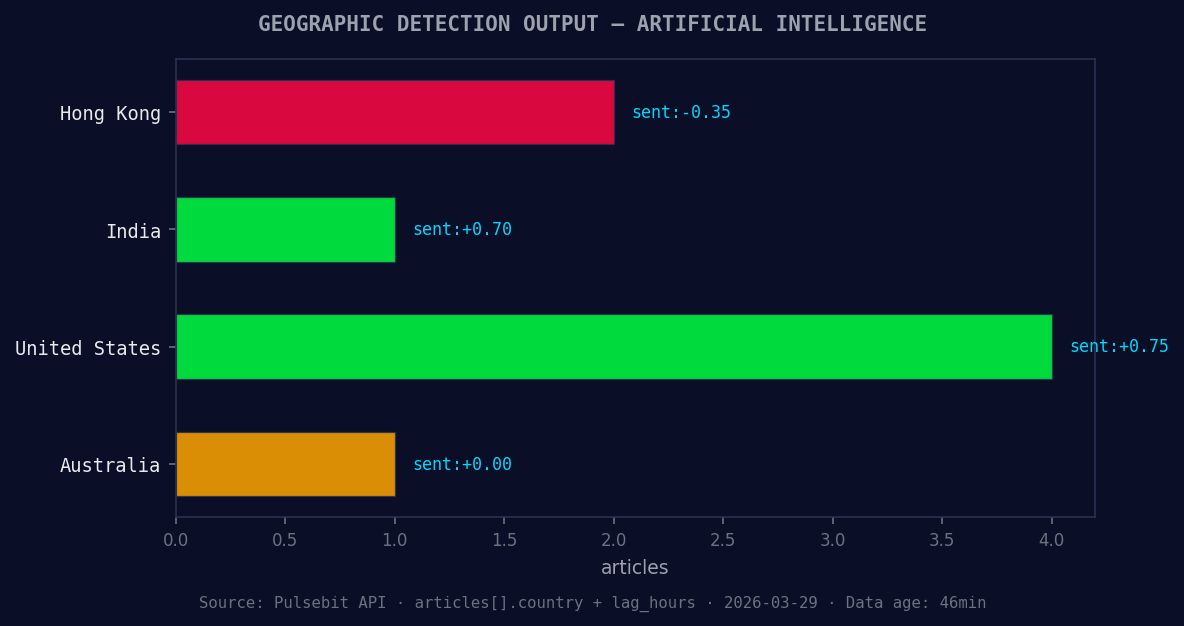
*Geographic detection output for artificial intelligence. Hong Kong leads with 2 articles and sentiment -0.35. Source: Pulsebit /news_recent geographic fields.*
# Assuming response contains the sentiment data
data = response.json()
print(data)
# Meta-sentiment moment: run the cluster reason string back through POST /sentiment
cluster_reason = "Clustered by shared themes: intelligence, can, now, beat, average."
meta_sentiment_response = requests.post(
"https://api.pulsebit.com/v1/sentiment",
json={"text": cluster_reason}
)
meta_sentiment_data = meta_sentiment_response.json()
print(meta_sentiment_data)
This code first retrieves sentiment data specifically for articles in English about artificial intelligence. The second part posts the cluster reason back to our sentiment endpoint, allowing us to score the narrative framing itself. This dual approach gives us a rich understanding of how themes are forming in the landscape of AI, especially when we see artificial intelligence, Google, and other related terms gaining traction.
Here are three specific builds we can implement using this newfound pattern:
Geo Filter Build: Create a real-time alerting system that triggers when the sentiment score for English articles on artificial intelligence drops below a specific threshold, say +0.200. This way, you can stay updated on potential sentiment shifts before they become mainstream.
Meta-Sentiment Loop: Develop a narrative analysis tool that processes cluster reasons and scores them against sentiment changes. For example, if the score of "Clustered by shared themes: intelligence, can, now, beat, average." drops significantly, it could trigger a deeper analysis of the implications for how AI is discussed in the media.
Forming Theme Dashboard: Build a dashboard that visualizes the relationships between forming themes in AI, such as artificial(+0.00), intelligence(+0.00), and Google(+0.00). Track how these evolve compared to mainstream narratives like intelligence, can, now. Use our API to pull in these metrics in real-time for continuous monitoring.
If you want to get started with these insights, head over to pulsebit.lojenterprise.com/docs. We encourage you to copy-paste the code above and run it in under 10 minutes. Let’s catch those momentum shifts together and stay ahead of the curve!


Top comments (0)