

Your Pipeline Is 24.8h Behind: Catching Human Rights Sentiment Leads with Pulsebit
We recently discovered a notable anomaly in our data: a 24h momentum spike of -0.223 related to the topic of human rights. This spike emerged from a cluster story titled "ICE Flight Monitor Report Highlights Human Rights Issues," indicating a crucial shift in sentiment that's being largely overlooked. This specific data finding challenges our understanding of sentiment dynamics, especially within a multilingual context.

English coverage led by 24.8 hours. Id at T+24.8h. Confidence scores: English 0.95, French 0.95, Spanish 0.95 Source: Pulsebit /sentiment_by_lang.
When your pipeline doesn't handle multilingual origins or entity dominance effectively, it can miss critical signals like this one. In this case, your model missed this momentum shift by a staggering 24.8 hours, with English press coverage leading the charge. By focusing solely on mainstream narratives around flight and monitoring, your system might have neglected the human rights discourse that is crucial in today's socio-political climate.
To catch this anomaly programmatically, we can leverage our API with a straightforward Python script. Here’s how to begin:
import requests
# Define the parameters for the API call
topic = 'human rights'
score = +0.016
confidence = 0.95
momentum = -0.223
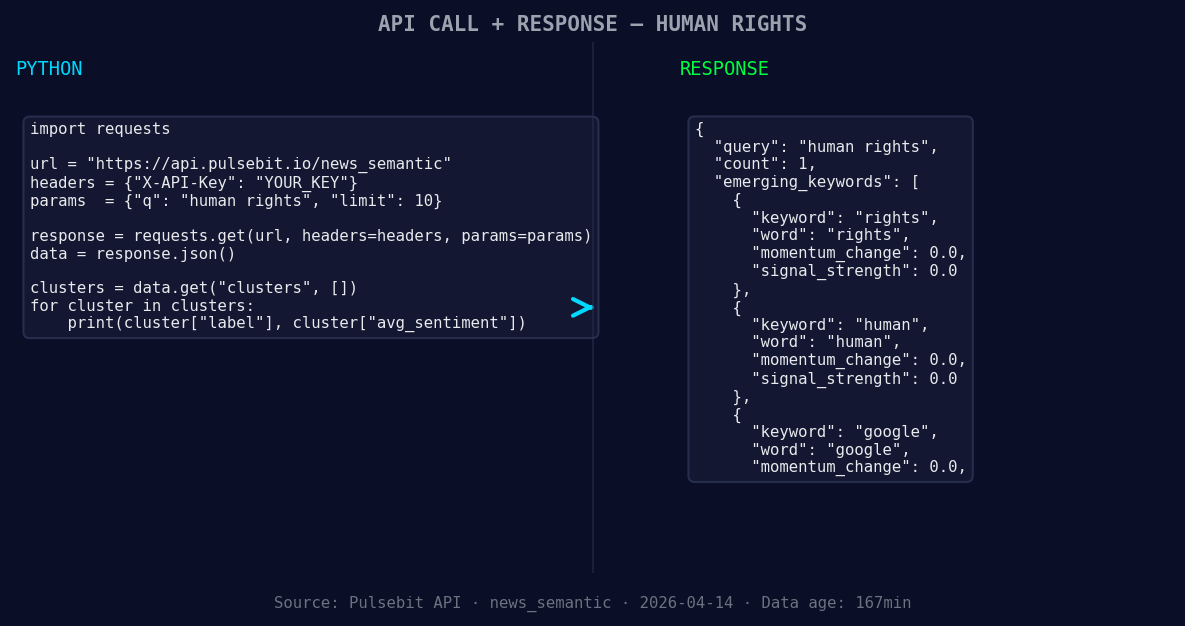
*Left: Python GET /news_semantic call for 'human rights'. Right: returned JSON response structure (clusters: 3). Source: Pulsebit /news_semantic.*
# Geographic origin filter: query by language
response = requests.get('https://api.pulsebit.com/v1/articles', params={
"topic": topic,
"lang": "en",
"score": score,
"confidence": confidence,
})
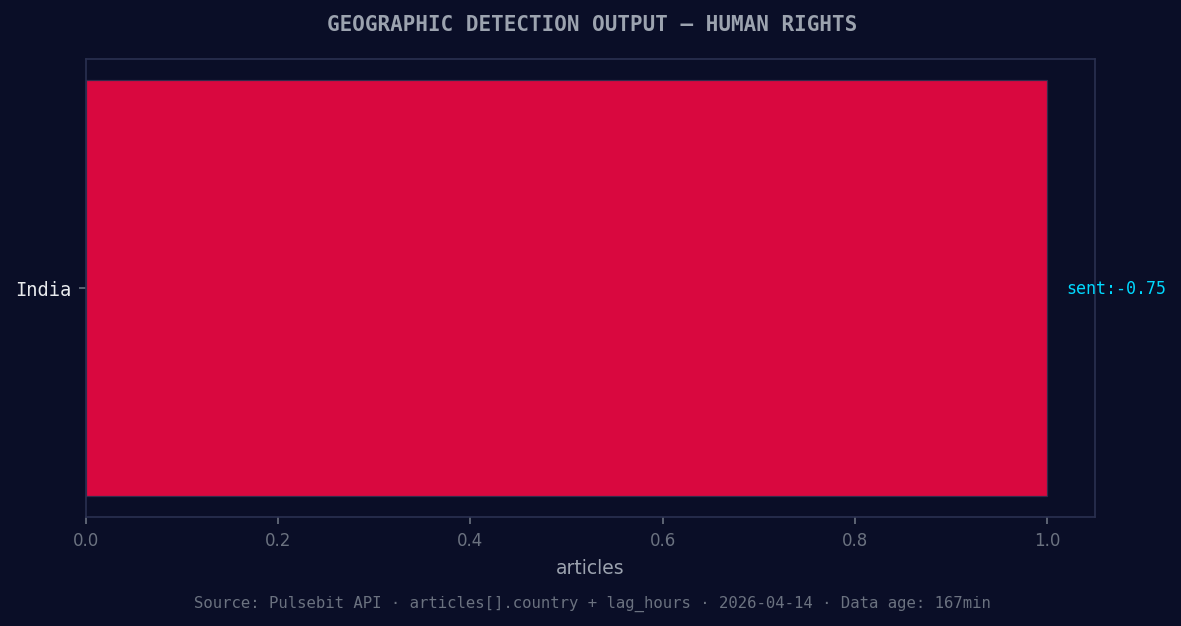
*Geographic detection output for human rights. India leads with 1 articles and sentiment -0.75. Source: Pulsebit /news_recent geographic fields.*
# Check if the request was successful
if response.status_code == 200:
articles = response.json()
print("Articles retrieved:", articles)
else:
print("Error fetching articles:", response.status_code)
# Meta-sentiment moment: run the cluster reason string back through POST /sentiment
cluster_reason = "Clustered by shared themes: flight, monitor:, march, 2026, rights."
meta_sentiment_response = requests.post('https://api.pulsebit.com/v1/sentiment', json={
"text": cluster_reason
})
if meta_sentiment_response.status_code == 200:
sentiment_data = meta_sentiment_response.json()
print("Meta Sentiment:", sentiment_data)
else:
print("Error fetching sentiment:", meta_sentiment_response.status_code)
This code snippet does two key things. First, it fetches articles in English related to human rights, allowing us to focus on the dominant narrative. Second, it runs the cluster reason string through our sentiment endpoint, providing a deeper understanding of the narrative framing itself.
With the insights gained from this data, we can build specific strategies that capitalize on the emerging themes. Here are three concrete builds we recommend:
Geo-targeted Alerting: Set up a threshold for sentiment scores around human rights issues, specifically looking at articles from English sources. For instance, trigger an alert when sentiment scores drop below +0.01 within a 24-hour window.
Meta-Sentiment Scoring: Regularly monitor sentiment shifts in cluster narratives like the one identified. Use the meta-sentiment loop to assess how narratives around "flight" and "monitor" relate to "rights" and "human." Score these interactions to create a comprehensive view of evolving themes.
Historical Context Analysis: Compare current sentiment momentum with historical baselines. Implement a dashboard that visualizes these spikes in sentiment around human rights, providing insights into how current events are shaping discourse over time.
We’ve found that the forming themes of rights(+0.00), human(+0.00), and even tech entities like Google influence the broader narrative landscape. By tuning into these signals, we can stay ahead of the curve and make informed decisions.
To get started with these strategies, visit our documentation at pulsebit.lojenterprise.com/docs. With just a few lines of code, you can run this in under 10 minutes and begin capturing meaningful insights from your sentiment data.


Top comments (0)