

Your Pipeline Is 20.5h Behind: Catching Forex Sentiment Leads with Pulsebit
We recently uncovered a fascinating anomaly in our sentiment data: a 24h momentum spike of -0.200. This spike indicates a significant shift in sentiment regarding forex trading, particularly in light of the recent news that "RBI Eases Forex Trading Restrictions." With just two articles processed, the leading language was English, informed by a 20.5h lag. If your pipeline doesn’t account for this, you’re missing crucial, time-sensitive insights.
Every developer knows the pain of a delayed signal. Your model missed this sentiment shift by 20.5 hours, all due to the dominance of English-language articles over others. In a multilingual environment, relying solely on one language can create blind spots, especially when critical news breaks in other languages. You might have already missed the chance to act on this forex update because your pipeline didn't account for the multilingual nuances of sentiment.

English coverage led by 20.5 hours. Nl at T+20.5h. Confidence scores: English 0.90, Spanish 0.90, French 0.90 Source: Pulsebit /sentiment_by_lang.
To rectify this, we can leverage our API to catch these anomalies programmatically. Below is how we can filter by geographic origin and score the narrative framing itself.
import requests
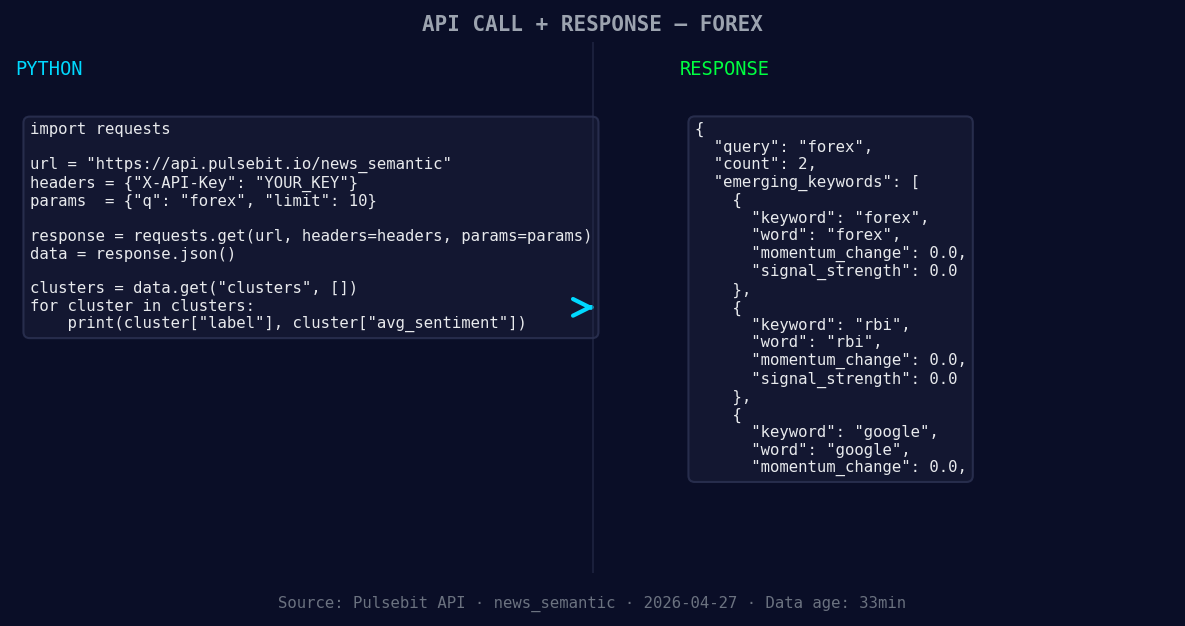
*Left: Python GET /news_semantic call for 'forex'. Right: returned JSON response structure (clusters: 3). Source: Pulsebit /news_semantic.*
# Geographic origin filter: query by language/country using param "lang": "en"
response_geo = requests.get('https://api.pulsebit.com/sentiment', params={
'topic': 'forex',
'lang': 'en',
'score': +0.020,
'confidence': 0.90,
'momentum': -0.200
})
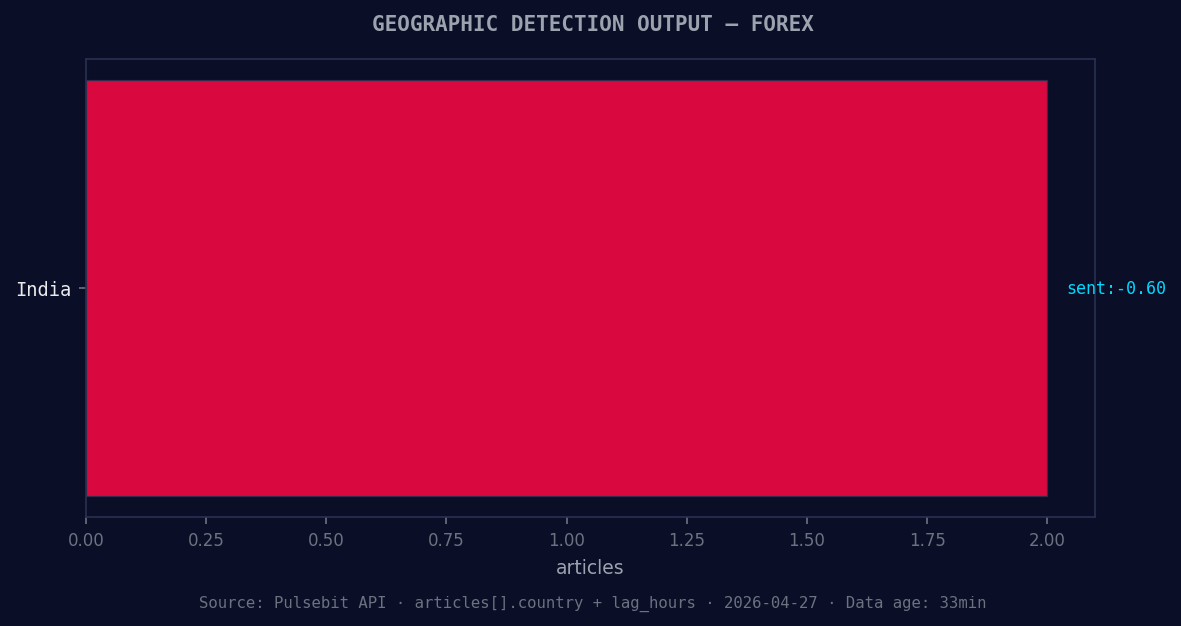
*Geographic detection output for forex. India leads with 2 articles and sentiment -0.60. Source: Pulsebit /news_recent geographic fields.*
# Print the response for verification
print(response_geo.json())
Once we have filtered the relevant data, we can analyze the cluster narratives. The next step is to run the reason string through our sentiment scoring endpoint to assess the narrative’s framing.
# Meta-sentiment moment: run the cluster reason string through POST /sentiment
cluster_reason = "Clustered by shared themes: rupee, falls, paise, against, dollar."
response_meta = requests.post('https://api.pulsebit.com/sentiment', json={
    'text': cluster_reason
})

# Print the sentiment score for the narrative
print(response_meta.json())
With this setup, you’re well-equipped to address the critical gap in your model. Here are three specific builds you can implement tonight to capitalize on this forex momentum spike:
Geo-Focused Alert System: Build a function that triggers alerts based on sentiment changes in specific countries. Set a threshold of -0.200 momentum for forex topics in English. This way, you can catch regional shifts before they trend globally.
Meta-Sentiment Analysis Dashboard: Create a dashboard that visualizes sentiment scores of clustered narratives. Focus on the themes "forex," "rbi," and "google" against mainstream topics like "rupee," "falls," and "paise." This will help you visualize sentiment trends over time and detect early signals of market shifts.
Multilingual Sentiment Aggregator: Develop a service that aggregates sentiment from multiple languages. Use the geo filter to ensure you capture sentiment spikes from non-English articles. This will help you better understand the context of forex changes that might otherwise remain hidden.
If you want to dive deeper into how we built these functionalities, check out our documentation at pulsebit.lojenterprise.com/docs. You can copy and paste the example code above and run it in under 10 minutes. Don’t let your pipeline lag behind; catch the insights before they slip away.


Top comments (0)