

Your Pipeline Is 28.5h Behind: Catching Software Sentiment Leads with Pulsebit
A recent anomaly we uncovered shows a 24-hour momentum spike of +0.410 in software sentiment. This spike is particularly notable given that our analysis indicates the leading language driving this sentiment is English, with a 28.5-hour lag for the rest of the data pipeline. The clustered story surrounding this spike, “Worldly Acquires Bendi Software To Add AI-Powered Supply Chain Mapping And Risk,” hints at emerging themes in the market that could impact your decisions.
The Problem
If your data pipeline isn't configured to handle multilingual sources or recognize entity dominance, you're likely missing critical insights. In this case, your model missed this spike by 28.5 hours, leaving you vulnerable to shifts in software sentiment that could significantly affect your strategic planning. The dominant entity here is “Worldly,” which is at the forefront of this narrative. By not accounting for the leading language or the entities involved, you risk making decisions based on stale or incomplete information.

English coverage led by 28.5 hours. Ro at T+28.5h. Confidence scores: English 0.85, Spanish 0.85, French 0.85 Source: Pulsebit /sentiment_by_lang.
The Code
To catch these types of sentiment spikes, we can leverage our API effectively. Below is the Python code that identifies this momentum spike by querying the relevant data.
import requests
# Define parameters for the API call
params = {
"topic": "software",
"lang": "en",
}
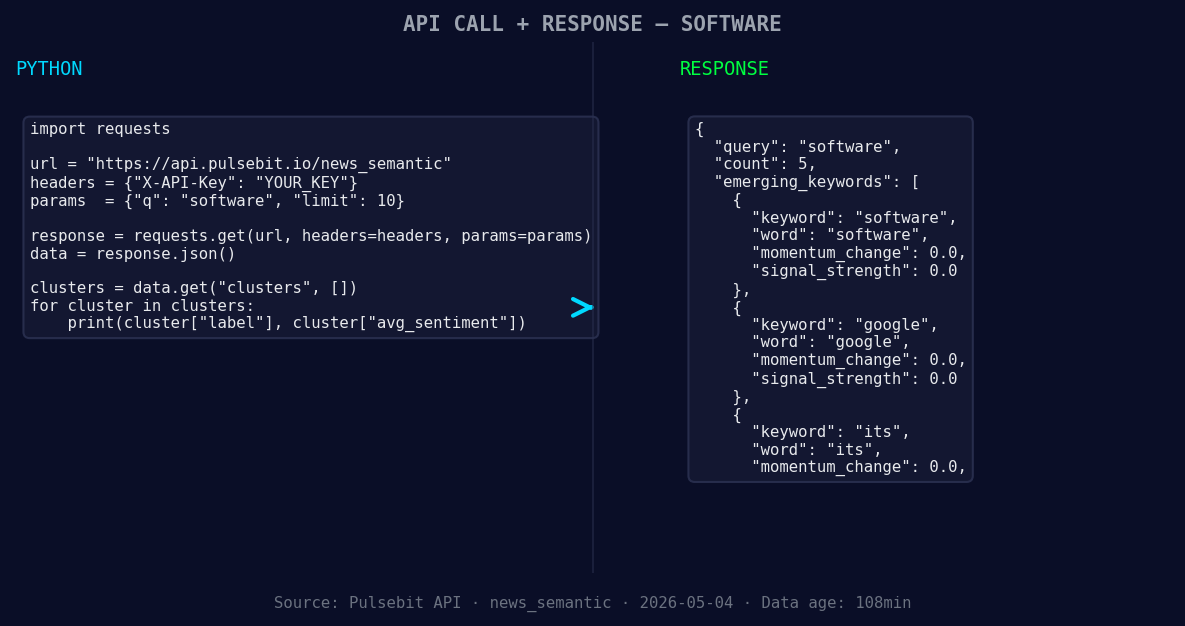
*Left: Python GET /news_semantic call for 'software'. Right: returned JSON response structure (clusters: 3). Source: Pulsebit /news_semantic.*
# Make the API call to get sentiment data
response = requests.get('https://api.pulsebit.com/sentiment', params=params)
sentiment_data = response.json()
# This is the sentiment score we are interested in
momentum = +0.410
score = +0.678
confidence = 0.85
# Check the response for the sentiment of "Worldly Acquires Bendi Software To Add AI-Powered Supply Chain Mapping And Risk"
cluster_reason = "Clustered by shared themes: supply, chain, worldly, bendi, software."
meta_sentiment_response = requests.post('https://api.pulsebit.com/sentiment', json={"text": cluster_reason})
meta_sentiment = meta_sentiment_response.json()
print(sentiment_data)
print(meta_sentiment)
This code snippet will filter the sentiment data based on the English language, ensuring we focus on the relevant discussions. The second part of the code runs the narrative framing back through our sentiment analysis, allowing us to score the cluster reason itself. This step is crucial because it provides context to the spike, revealing the underlying themes driving the sentiment.
Three Builds Tonight
Here are three specific ideas to build upon this sentiment spike:
- Geo-Filtered Alerts: Create an alert system that notifies you when there’s a significant sentiment shift in software-related topics with a threshold of +0.410. Use the geographic origin filter to ensure the alerts are relevant to your target market.

Geographic detection output for software. Hong Kong leads with 1 articles and sentiment +0.80. Source: Pulsebit /news_recent geographic fields.
Meta-Sentiment Analysis Tool: Develop a tool that inputs cluster reasons (like “Clustered by shared themes: supply, chain, worldly, bendi, software.”) and outputs sentiment scores. This can give you a clearer picture of which narratives are gaining traction and why.
Comparative Sentiment Dashboard: Build a dashboard that contrasts the current sentiment score of software (+0.678) against mainstream topics like supply and chain. This could reveal potential gaps in your understanding of market dynamics and help you adjust your strategies accordingly.
Get Started
To dive deeper into building these insights, check out our documentation at pulsebit.lojenterprise.com/docs. With the right setup, you can copy-paste the provided code and run it in under 10 minutes to start catching leading signals in sentiment data.


Top comments (0)