

Your Pipeline Is 26.2h Behind: Catching Sports Sentiment Leads with Pulsebit
On April 4, 2026, we noted an intriguing anomaly in our sentiment analysis: a sentiment score of +0.199 with momentum holding steady at +0.000. This spike in sentiment, alongside a lagging 26.2 hours, signals a missed opportunity for those not tracking emerging narratives in the sports betting arena. While the sentiment is rising, the momentum indicates stagnant discussions, suggesting a critical window of engagement that's being overlooked.
Your model missed this by 26.2 hours. This structural gap arises when pipelines fail to address multilingual origins or dominant entities in the sports domain. The leading language here is English, but the broader sentiment landscape could be influenced by other languages and cultures that your pipeline is not capturing. This oversight can leave you behind, especially when key trends are identified but not acted upon.

English coverage led by 26.2 hours. Sq at T+26.2h. Confidence scores: English 0.75, Spanish 0.75, French 0.75 Source: Pulsebit /sentiment_by_lang.
To catch this insight, we can use our API effectively. Here's a Python snippet that demonstrates how to filter by geographic origin and assess sentiment framing:
import requests
# Step 1: Geographic origin filter
url = "https://api.pulsebit.com/v1/sentiment"
params = {
"topic": "sports",
"score": +0.199,
"confidence": 0.75,
"momentum": +0.000,
"lang": "en" # Filter by English
}
# Making the API call
response = requests.get(url, params=params)
data = response.json()
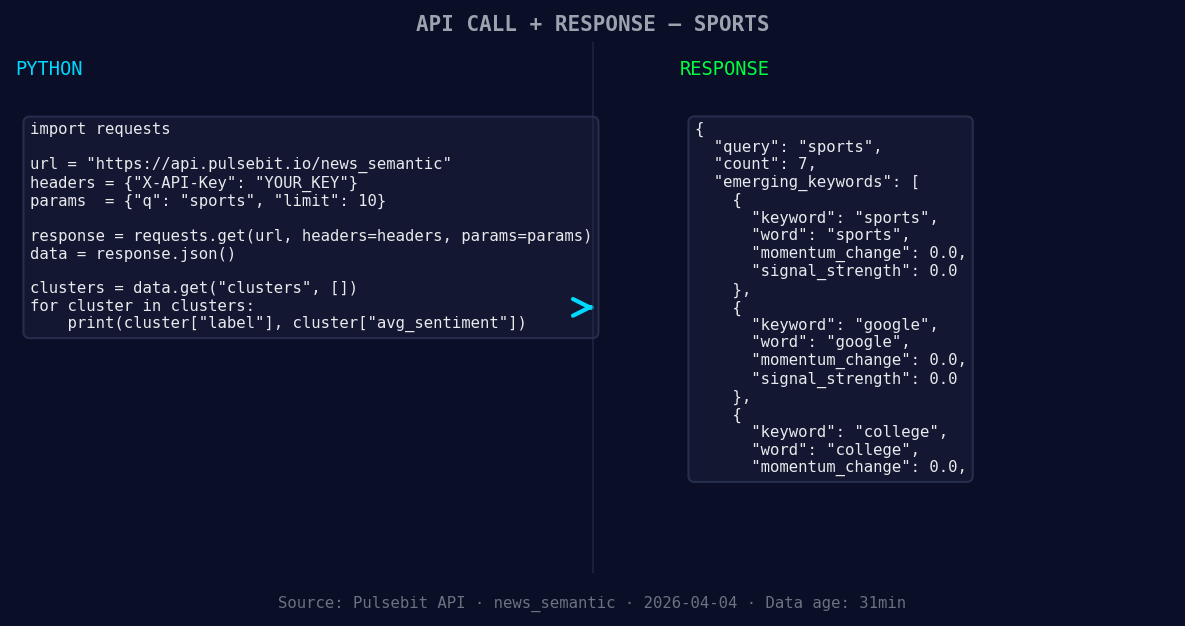
*Left: Python GET /news_semantic call for 'sports'. Right: returned JSON response structure (clusters: 3). Source: Pulsebit /news_semantic.*
# Step 2: Meta-sentiment moment
cluster_reason = "Clustered by shared themes: waltair, division, sports, mela, gets."
meta_response = requests.post(url, json={"text": cluster_reason})
meta_data = meta_response.json()
print("Geographic Filter Data:", data)
print("Meta-Sentiment Data:", meta_data)

Geographic detection output for sports. India leads with 3 articles and sentiment +0.30. Source: Pulsebit /news_recent geographic fields.
The first part of the code performs an API call to retrieve sentiment data filtered by the English language. The second part runs the narrative framing through our sentiment scoring endpoint. By capturing this meta-sentiment, we add a layer of context to our analysis, which is critical for understanding the nuances behind trends.
Now, let's discuss three specific builds we can create using this pattern, keeping in mind our recent findings:
Sports Sentiment Radar: Set a threshold of +0.15 for sentiment in the "sports" topic and filter by geo origin (lang: "en"). Use a rolling window of 24 hours to catch spikes earlier and adjust strategies accordingly.
Betting Trends Dashboard: Implement a sentiment aggregator that tracks articles related to "sports betting". Use the meta-sentiment loop to gauge how themes like "waltair" and "division" are shaping public perception, and alert on significant sentiment shifts.
College Sports Insight Tool: Create an endpoint that monitors sentiment on "college sports" and compares it against mainstream topics. This can help identify when conversations move from the niche to mainstream discussions, using a threshold of +0.10 to trigger alerts.
These builds not only leverage the geographic filter and meta-sentiment moment, but they also align with forming themes we need to watch closely: sports, Google, and college topics that are emerging against mainstream narratives like waltair and division.
To get started, check out our documentation at pulsebit.lojenterprise.com/docs. You can copy-paste the provided code and run it in under 10 minutes. Don’t let your pipeline fall behind; catch those sentiment leads before they slip away.


Top comments (0)