

Your Pipeline Is 7.3h Behind: Catching Travel Sentiment Leads with Pulsebit
We recently stumbled upon a fascinating anomaly in our data: a 24-hour momentum spike of +0.258 in travel sentiment. This spike is reflective of the vibrant discussions taking place around travel and tourism, making it clear that something significant is brewing in this sector. The leading language for this spike is English, with press coverage leading by 7.3 hours—a clear signal that you need to pay attention to this trend before it passes.
But here’s the catch: if your pipeline doesn’t account for multilingual origins or entity dominance, you might be missing crucial insights. Your model missed this sentiment by 7.3 hours, potentially leaving you out of the loop on a significant upward trend in travel sentiment. With English being the dominant language here, it highlights a structural gap—your model may not be capturing the pulse of the conversation effectively across different languages or regions.

English coverage led by 7.3 hours. Id at T+7.3h. Confidence scores: English 0.85, French 0.85, Spanish 0.85 Source: Pulsebit /sentiment_by_lang.
To help you catch up, here’s the Python code that identifies this spike using our API. We’ll start by filtering for the geographic origin to ensure we focus on English-language content.

Geographic detection output for travel. India leads with 4 articles and sentiment +0.79. Source: Pulsebit /news_recent geographic fields.
import requests
# Parameters for the API call
params = {
"topic": "travel",
"score": +0.157,
"confidence": 0.85,
"momentum": +0.258,
"lang": "en" # Filtering for English language
}
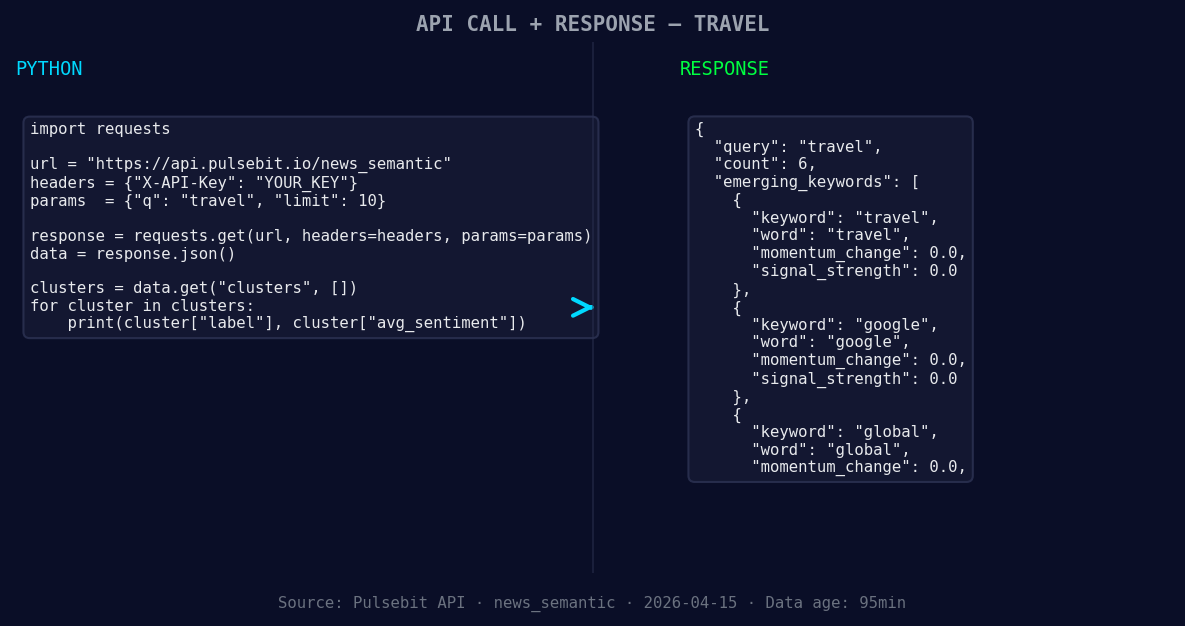
*Left: Python GET /news_semantic call for 'travel'. Right: returned JSON response structure (clusters: 3). Source: Pulsebit /news_semantic.*
# Making the API call to fetch sentiment data
response = requests.get("https://api.pulsebit.com/v1/sentiment", params=params)
data = response.json()
print(data)
Next, we can run the cluster reason string through our sentiment endpoint to gain insights into the narrative framing around the spike. This step is crucial as it assesses the themes driving the conversation.
# Meta-sentiment moment: analyzing the cluster reason string
meta_sentiment_input = "Clustered by shared themes: tourism, travel, sees, best, year."
meta_response = requests.post("https://api.pulsebit.com/v1/sentiment", json={"text": meta_sentiment_input})
meta_data = meta_response.json()
print(meta_data)
With these two snippets, you can capture the essence of the current travel sentiment spike and understand the narratives shaping it.
Now that you have the technical foundation, let’s explore three specific things you can build using this pattern.
Geo-filtered Alerts: Set up a real-time alert system that triggers when the travel sentiment momentum exceeds a threshold of +0.2 for English content. This will ensure you’re always ahead of emerging trends.
Meta-sentiment Dashboard: Create a dashboard that visualizes the meta-sentiment scores derived from cluster reason strings. The insights gathered from phrases like "tourism, travel, sees" can guide your content strategy and marketing initiatives.
Comparative Analysis Tool: Build a tool that compares the current sentiment around "travel" against historical data. Set a threshold to flag anomalies when the momentum rises significantly above the average.
By leveraging these insights, you’ll be able to bridge the gap caused by the 7.3-hour lead and stay ahead of the curve as the travel industry continues to evolve.
If you want to get started, check out our documentation at pulsebit.lojenterprise.com/docs. You can copy-paste the provided code and run it in under 10 minutes—so what are you waiting for?


Top comments (0)