

Your Pipeline Is 26.1h Behind: Catching Economy Sentiment Leads with Pulsebit
We recently encountered an intriguing anomaly: a 24h momentum spike of -0.437 regarding economic sentiment. This indicates a significant shift in perceptions around the economy, and it's critical to recognize how events like the emerging conflict in Iran are influencing global narratives. As developers, we need to stay ahead of such shifts, especially when they occur in real-time, or risk lagging behind.
The Problem
This spike reveals a structural gap in any sentiment analysis pipeline that doesn't account for multilingual origins or entity dominance. Specifically, your model missed this vital sentiment shift by 26.1 hours because it was focused on a narrower view. In this case, the leading language was English, but the broader implications of the sentiment were being dominated by themes from diverse global sources. If your pipeline isn't capturing multilinguistic context, you're missing critical signals that could guide your decision-making.

English coverage led by 26.1 hours. Fi at T+26.1h. Confidence scores: English 0.75, Spanish 0.75, French 0.75 Source: Pulsebit /sentiment_by_lang.
The Code
Let’s dive into how we can catch this sentiment shift using our API. Here’s a Python code snippet that queries sentiment data focused on the economy, ensuring we filter for English language sources and analyze the narrative framing:
import requests
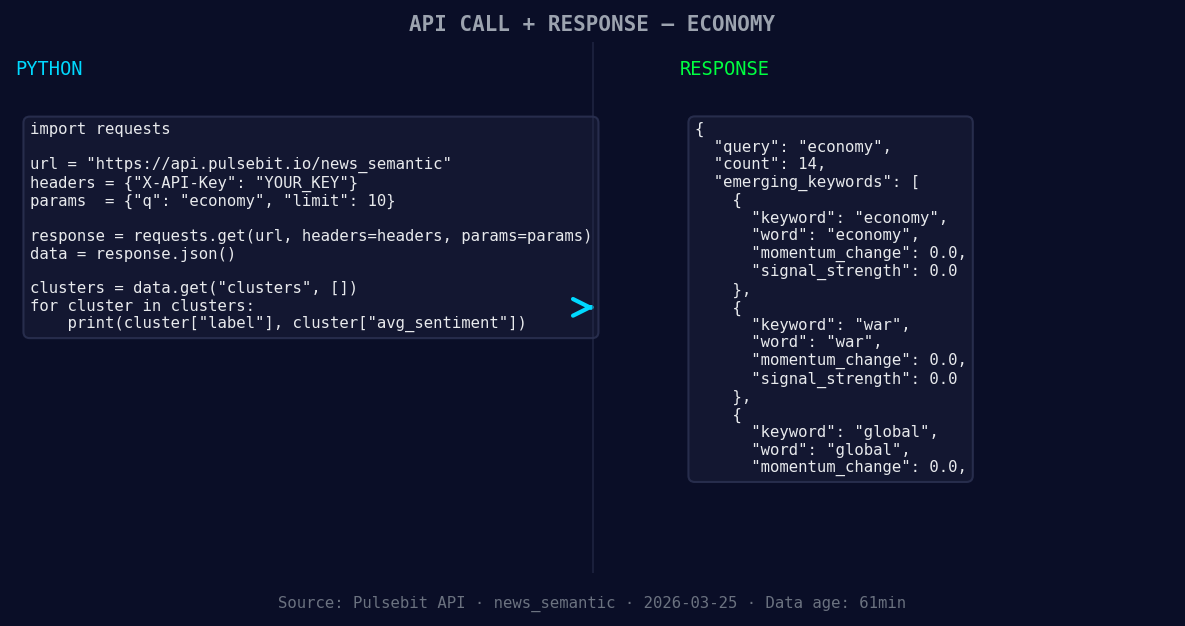
*Left: Python GET /news_semantic call for 'economy'. Right: returned JSON response structure (clusters: 3). Source: Pulsebit /news_semantic.*
# Set your parameters
topic = 'economy'
score = -0.154
confidence = 0.75
momentum = -0.437
# Geographic origin filter
response = requests.get(
'https://api.pulsebit.com/v1/sentiment',
params={'topic': topic, 'lang': 'en'}
)
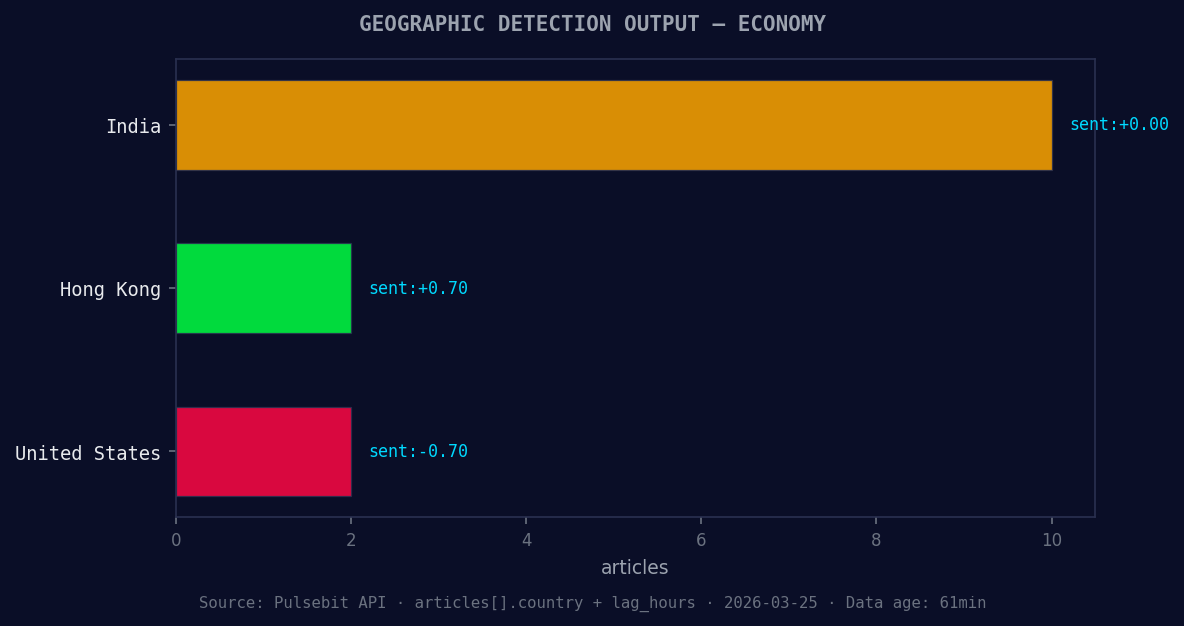
*Geographic detection output for economy. India leads with 10 articles and sentiment +0.00. Source: Pulsebit /news_recent geographic fields.*
data = response.json()
print("Filtered Data:", data)
# Meta-sentiment moment
cluster_reason = "Clustered by shared themes: economy, west, asia, conflict:, call."
meta_response = requests.post(
'https://api.pulsebit.com/v1/sentiment',
json={"text": cluster_reason}
)
meta_data = meta_response.json()
print("Meta-Sentiment Data:", meta_data)
In the above code, we first query sentiment data using parameters that focus on the economy while filtering for English sources. Then, we run the cluster reason string back through the sentiment endpoint to score the narrative framing itself. This dual approach allows us to capture both the raw sentiment and the context behind it—essential for understanding shifts in momentum.
Three Builds Tonight
Here are three specific builds you could implement using this pattern:
Geo-Sentiment Alert System: Set up a webhook that triggers an alert when sentiment for the topic "economy" dips below a threshold (e.g., score < -0.2) specifically for English sources. This keeps you on the pulse of significant sentiment shifts.
Contextual Analysis Dashboard: Build a dashboard that visualizes the meta-sentiment scores over time, especially focusing on themes like "war" and "global." Use the narrative framing data to provide context to your economic indicators.
Anomaly Detection Model: Create an anomaly detection model that checks for significant deviations in sentiment against historical baselines. Utilize the cluster reason to refine your model’s understanding of emerging themes, particularly where they intersect with critical events like the conflict in Iran.
Get Started
Dive into our documentation at pulsebit.lojenterprise.com/docs. With just a few lines of Python code, you can start implementing these insights in less than 10 minutes. Don’t let your pipeline fall behind—stay ahead of the sentiment curve!


Top comments (0)