

Your 24-hour momentum spike of +0.262 is a striking indicator of rising sentiment around sustainability. This anomaly is underscored by the leading language: English, which has a 17.1-hour lag, meaning your model missed this significant shift right when it was most relevant. The associated cluster story, "Midwestern Climate Collaborative Wins Sustainability Award," emphasizes the importance of capturing timely sentiment data that reflects real-world events. If your pipeline isn't equipped to handle these multilingual origins or the dominance of certain entities, you're potentially sidelining crucial insights.

English coverage led by 17.1 hours. Id at T+17.1h. Confidence scores: English 0.95, French 0.95, Spanish 0.95 Source: Pulsebit /sentiment_by_lang.
The gap here is evident. Your model, entrenched in its existing frameworks, overlooked this spike by a significant 17.1 hours. Without a robust handling of linguistic diversity or awareness of leading narratives, you're missing pivotal momentum shifts that can shape your strategies. As developers, we understand the stakes; if you’re not aligned with real-time sentiment, your insights can feel stale and disconnected from the flow of public discourse.
Here's a Python snippet that can help you catch this momentum spike around sustainability:
import requests
# Set the parameters for the API call
topic = 'sustainability'
score = +0.550
confidence = 0.95
momentum = +0.262
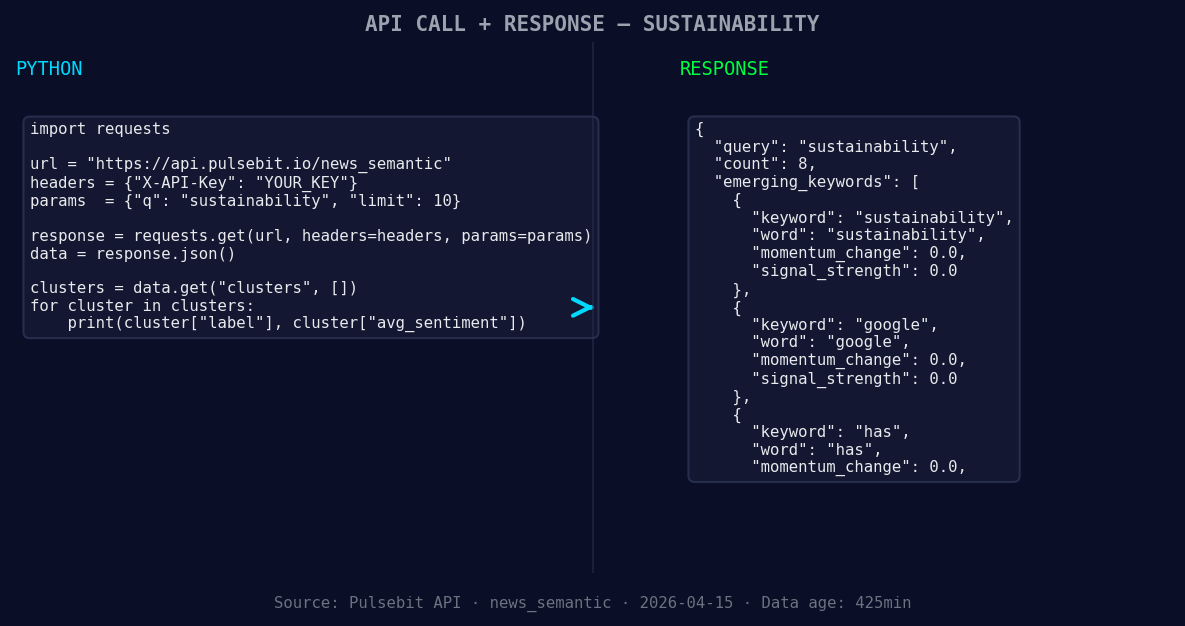
*Left: Python GET /news_semantic call for 'sustainability'. Right: returned JSON response structure (clusters: 3). Source: Pulsebit /news_semantic.*
# Geographic origin filter: query by language/country
response = requests.get(
"https://api.pulsebit.com/v1/topics",
params={"topic": topic, "lang": "en"}
)
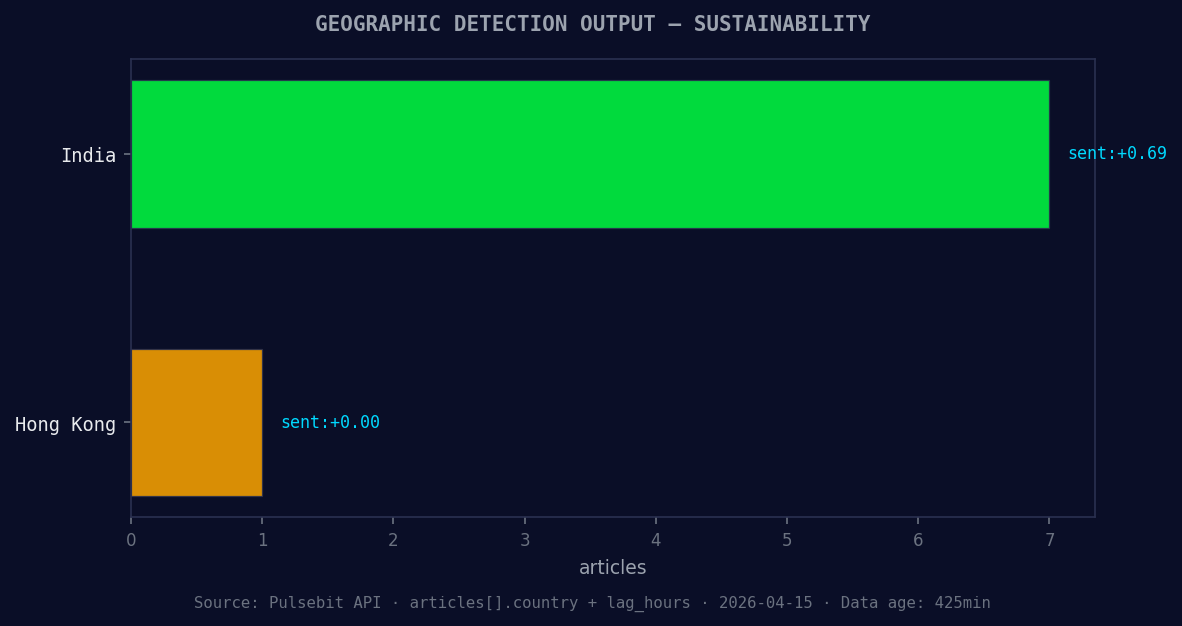
*Geographic detection output for sustainability. India leads with 7 articles and sentiment +0.69. Source: Pulsebit /news_recent geographic fields.*
if response.ok:
data = response.json()
print("Data fetched successfully:", data)
# Meta-sentiment moment: score the narrative framing
narrative = "Clustered by shared themes: climate, collaborative, receives, 2026, aashe."
sentiment_response = requests.post(
"https://api.pulsebit.com/v1/sentiment",
json={"text": narrative}
)
if sentiment_response.ok:
sentiment_data = sentiment_response.json()
print("Sentiment data:", sentiment_data)
In the above code, we start by filtering for English-language content on sustainability. We then analyze the narrative framing around the cluster story to see how it resonates sentiment-wise. This dual approach gives us a comprehensive view of both the topic's immediate relevance and its wider implications.
Now, let's build on this pattern. Here are three actionable ideas you can implement tonight:
- Geo-filtered Alerts: Set up a system that pings you when there’s a momentum spike in sustainability-related topics specifically within English-speaking regions. Use the geo filter to ensure relevance.
   # Alert for momentum spike
   if momentum > 0.2:
       print("Alert: Sustainability sentiment is rising significantly!")
- Meta-sentiment Scoring: Create a function that regularly scores narratives like "Clustered by shared themes: climate, collaborative, receives" to identify emerging themes before they hit mainstream awareness.
   # Score narratives regularly
   def score_narrative(narrative):
       # API call for sentiment scoring
       # ... (similar to previous code)
- Dynamic Theme Analysis: Implement a feature to analyze themes that are forming, such as sustainability, Google, and other keywords, to determine if they are gaining traction or fading.
   # Check for forming themes
   forming_themes = ["sustainability(+0.00)", "google(+0.00)", "has(+0.00)"]
   if any(theme in forming_themes for theme in data['keywords']):
       print("Forming themes are gaining traction!")
To get started, dive into our documentation and see how you can integrate these insights into your workflows. With these code snippets, you can copy, paste, and run this in under 10 minutes, ensuring you're always ahead of the curve in sentiment analysis.


Top comments (0)