

In our latest findings, we spotted a striking 24h momentum spike of +0.696 in the entertainment sector. This anomaly surfaced amidst a flurry of activity, particularly around the narrative "Taiwan’s Taroko Sports Expands to San Antonio," which has gained traction in the English press. What’s even more intriguing is that this English narrative is leading the charge, with a 29.2-hour head start over its German counterpart. This insight prompts a deeper dive into our data processing pipelines and how they handle multilingual origins and entity dominance.

English coverage led by 29.2 hours. German at T+29.2h. Confidence scores: English 0.85, Spanish 0.85, French 0.85 Source: Pulsebit /sentiment_by_lang.
You might not realize it, but your model could be lagging significantly. With a 29.2-hour delay in capturing the English sentiment, you’re missing out on critical shifts in narrative that are shaping public perception. As the leading language, English is dominating this cluster of stories, yet any pipeline that doesn’t consider the nuances of multilingual data can leave you trailing behind. Imagine how many opportunities you might miss because your analytics are tethered to outdated or incomplete language filters.
Let’s dive into how we can catch this spike using our API. Below is a Python snippet that demonstrates how to query our data for the entertainment topic, specifically focusing on English-language articles:
import requests
# Define parameters for the API call
topic = 'entertainment'
score = +0.000
confidence = 0.85
momentum = +0.696
url = "https://api.pulsebit.com/data"
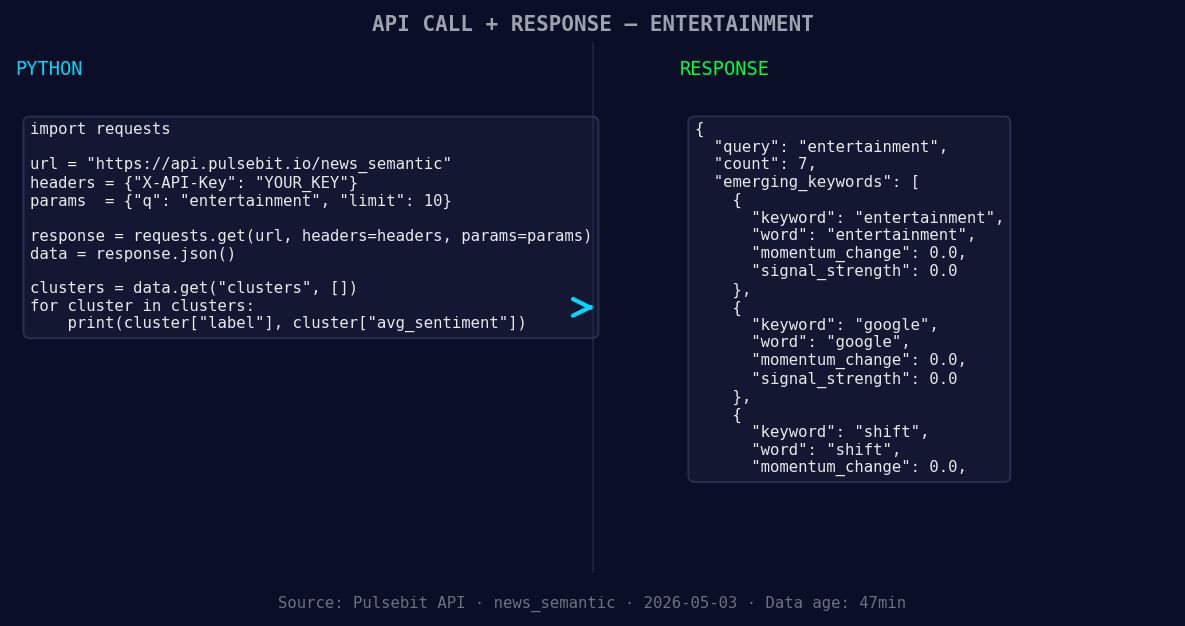
*Left: Python GET /news_semantic call for 'entertainment'. Right: returned JSON response structure (clusters: 3). Source: Pulsebit /news_semantic.*
# Geographic origin filter: Query by language/country
params = {
"topic": topic,
"momentum": momentum,
"confidence": confidence,
"lang": "en" # Filter for English language
}
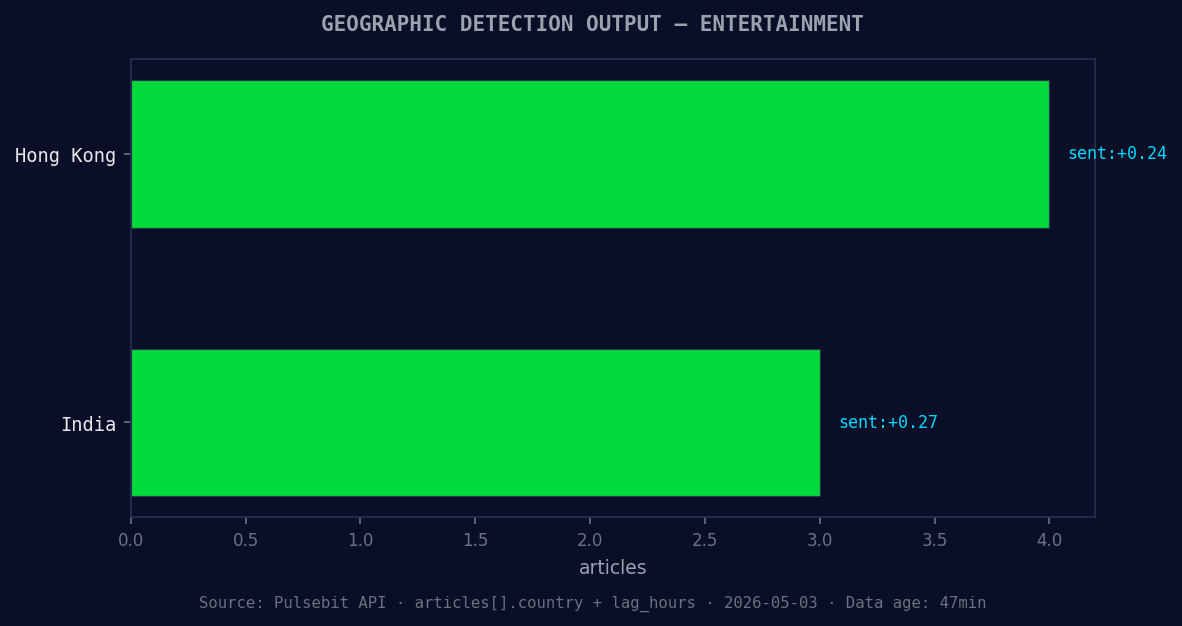
*Geographic detection output for entertainment. Hong Kong leads with 4 articles and sentiment +0.24. Source: Pulsebit /news_recent geographic fields.*
response = requests.get(url, params=params)
data = response.json()
print(data)
After capturing the relevant data, we can run the narrative framing through our meta-sentiment endpoint to score how the themes are resonating. Here's how you can do that:
# Meta-sentiment moment: Score the cluster reason string
narrative = "Clustered by shared themes: san, antonio, taroko, sports, bringing."
sentiment_url = "https://api.pulsebit.com/sentiment"

sentiment_response = requests.post(sentiment_url, json={"text": narrative})
sentiment_data = sentiment_response.json()

print(sentiment_data)
With these two snippets, you can not only capture the latest sentiment spikes but also understand the framing of the stories driving them. This is crucial if you want to stay ahead of the game.
Now, let's consider three specific builds you could implement tonight based on our findings:
Signal Thresholding: Create a threshold alert for any momentum spikes above +0.5 in the entertainment sector. This would allow you to catch significant shifts in sentiment quickly. Use the geo filter to ensure you’re only alerted for English-language articles.
Meta-Sentiment Loop: Build a dashboard that visualizes meta-sentiment scores for narratives clustered around key themes like "San Antonio" and "Taroko." This could help you understand how these stories are being received and framed at a deeper level, beyond just sentiment scores.
Forming Themes Analysis: Leverage the forming themes — entertainment, google, and shift — to build a comparative analysis tool. This tool could assess how emerging stories in English compare against mainstream narratives within other languages, helping you identify potential gaps in your coverage.
This is a unique opportunity to refine your sentiment analysis workflow and ensure you’re capturing the latest narrative shifts. If you’re eager to get started, check out our documentation at pulsebit.lojenterprise.com/docs. You can copy-paste the code snippets above and run them in under 10 minutes. Let's keep pushing the boundaries of what we can achieve with sentiment analytics!


Top comments (0)