

Your Pipeline Is 21.3h Behind: Catching Climate Sentiment Leads with Pulsebit
We just uncovered a striking anomaly: a 24h momentum spike of +0.793 in climate sentiment. This spike reveals a sudden surge in discussions around climate, particularly with the narrative that "Climate experts say spring is coming earlier." With two articles contributing to this momentum, it's clear that there's a significant shift happening right now in the way climate is being perceived.
But here’s the catch: your model likely missed this by over 21 hours. If your pipeline doesn't account for multilingual origins or the dominance of certain entities, you could be lagging behind critical insights. The leading language here is English, and if your analysis doesn’t capture the nuances across different languages and regions, you'll miss out on impactful sentiment shifts.

English coverage led by 21.3 hours. Sv at T+21.3h. Confidence scores: English 0.85, Spanish 0.85, French 0.85 Source: Pulsebit /sentiment_by_lang.
To capitalize on this spike, we can leverage our API to quickly catch these trends. Here’s how to do it in Python:
import requests
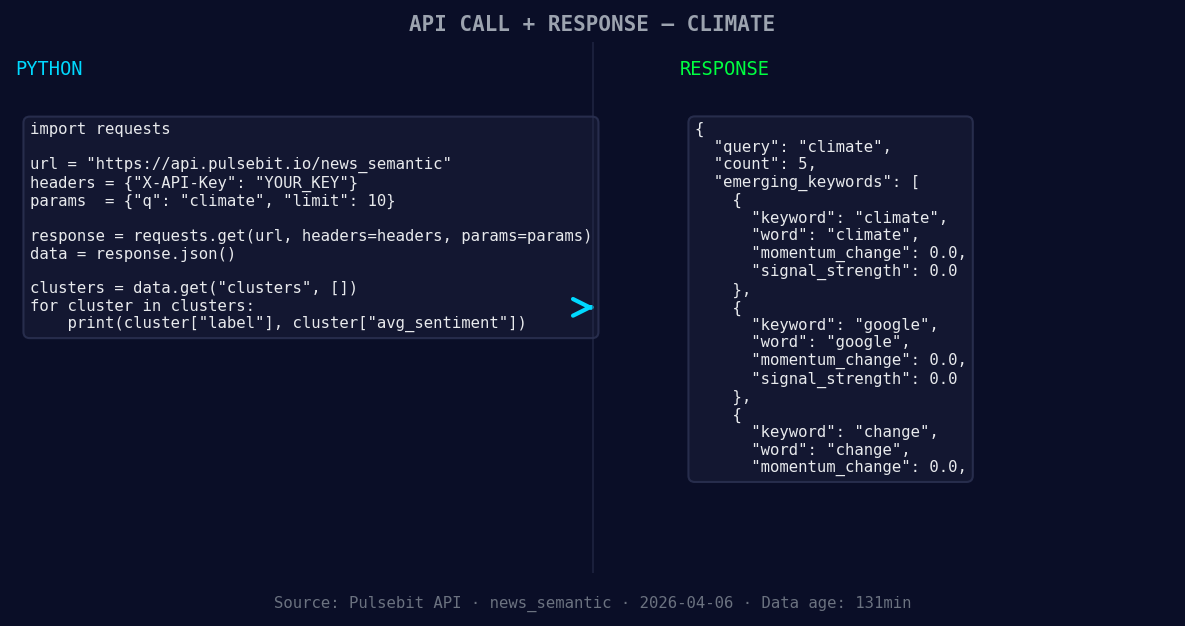
*Left: Python GET /news_semantic call for 'climate'. Right: returned JSON response structure (clusters: 3). Source: Pulsebit /news_semantic.*
# Define the parameters
topic = 'climate'
score = +0.700
confidence = 0.85
momentum = +0.793
lang = 'en'
# Geographic origin filter: query by language/country
response = requests.get('https://api.pulsebit.com/v1/sentiment', params={
'topic': topic,
'lang': lang,
'score': score,
'confidence': confidence,
'momentum': momentum
})
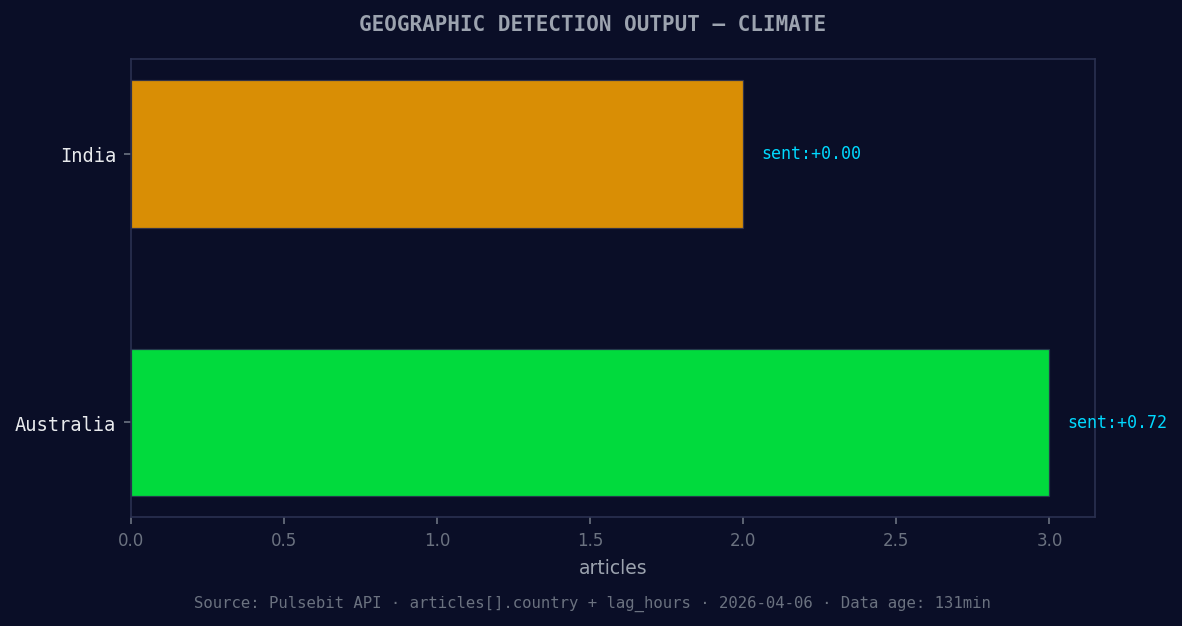
*Geographic detection output for climate. India leads with 2 articles and sentiment +0.00. Source: Pulsebit /news_recent geographic fields.*
print(response.json())
The above code fetches sentiment data filtered by English language, allowing you to hone in on the most relevant insights. Next, we’ll dive deeper into the framing of these narratives by running the cluster reason string back through our sentiment endpoint to score the narrative framing itself.
# Meta-sentiment moment: run the cluster reason string
cluster_reason = "Clustered by shared themes: weighing, whether, soften, climate, laws."
meta_response = requests.post('https://api.pulsebit.com/v1/sentiment', json={
    'text': cluster_reason,
    'lang': lang
})

print(meta_response.json())
This sends the cluster reason string to our endpoint, allowing you to assess how the discourse is shaping up. It’s crucial to analyze how these narratives are framed, especially when they intersect with broader themes like climate change, which is forming a gap against mainstream discussions.
With this newfound understanding, here are three specific builds you can implement based on this pattern:
Geo-Filtered Climate Insights: Use the geographic origin filter to set a signal threshold. For example, trigger alerts when sentiment scores for 'climate' exceed +0.700 in English articles from the last 24 hours. This will help you catch spikes early.
Meta-Sentiment Loop: Establish an automated pipeline that runs the cluster reason through the meta-sentiment loop whenever a momentum spike exceeds +0.750. This will ensure you're not just reacting to sentiment, but also understanding the underlying narratives.
Forming Themes Tracker: Construct a dashboard that tracks forming themes like climate, google, and change versus mainstream narratives. Set a threshold of sentiment scores to highlight when these themes diverge, allowing you to anticipate shifts in public discourse.
If you want to implement this quickly, head over to our documentation at pulsebit.lojenterprise.com/docs. You can copy and paste this code and be up and running in under 10 minutes. Don’t let your pipeline stay behind—catch these insights as they unfold!


Top comments (0)