

Your Pipeline Is 25.0h Behind: Catching Sports Sentiment Leads with Pulsebit
On May 6, 2026, we discovered an interesting anomaly in the sentiment data surrounding the topic of sports. With a sentiment score of +0.200 and momentum flat at +0.000, the leading language was Spanish, showing a clear dominance with a 25.0h lead. This finding is particularly noteworthy given its potential implications for real-time data analysis and decision-making. The clustered story titled "H.S. sports for Saturday, May 9 - WCAX" comprised two articles, revealing a rich vein of sentiment that could have been easily overlooked.
If your pipeline doesn’t effectively handle multilingual origins or recognize entity dominance, you might have missed this spike by a staggering 25 hours. Imagine the ramifications of such a gap: if you’re relying solely on English-language sentiment, you could be blind to emerging trends in regions where Spanish is prevalent. Your model would be missing critical insights from a significant portion of the audience, potentially leading to misguided strategies or delayed responses.

Spanish coverage led by 25.0 hours. Id at T+25.0h. Confidence scores: Spanish 0.75, English 0.75, Sv 0.75 Source: Pulsebit /sentiment_by_lang.
Here's how we can catch this anomaly using our API in a Python script:
import requests
# Set parameters for the API call
topic = 'sports'
score = +0.200
confidence = 0.75
momentum = +0.000
lang = 'sp'
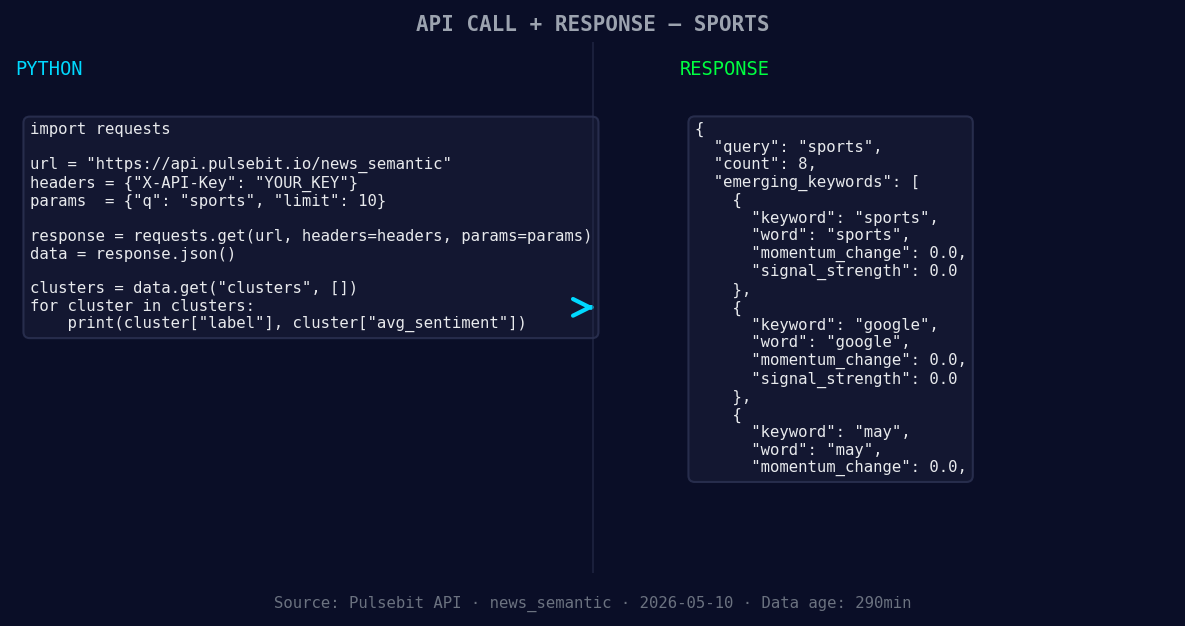
*Left: Python GET /news_semantic call for 'sports'. Right: returned JSON response structure (clusters: 3). Source: Pulsebit /news_semantic.*
# Geographic origin filter: query by language
response = requests.get(f'https://api.pulsebit.com/sentiment?topic={topic}&lang={lang}')
sentiment_data = response.json()
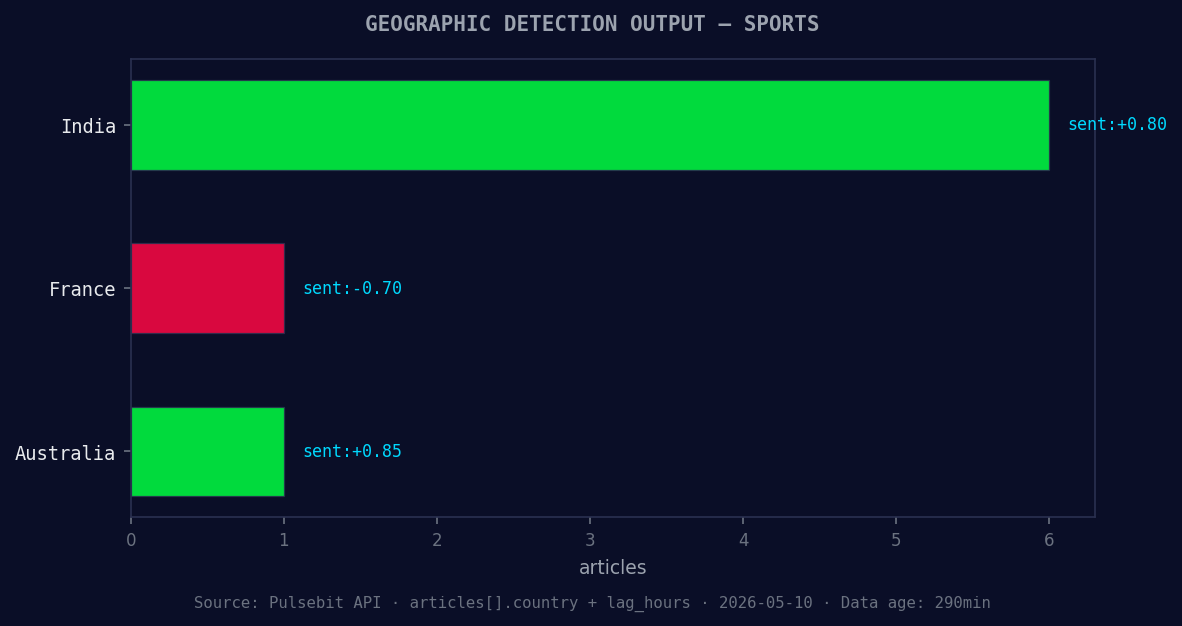
*Geographic detection output for sports. India leads with 6 articles and sentiment +0.80. Source: Pulsebit /news_recent geographic fields.*
# Meta-sentiment moment: analyzing narrative framing
cluster_reason = "Clustered by shared themes: construction, 9-crore, paralympic, complex, coimbato"
meta_response = requests.post('https://api.pulsebit.com/sentiment', json={'input': cluster_reason})
meta_sentiment_data = meta_response.json()
print(sentiment_data)
print(meta_sentiment_data)
In this code, we first filter the sentiment data based on the Spanish language with our geographic origin filter. This ensures we are capturing the relevant insights from the correct demographic. Then, we take the narrative framing from the clustered stories and run it back through our sentiment analysis endpoint to gauge how well the narrative itself resonates. This second step is crucial for understanding the broader context of the sentiment data, and it reveals how the themes—like construction and paralympic events—might be shaping perceptions in the sports domain.
Now that we’ve caught this anomaly, here are three specific builds you can implement tonight using this pattern:
Signal Tracking: Set a threshold for sentiment changes in sports. For instance, trigger alerts when sentiment exceeds +0.150 in Spanish-speaking regions. This can help you react faster to trending topics that may affect your business decisions.
Geo Filter Implementation: Utilize the geographic origin filter to monitor sentiment shifts in specific locales. For example, if sports sentiment rises in Spain or Latin America, adjust your marketing strategies accordingly to capitalize on this uptick.
Meta-Sentiment Analysis: Integrate the meta-sentiment loop into your reporting dashboard. Analyze how narratives around sports are framed, especially in relation to mainstream topics like construction and the paralympic movement. This might reveal hidden correlations that could inform your content strategy.
You can dive deeper into building these features by visiting our documentation at pulsebit.lojenterprise.com/docs. The best part? You can copy-paste and run this in under 10 minutes. Let’s not let 25 hours of insight slip by unnoticed again.


Top comments (0)