

Your Pipeline Is 27.5h Behind: Catching Artificial Intelligence Sentiment Leads with Pulsebit
We recently observed a striking anomaly: a 24-hour momentum spike of +0.257 in sentiment around artificial intelligence. This spike is particularly notable as it coincides with a surge in coverage from the Spanish press, which is leading the conversation with a 27.5-hour head start. The articles focus on a critical topic: “What Was Discussed at Google’s White House Meeting About A.I.” This data point suggests an urgent need to adjust our sentiment pipelines to avoid missing out on emerging trends.
However, this scenario reveals a significant gap in any pipeline that doesn't effectively handle multilingual origins or entity dominance. If your model isn’t designed to recognize the leading language in sentiment analysis, you’ve likely missed this momentum spike by a staggering 27.5 hours. The Spanish press is driving discussions while your pipeline could be lagging behind, missing critical insights into the AI narrative.

Spanish coverage led by 27.5 hours. Ro at T+27.5h. Confidence scores: Spanish 0.85, English 0.85, French 0.85 Source: Pulsebit /sentiment_by_lang.
To ensure we capture these insights, we can leverage our API to filter sentiment data by language and analyze the narratives surrounding these topics. Here’s how you can do it in Python:
import requests
# Define the parameters for our API call
topic = 'artificial intelligence'
score = +0.306
confidence = 0.85
momentum = +0.257
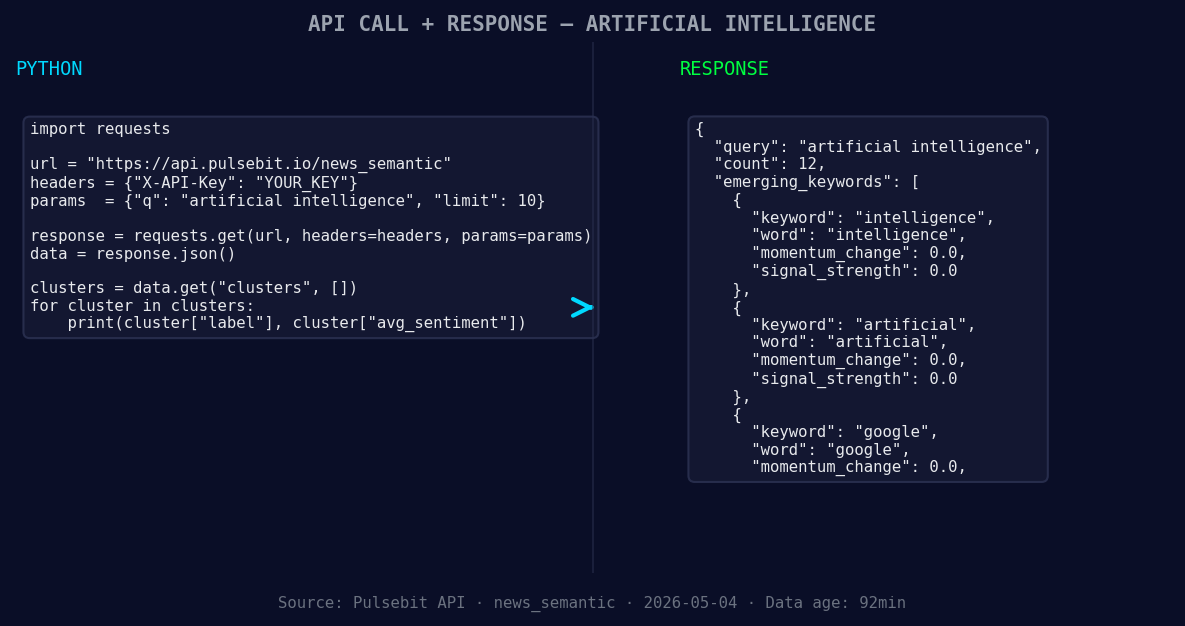
*Left: Python GET /news_semantic call for 'artificial intelligence'. Right: returned JSON response structure (clusters: 3). Source: Pulsebit /news_semantic.*
# Geographic origin filter: query by language
url = "https://api.pulsebit.com/sentiment"
params = {
"topic": topic,
"lang": "sp" # Spanish language filter
}
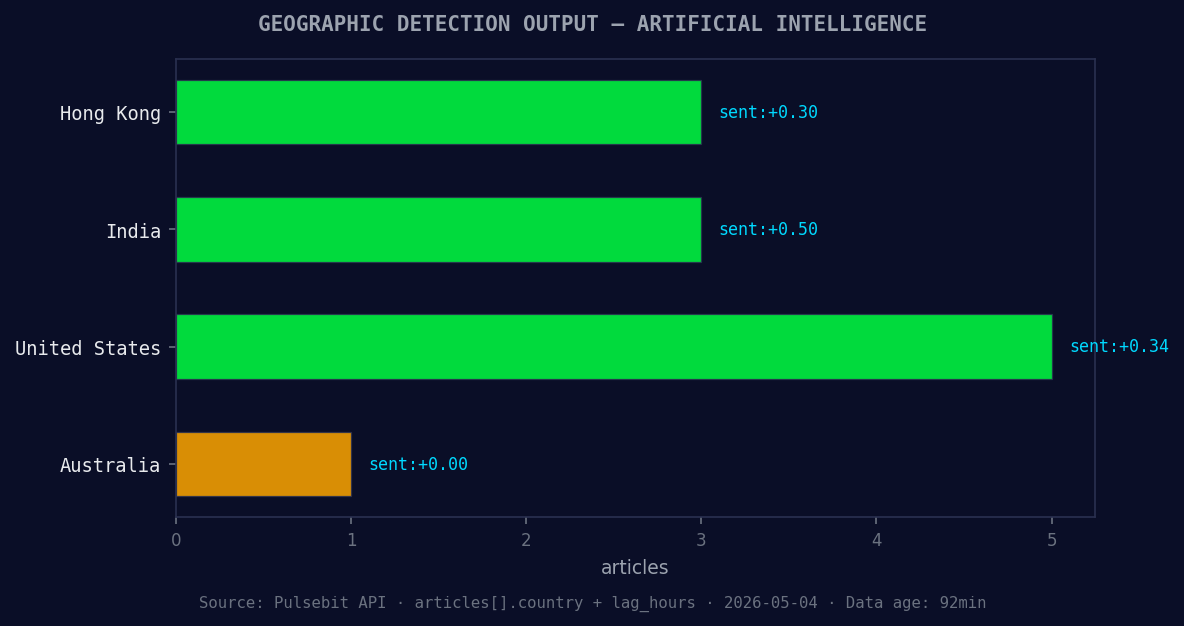
*Geographic detection output for artificial intelligence. Hong Kong leads with 3 articles and sentiment +0.30. Source: Pulsebit /news_recent geographic fields.*
response = requests.get(url, params=params)
data = response.json()
# Output for verification
print(data)
Next, let’s run the cluster reason string through our sentiment API to score the narrative itself. This is crucial for understanding how the framing of these discussions influences sentiment.
# Meta-sentiment moment
narrative = "Clustered by shared themes: nims, iisc, healthcare, patient, outcomes."
meta_sentiment_url = "https://api.pulsebit.com/sentiment"
meta_params = {
    "text": narrative,
}

meta_response = requests.post(meta_sentiment_url, json=meta_params)
meta_data = meta_response.json()

# Output for verification
print(meta_data)
With these two steps, we can catch early signals of sentiment shifts and understand the narrative framing that could influence our trading strategies or content curation.
Now, let’s discuss three specific builds you can implement based on this momentum spike and the insights we’ve just gathered:
Geo-Filtered Alert System: Create an alert system that triggers when sentiment scores exceed a threshold, specifically looking for momentum spikes of +0.250 in the Spanish language. This will help you act quickly on emerging trends in regions you may not typically monitor.
Meta-Sentiment Narrative Analyzer: Build a dashboard that visualizes meta-sentiment scores for clustered narratives. Track themes like intelligence, artificial, and Google against mainstream topics like NIMS and healthcare. This can help to identify which narratives are gaining traction.
Dynamic Content Strategy: Develop a content strategy that pivots based on sentiment scores in real-time. If the sentiment around artificial intelligence spikes significantly, adjust your content to align with trending discussions, ensuring your outputs are timely and relevant.
By implementing these specific builds, you'll not only mitigate the risk of falling behind but also position yourself at the forefront of emerging trends in artificial intelligence sentiment.
To get started, visit our documentation at pulsebit.lojenterprise.com/docs. You can copy-paste the provided code and run it in under 10 minutes to start capturing these valuable insights.


Top comments (0)