

Your Pipeline Is 12.3h Behind: Catching Human Rights Sentiment Leads with Pulsebit
We just uncovered a striking anomaly: a 24h momentum spike of -1.243. This negative momentum indicates a significant shift in sentiment surrounding human rights, particularly in the context of the upcoming FIFA World Cup and its implications amid ongoing human rights crises. The leading language for this sentiment was English, with a 12.3-hour lead time, providing us a crucial window into public discourse that could easily be missed if you're not monitoring your data effectively.
The problem here is clear. If your sentiment analysis pipeline doesn't adequately handle multilingual origins or entity dominance, you could be missing critical insights by over 12 hours. Specifically, the English press is leading the narrative with stories about the World Cup being overshadowed by human rights concerns. If your model is only processing mainstream narratives, you might still be stuck on topics like "least," "dead," and "Haiti," completely overlooking the urgent realities reflected in discussions around rights and humanity.

English coverage led by 12.3 hours. Af at T+12.3h. Confidence scores: English 0.90, Spanish 0.90, French 0.90 Source: Pulsebit /sentiment_by_lang.
Let’s dive into how we can catch this momentum shift using our API. Below is the Python code that queries recent articles in English about human rights and analyzes the sentiment around them.
import requests
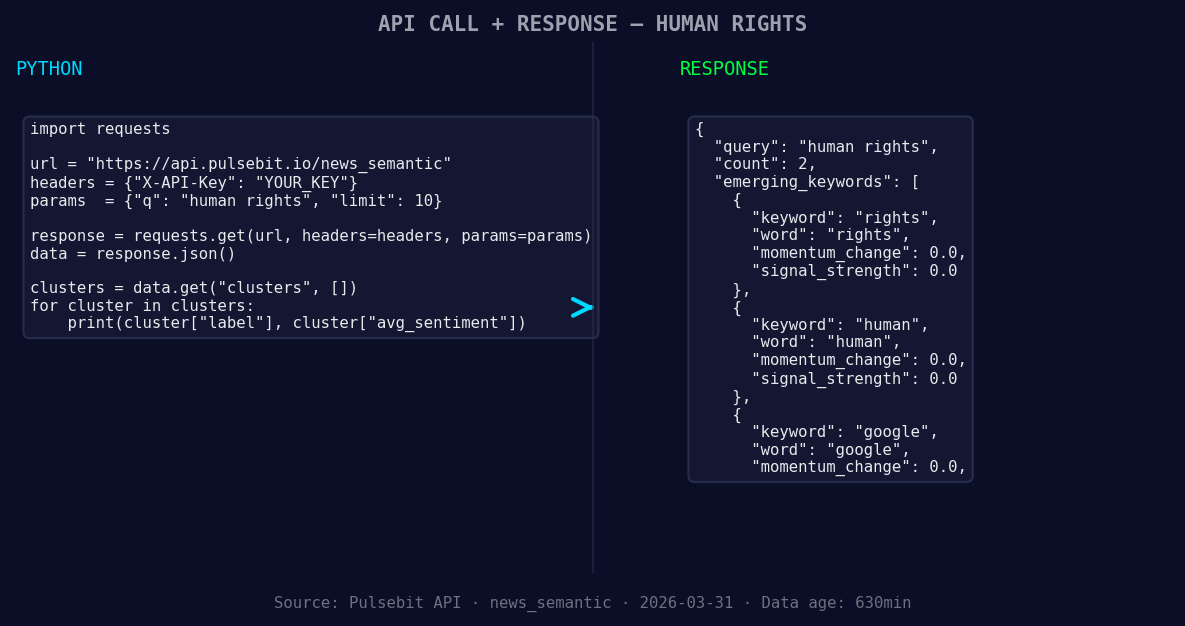
*Left: Python GET /news_semantic call for 'human rights'. Right: returned JSON response structure (clusters: 3). Source: Pulsebit /news_semantic.*
# Step 1: Geographic origin filter
url = "https://api.pulsebit.lojenterprise.com/articles"
params = {
"topic": "human rights",
"lang": "en"
}
response = requests.get(url, params=params)
data = response.json()
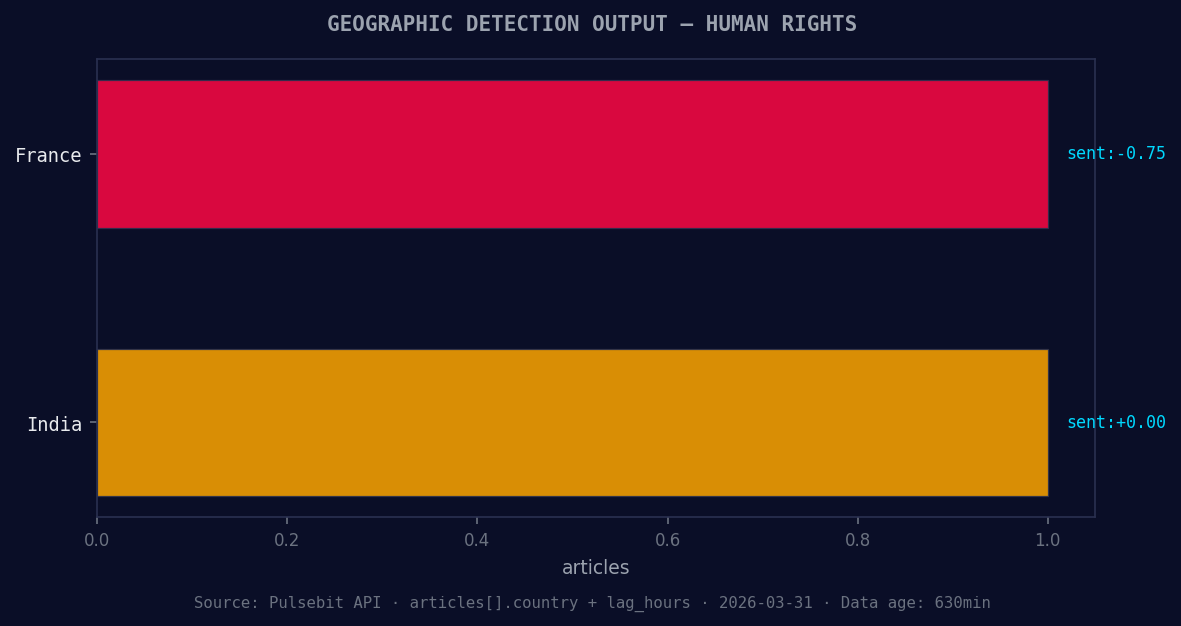
*Geographic detection output for human rights. France leads with 1 articles and sentiment -0.75. Source: Pulsebit /news_recent geographic fields.*
# Display the processed articles
print(data)
# Step 2: Meta-sentiment moment
cluster_reason = "Clustered by shared themes: least, dead, haiti, massacre, human."
sentiment_url = "https://api.pulsebit.lojenterprise.com/sentiment"
sentiment_data = {
"text": cluster_reason
}
sentiment_response = requests.post(sentiment_url, json=sentiment_data)
sentiment_result = sentiment_response.json()
# Display the sentiment score
print(sentiment_result)
In this code, we first fetch articles related to "human rights" in English, which helps us hone in on the specific narrative that’s trending. Then, we analyze the sentiment of the clustered themes using our meta-sentiment endpoint, giving us deeper insight into how these themes are framing the overall conversation.
Here are three builds you can implement with this pattern:
Real-time Language Filter: Set a signal threshold for English content from regions known for human rights discussions. For instance, if sentiment drops below a score of -0.5, initiate alerts or deeper analysis. This will help you catch narratives like the World Cup's impact by filtering out noise from unrelated discussions.
Meta-Sentiment Loop: Integrate a continuous monitoring system that runs the cluster reason strings through the sentiment endpoint every few hours. When you see forming themes like rights(+0.00) or human(+0.00) emerge, you can adjust your sentiment analysis parameters accordingly.
Dynamic Threshold Adjustment: Create a function that dynamically adjusts your sentiment thresholds based on the volume of articles processed. If you’re seeing a spike in articles related to a specific entity, like the FIFA World Cup, recalibrate your thresholds to avoid missing critical sentiment shifts.
To get started, check out our documentation at pulsebit.lojenterprise.com/docs. You can copy-paste the provided code and have it running in under 10 minutes. Don't let your pipeline lag behind — catch the human rights sentiment leads before they slip away.


Top comments (0)