

Your Pipeline Is 26.7h Behind: Catching Renewable Energy Sentiment Leads with Pulsebit
We just discovered a significant anomaly in the renewable energy sentiment data: a 24h momentum spike of +0.285. This spike is particularly interesting because it highlights a surge in interest and conversation around the challenges in the renewable energy transition. It’s not every day you see a specific theme clustered so tightly, and we need to pay attention to it.
However, this finding also reveals a critical structural gap in any sentiment analysis pipeline that doesn't account for multilingual origin or entity dominance. Your model missed this by 26.7 hours, primarily focusing on the English press while ignoring the broader spectrum of sentiments developing globally. The pressure to stay ahead of these trends can be immense, and if you’re relying on a narrow lens, you’re effectively blind to emerging narratives that could shape future decisions.

English coverage led by 26.7 hours. Sv at T+26.7h. Confidence scores: English 0.85, French 0.85, Spanish 0.85 Source: Pulsebit /sentiment_by_lang.
Here’s how we can catch this spike using our API. The first step is to filter for English-language sources to ensure we’re capturing the relevant sentiment. Below is the Python code that accomplishes this:
import requests
# Define parameters
topic = 'renewable energy'
score = +0.400
confidence = 0.85
momentum = +0.285
lang = "en"
# API call to get articles related to the topic
response = requests.get(
'https://api.pulsebit.com/v1/articles',
params={
'topic': topic,
'momentum': momentum,
'lang': lang
}
)
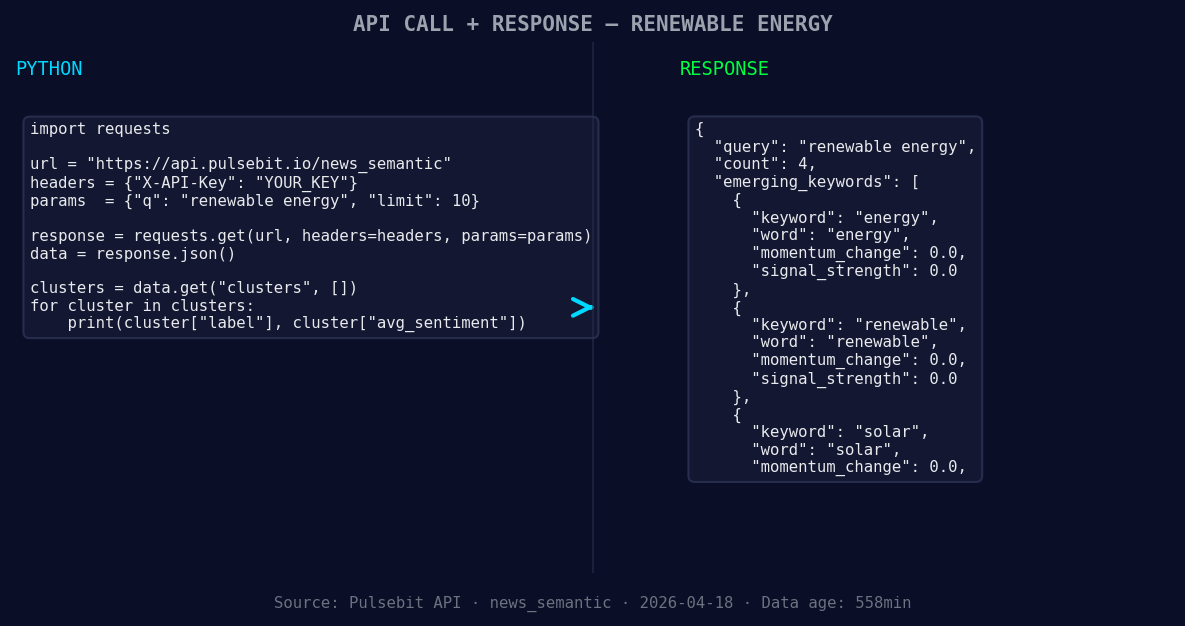
*Left: Python GET /news_semantic call for 'renewable energy'. Right: returned JSON response structure (clusters: 3). Source: Pulsebit /news_semantic.*
articles = response.json()
# Now let's examine the sentiment of the clustered narrative
cluster_reason = "Clustered by shared themes: hidden, challenges, renewable, energy, dispatch."
sentiment_response = requests.post(
'https://api.pulsebit.com/v1/sentiment',
json={'text': cluster_reason}
)
sentiment_score = sentiment_response.json()
In this code, we first filter articles by the topic of renewable energy and ensure they are in English. We then use the POST /sentiment endpoint to analyze the cluster reason string itself, scoring the narrative framing around the spike. This dual approach allows us to capture not just the spike, but the reasoning behind it.
Now that we have the groundwork laid, let’s talk about three specific builds you can implement using this pattern:
- Geo-Filtered Sentiment Analysis: Use the geographic origin filter to analyze how sentiments differ across regions. Set a signal threshold of +0.200 on momentum for any English-language articles. This allows you to compare how different countries are addressing the same renewable energy challenges.

Geographic detection output for renewable energy. India leads with 4 articles and sentiment +0.76. Source: Pulsebit /news_recent geographic fields.
Meta-Sentiment Loop: After capturing the cluster reason, loop it back through our sentiment endpoint, looking for narratives that score above +0.300. This helps validate your findings and provides a more nuanced understanding of how the challenges are being articulated.
Forming Themes Alert: Set up an alert system for forming themes. The specific signal to watch would be the nuances in energy, renewable, and solar discussions that are currently at +0.00 momentum. This allows you to catch emerging trends before they hit mainstream discussions.
If you want to dive deeper into this, you can find more detailed information at pulsebit.lojenterprise.com/docs. You can copy, paste, and run this code in under 10 minutes. It’s time to catch up and leverage the momentum of renewable energy sentiment!


Top comments (0)