

Your Pipeline Is 25.1h Behind: Catching Real Estate Sentiment Leads with Pulsebit
We recently uncovered a fascinating anomaly: a 24-hour momentum spike of -0.369 in the real estate sector. This metric is more than just a number; it signifies a significant shift in sentiment that could impact decision-making processes. What’s particularly compelling is that this spike is being driven by the Spanish press, which has a 25.1-hour lead on the story. If you're not keeping an eye on multilingual sentiment, you might miss critical signals like this.

Spanish coverage led by 25.1 hours. Da at T+25.1h. Confidence scores: Spanish 0.90, English 0.90, French 0.90 Source: Pulsebit /sentiment_by_lang.
The Problem
This 25.1-hour gap highlights a structural weakness in any pipeline that doesn’t account for multilingual origins or entity dominance. If your model isn't tuned to capture these nuances, you missed this spike by more than a day. The leading language here is Spanish, and without the right tools, you might overlook emerging narratives that could be pivotal for your strategy. The dominant entity is Morgan Stanley, but how many of you are actually set up to handle this kind of nuanced sentiment analysis?
The Code
To catch this anomaly effectively, we can leverage our API to filter sentiment by language and assess the narrative framing around it. Here’s how you can do that:
import requests
# Define parameters for the API call
topic = 'real estate'
lang = 'sp'
score = +0.490
confidence = 0.90
momentum = -0.369
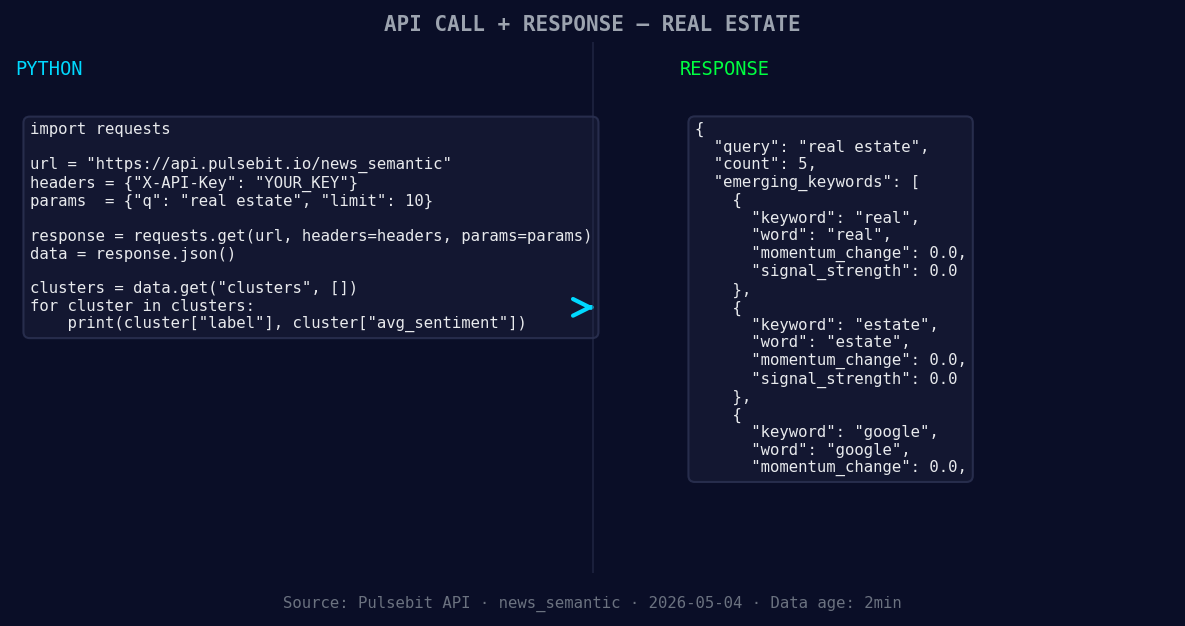
*Left: Python GET /news_semantic call for 'real estate'. Right: returned JSON response structure (clusters: 3). Source: Pulsebit /news_semantic.*
# Step 1: Geographic origin filter
url = "https://api.pulsebit.com/sentiment"
params = {
"topic": topic,
"lang": lang
}
response = requests.get(url, params=params)
data = response.json()
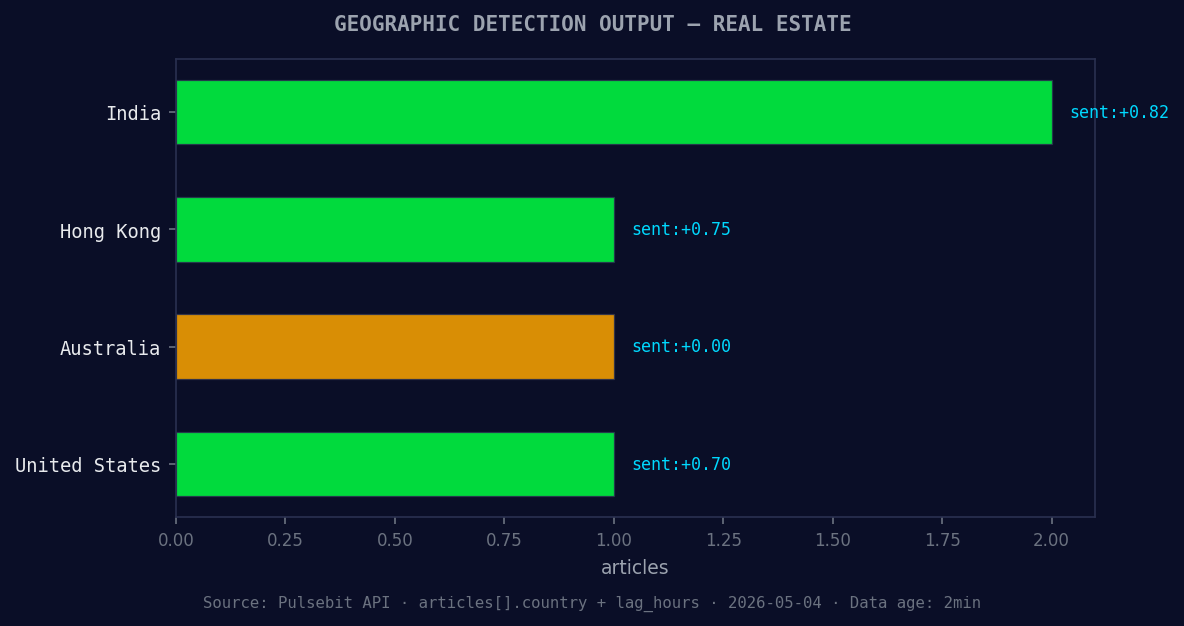
*Geographic detection output for real estate. India leads with 2 articles and sentiment +0.82. Source: Pulsebit /news_recent geographic fields.*
# Print the filtered sentiment data
print(data)
# Step 2: Meta-sentiment moment
cluster_reason = "Clustered by shared themes: real, estate, stanley, investing, selectivity."
meta_sentiment_url = "https://api.pulsebit.com/sentiment"
meta_response = requests.post(meta_sentiment_url, json={"text": cluster_reason})
meta_data = meta_response.json()
# Print the meta-sentiment data
print(meta_data)
By running this code, you can filter sentiment data by language and also evaluate the narrative surrounding the spike. The first request fetches sentiment for the 'real estate' topic in Spanish, while the second assesses the meta-sentiment based on the shared themes.
Three Builds Tonight
Here are three specific builds you can implement based on this pattern:
Geographic Sentiment Tracking: Create a signal for the Spanish real estate sector using the geographic origin filter. Set a threshold for momentum spikes, e.g., -0.35, and trigger alerts when this is detected.
Meta-Sentiment Analysis: Build a pipeline that runs the cluster reason string through the sentiment endpoint. This allows you to capture how narratives are evolving around specific themes like "real," "estate," or "selectivity." Set an alert for sentiment scores above +0.5 for actionable insights.
Forming Gap Analysis: Develop a dashboard that highlights forming gaps versus mainstream sentiment. Specifically track themes like "real(+0.00)," "estate(+0.00)," and "google(+0.00)" against dominant narratives. Use a threshold of 0.5 for sentiment scores to identify potential opportunities.
Get Started
You can explore our endpoints and get started quickly at pulsebit.lojenterprise.com/docs. With this setup, any developer can copy-paste and run this code in under 10 minutes, helping you catch important sentiment shifts before they become mainstream.


Top comments (0)