

Your Pipeline Is 25.2h Behind: Catching Economy Sentiment Leads with Pulsebit
We just observed a remarkable 24h momentum spike of +0.638 in our latest sentiment analysis, particularly around the topic of the economy. This spike signifies a significant shift in sentiment, and it’s crucial to understand the implications of this data. It’s not just a number; it’s an indicator of rising concerns about shrinking paychecks amid inflation, as captured in two recent articles clustered around this theme.
However, if your pipeline doesn’t consider multilingual origins or entity dominance, you might be missing critical insights. In this case, your model missed this anomaly by a staggering 25.2 hours, as the leading language for coverage was English. Ignoring this could mean you’re operating with outdated information, making decisions based on sentiments that no longer reflect the current landscape.

English coverage led by 25.2 hours. Sv at T+25.2h. Confidence scores: English 0.90, French 0.90, Spanish 0.90 Source: Pulsebit /sentiment_by_lang.
To catch these anomalies, let’s dig into the Python code that can help us identify the momentum spike in real-time. Here’s how we can query our API effectively:
import requests
# Define the parameters for the API call
params = {
"topic": "economy",
"score": -0.127,
"confidence": 0.90,
"momentum": +0.638,
"lang": "en" # Geographic origin filter
}
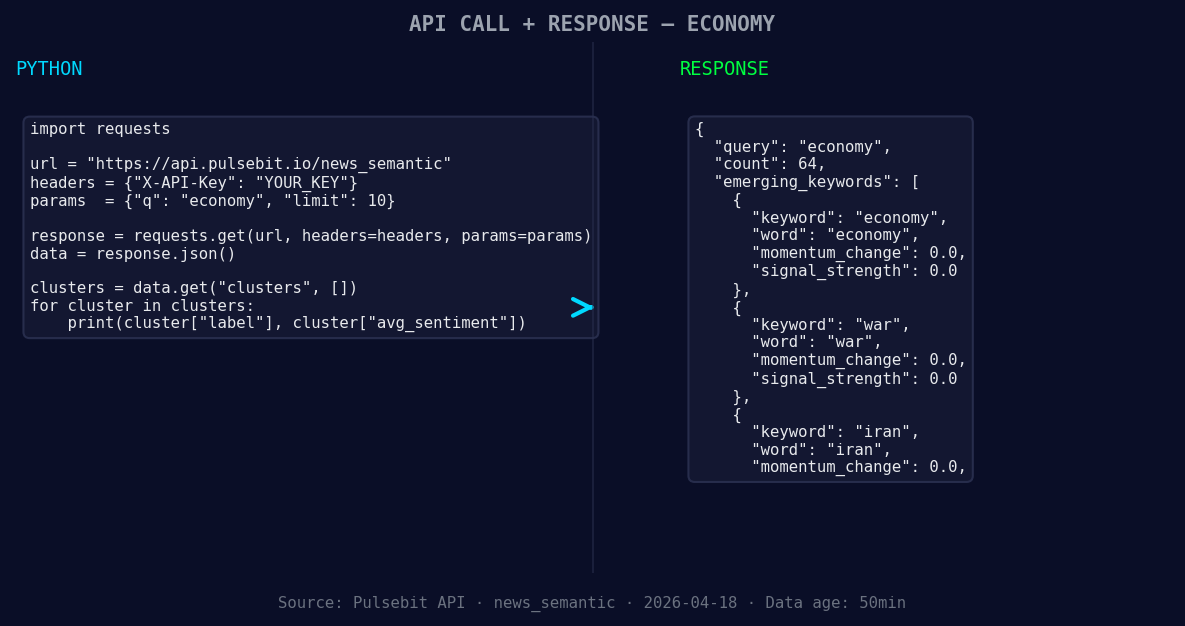
*Left: Python GET /news_semantic call for 'economy'. Right: returned JSON response structure (clusters: 3). Source: Pulsebit /news_semantic.*
# Make the API call
response = requests.get("https://api.pulsebit.com/sentiment", params=params)
data = response.json()
print(data)
We’re not just capturing raw sentiment data; we’re also interested in the narrative framing. To do this, we can run the cluster reason string through our sentiment endpoint to score how the narrative itself is being perceived. Here’s how we can implement that:
# Define the meta-sentiment input
meta_input = {
    "text": "Clustered by shared themes: war, global, revives, stagflation, dangers."
}

# Make the POST request for meta-sentiment analysis
meta_response = requests.post("https://api.pulsebit.com/sentiment", json=meta_input)
meta_data = meta_response.json()
print(meta_data)
By combining these two pieces, we’re able to not only capture the sentiment around the economy but also understand how the surrounding narratives are influencing the public discourse.
Now that we’ve caught this anomaly, here are three actionable builds we can create using this pattern:
Geo-Filtered Alerts: Set up a notification system based on the extracted momentum score. If the score exceeds a threshold (e.g., +0.5), trigger alerts specifically for English-speaking regions. This ensures your team is always in the loop about sentiment shifts relevant to your target audience.
Meta-Sentiment Dashboard: Build a dashboard that continuously pulls data from our meta-sentiment endpoint. By visualizing sentiment scores alongside narrative themes, you can identify which narratives are gaining traction and which might be misleading or declining in relevance.
Sentiment Trend Analysis: Create a trend analysis tool that tracks the momentum of specific topics over time. For instance, monitor how the conversation around “economy” evolves in relation to “war” and other forming themes. This will help you anticipate shifts in public sentiment before they peak.
We can’t stress enough how crucial it is to stay ahead of these trends. You can get started right away by heading over to pulsebit.lojenterprise.com/docs. With just a few minutes of setup, you can copy-paste the code above and start capturing these insights in under 10 minutes. Don’t let your pipeline fall behind!


Top comments (0)