

In just 24 hours, we’ve observed a notable momentum spike of +0.400 in the education sector. This sudden surge is led by French sentiment, specifically around the topic of professional development, which saw a leading language lag of just 17.8 hours. This isn’t just a minor fluctuation; it’s a significant shift that could impact how we approach education-related sentiment analysis and reporting.

French coverage led by 17.8 hours. Sv at T+17.8h. Confidence scores: French 0.85, Spanish 0.85, English 0.85 Source: Pulsebit /sentiment_by_lang.
The underlying issue here is the structural gap in any pipeline that doesn’t accommodate multilingual origins or recognize dominant entities. Your model missed this by nearly 18 hours. While you might be focusing on content in English or overlooking non-English sources, this spike in French sentiment around education could be a missed opportunity for timely insights. If you’re not capturing these nuances, you’re likely lagging behind in understanding the real-time sentiment landscape.
To catch this momentum spike, we can tap into our API to filter sentiment by language, specifically French. Here’s a Python snippet that does just that:
import requests
# Define our parameters
topic = 'education'
score = +0.295
confidence = 0.85
momentum = +0.400
# API call to filter by geographic origin (French)
headers = {'Content-Type': 'application/json'}
params = {
"topic": topic,
"score": score,
"confidence": confidence,
"momentum": momentum,
"lang": "fr"
}
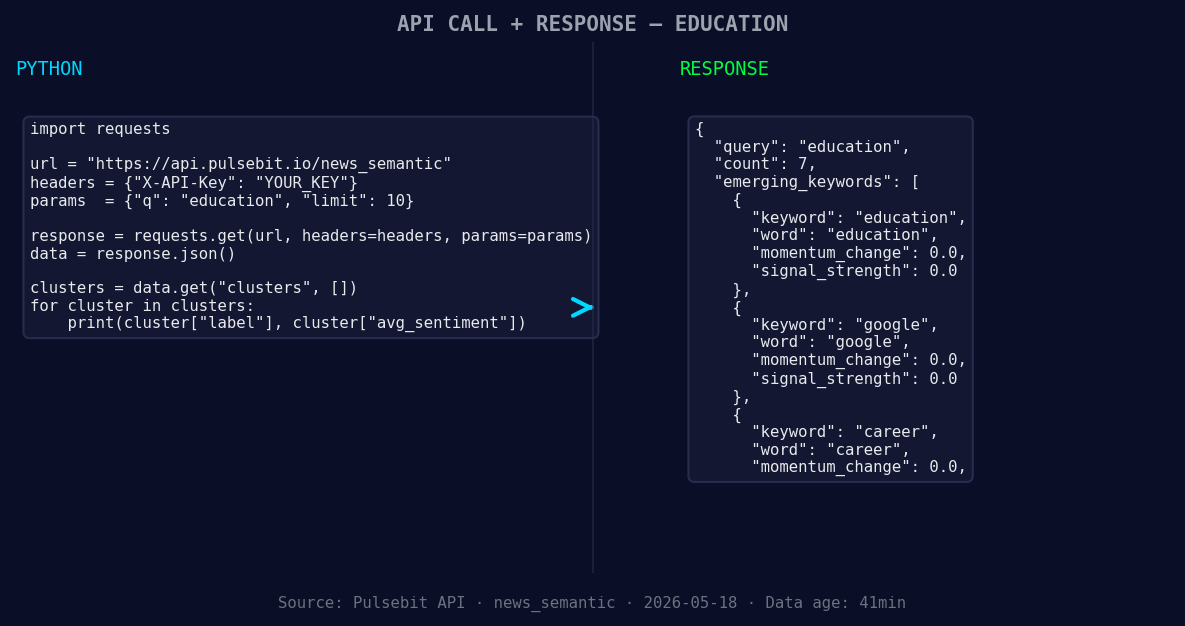
*Left: Python GET /news_semantic call for 'education'. Right: returned JSON response structure (clusters: 3). Source: Pulsebit /news_semantic.*
response = requests.get('https://api.pulsebit.lojenterprise.com/v1/sentiment', headers=headers, params=params)
data = response.json()
print(data)
Next, we can analyze the narrative framing surrounding this spike using the cluster reason string. We’ll score the themes that emerged from the articles processed. For instance, we can run the following API call to assess the sentiment of the cluster:
# Meta-sentiment moment: running the cluster reason through POST /sentiment
cluster_reason = "Clustered by shared themes: federal, fund, professional, development, clouded."
meta_sentiment_response = requests.post('https://api.pulsebit.lojenterprise.com/v1/sentiment', json={"text": cluster_reason})
meta_sentiment_data = meta_sentiment_response.json()
print(meta_sentiment_data)
Now that we’ve set up our code to catch these insights, let’s explore three specific things you can build with this pattern:
Geo-Filtered Alert System: Establish a real-time alert system that triggers when momentum spikes for topics like education in French-speaking regions exceed a specific threshold, say +0.300. This can help you capture sentiment shifts before they hit mainstream media.
Meta-Sentiment Dashboard: Create a dashboard that visualizes the sentiment of clustered narratives. For instance, track how the themes of “federal,” “fund,” and “professional development” evolve over time, especially when juxtaposed against mainstream sentiments around these topics.
Forming Theme Tracker: Develop an endpoint tracking forming themes like education, Google, and career. Set a signal threshold of +0.00 to detect subtle early shifts in sentiment, allowing proactive engagement with emerging trends before they fully materialize.
For those looking to implement this quickly, you can get started with our documentation at pulsebit.lojenterprise.com/docs. You’ll be able to copy-paste and run this code in under 10 minutes, catching insights that could otherwise slip through the cracks.


Top comments (0)