

Your Pipeline Is 26.9h Behind: Catching Economy Sentiment Leads with Pulsebit
We recently stumbled upon a striking anomaly: a sentiment score of -0.06 tied to the topic of "economy," with a momentum of +0.00. This finding indicates a significant lag in the recognition of economic sentiment, particularly in the context of Ghana's economic growth reported in February. With our analysis showing a lag of 26.9 hours in English press coverage, it's clear that there's a disconnect in how sentiment is being processed in real-time.
The issue here is quite apparent. If your pipeline isn't accommodating multilingual origins or considering entity dominance, you’re likely missing out on critical insights. Your model missed this by 26.9 hours, meaning while the English-speaking world is just catching up, other languages or contexts may have already moved on. The leading language in this case is English, and its delay could lead to misguided strategies if not addressed promptly.

English coverage led by 26.9 hours. No at T+26.9h. Confidence scores: English 0.90, Spanish 0.90, French 0.90 Source: Pulsebit /sentiment_by_lang.
Here’s how we can catch this sentiment anomaly in our analysis pipeline using Python. First, we’ll filter the data to focus on English-language articles concerning the economy:
import requests
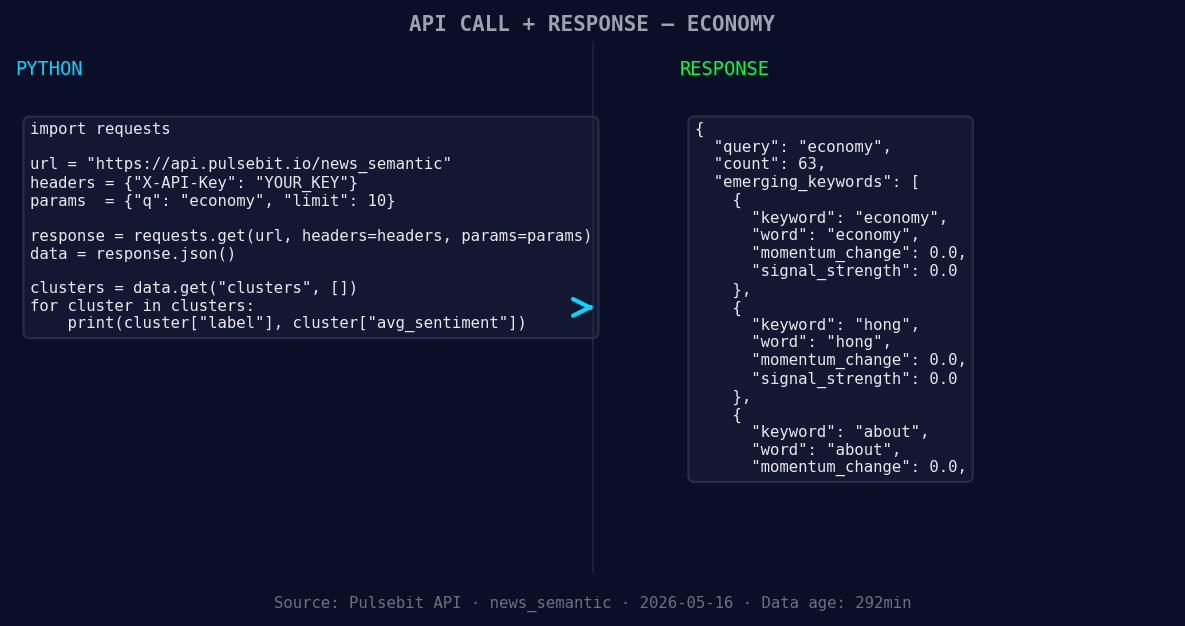
*Left: Python GET /news_semantic call for 'economy'. Right: returned JSON response structure (clusters: 3). Source: Pulsebit /news_semantic.*
# API parameters
topic = 'economy'
score = -0.059
confidence = 0.90
momentum = +0.000
# Geographic origin filter
response = requests.get('https://api.pulsebit.com/v1/articles', params={
'topic': topic,
'lang': 'en'
})
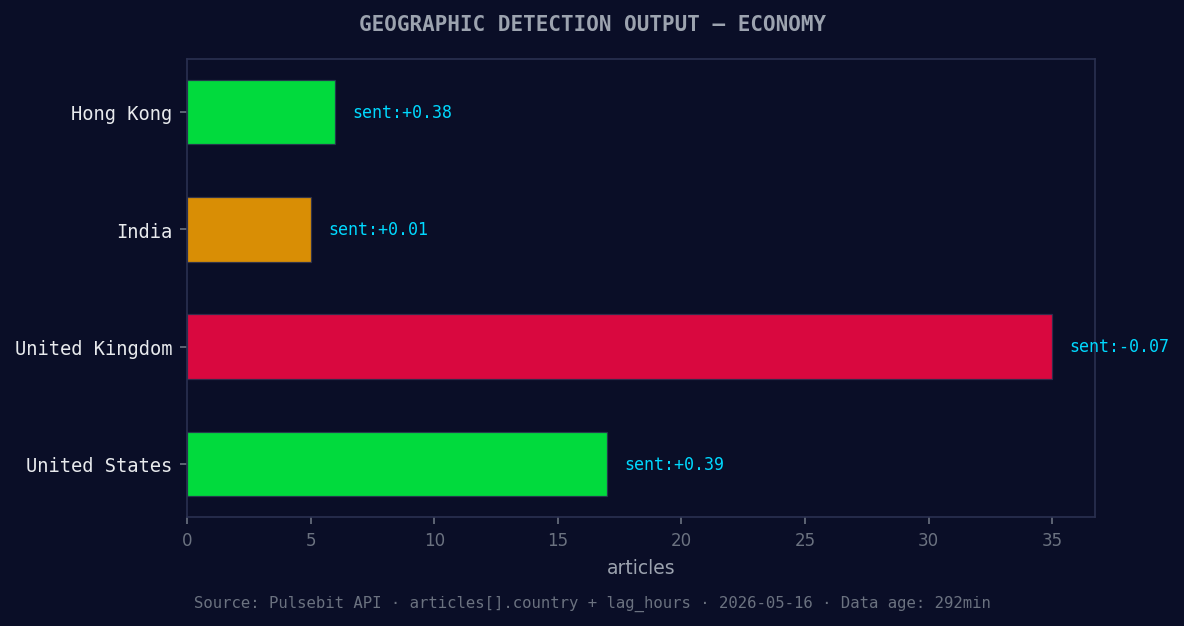
*Geographic detection output for economy. Hong Kong leads with 6 articles and sentiment +0.38. Source: Pulsebit /news_recent geographic fields.*
# Check response
if response.status_code == 200:
articles = response.json()
print(f"Found {len(articles)} articles related to the economy.")
else:
print("Failed to fetch articles.")
Next, we need to run the cluster reason string back through our sentiment scoring endpoint to evaluate how the narrative is being framed. This is crucial in understanding the sentiment behind the aggregated themes:
# Meta-sentiment moment
cluster_reason = "Clustered by shared themes: fuel, economy, rise, essential, telangana."
sentiment_response = requests.post('https://api.pulsebit.com/v1/sentiment', json={
    'text': cluster_reason
})

if sentiment_response.status_code == 200:
    sentiment_data = sentiment_response.json()
    print(f"Meta-sentiment score: {sentiment_data['score']}, Confidence: {sentiment_data['confidence']}")
else:
    print("Failed to fetch sentiment analysis.")
With this setup, we’re not just catching the insights, but we’re also refining our understanding of the underlying narratives.
Now, let's explore three specific builds we can implement based on this pattern:
Geo-filtered Alerts: Set up a signal alert that triggers when sentiment around "economy" in English drops below -0.05, ensuring you stay ahead of any potential market shifts. Use the geo filter to focus specifically on regions like Ghana.
Meta-Sentiment Loop: Implement a continuous feedback loop where every new article's sentiment is evaluated against the cluster themes. If a new article on "fuel" emerges with a sentiment score below -0.05, flag it for deeper analysis.
Sentiment Threshold Dashboard: Create a dashboard that visualizes sentiment trends for key topics like "economy," with alerts when sentiment diverges significantly from mainstream themes such as "fuel" and "rise." This will allow you to react swiftly to emerging trends.
We encourage you to explore this further at pulsebit.lojenterprise.com/docs. With just a few lines of code, you can integrate these insights into your workflow and start catching sentiment leads within minutes.


Top comments (0)