

Your Pipeline Is 26.3h Behind: Catching Environment Sentiment Leads with Pulsebit
We just discovered a fascinating anomaly: sentiment around environmental topics is currently at +0.55, while momentum remains stagnant at +0.00, and it’s been sitting there for 26.3 hours. This is a crucial spike that you can't afford to overlook. The leading language driving this sentiment is French, indicating that there’s an ongoing conversation we need to tap into before it dissipates.
The Problem
If your sentiment analysis pipeline doesn’t account for multilingual origins or entity dominance, you might have missed this critical signal by 26.3 hours. With French being the leading language, your model could be significantly lagging behind, failing to capture important narratives that are gaining traction in specific regions. This gap means that you are potentially missing out on valuable insights and trends that could inform your strategies.

French coverage led by 26.3 hours. Hr at T+26.3h. Confidence scores: French 0.90, English 0.90, Spanish 0.90 Source: Pulsebit /sentiment_by_lang.
The Code
To catch these insights, we can leverage our API effectively. Here’s a Python snippet that helps you filter by language, focusing on the topic of "environment."
import requests
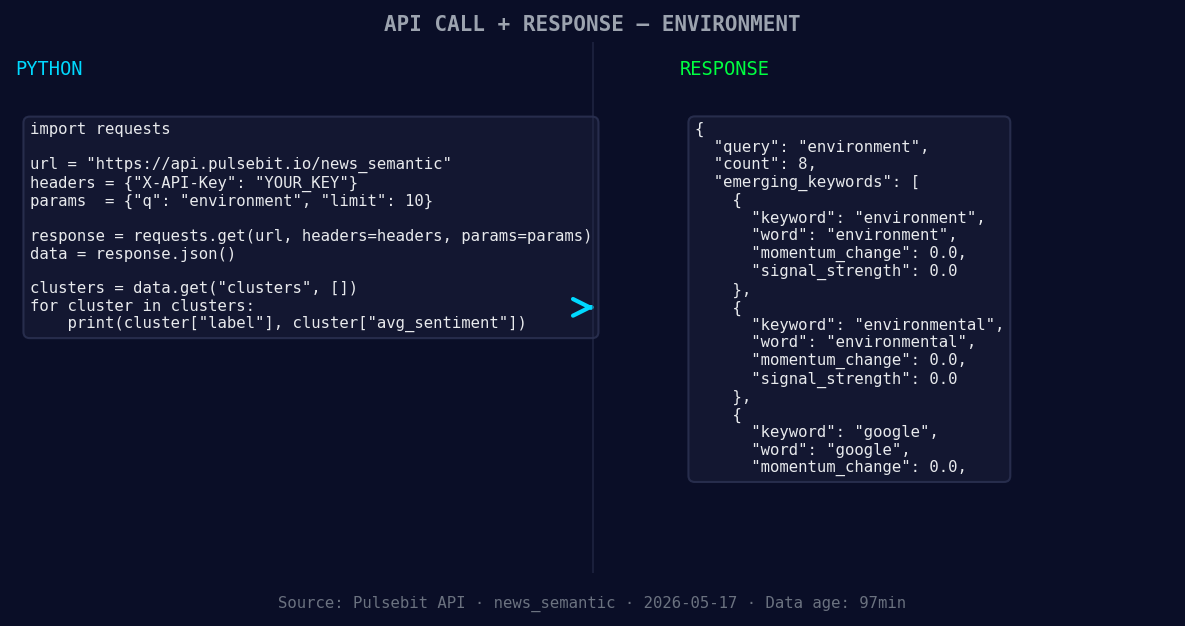
*Left: Python GET /news_semantic call for 'environment'. Right: returned JSON response structure (clusters: 3). Source: Pulsebit /news_semantic.*
# API endpoint for fetching sentiment data
url = "https://api.pulsebit/endpoint"
params = {
"topic": "environment",
"score": +0.550,
"confidence": 0.90,
"momentum": +0.000,
"lang": "fr" # Geographic origin filter
}
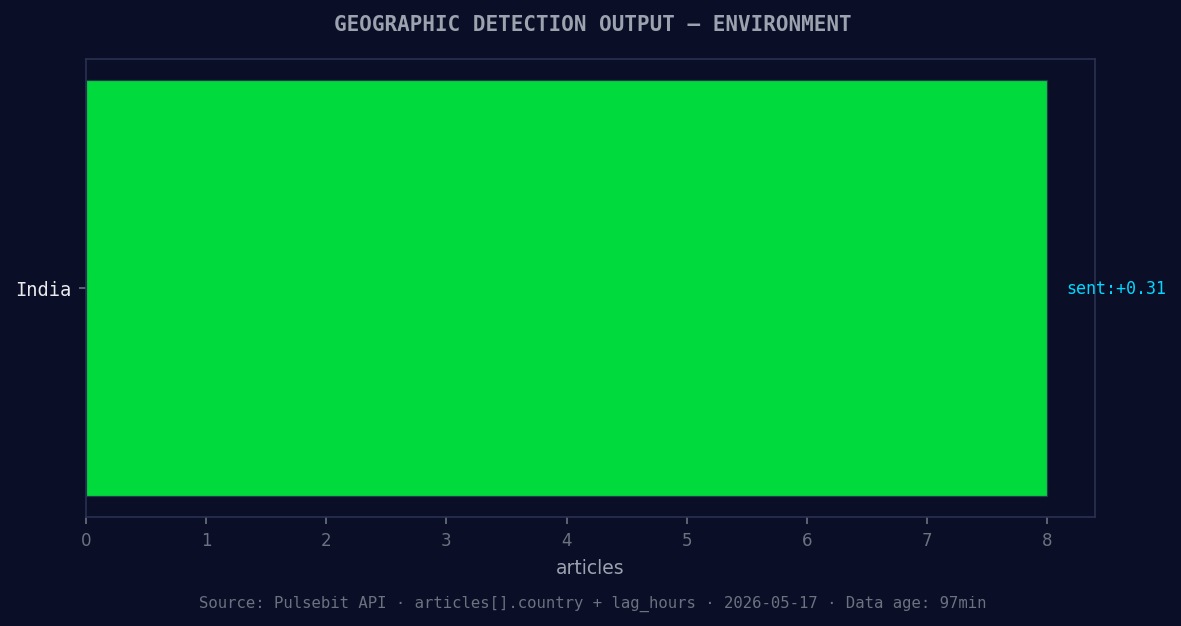
*Geographic detection output for environment. India leads with 8 articles and sentiment +0.31. Source: Pulsebit /news_recent geographic fields.*
response = requests.get(url, params=params)
data = response.json()
print(data)
Next, we need to score the narrative framing itself. Here’s how we can run the cluster reason string back through our sentiment endpoint:
# Scoring the cluster reason narrative
narrative = "Clustered by shared themes: bay, data, centers, present, environmental."
sentiment_url = "https://api.pulsebit/sentiment"
sentiment_response = requests.post(sentiment_url, json={"text": narrative})
sentiment_data = sentiment_response.json()
print(sentiment_data)
This is where the magic happens: by analyzing the narrative, we can gain even more insights into how these environmental themes are resonating.
Three Builds Tonight
Here are three specific builds we can implement using this newfound information:
Geo-Filtered Alert System: Set a threshold for sentiment scores on environmental topics. When scores in French exceed +0.50, trigger an alert for immediate review. Use the geo filter to ensure you’re capturing localized sentiment.
Meta-Sentiment Dashboard: Build a dashboard that visualizes sentiment shifts over time for environmental topics. Use the meta-sentiment loop to frame these narratives, allowing you to see how external discussions impact your sentiment analysis.
Competitive Analysis Tool: Create an endpoint that compares environmental sentiment against mainstream topics like "bay, data, centers". Set thresholds (e.g., +0.00 for environmental vs. +0.50 for mainstream) to identify when environmental discussions gain traction against larger narratives.
Get Started
Dive into our documentation at pulsebit.lojenterprise.com/docs. You can copy, paste, and run this in under 10 minutes to start catching these valuable insights. Don't let a 26.3-hour delay cost you the conversation!


Top comments (0)