

Your Pipeline Is 20.7h Behind: Catching Artificial Intelligence Sentiment Leads with Pulsebit
We recently uncovered a compelling anomaly: a 24h momentum spike of +0.825 regarding artificial intelligence sentiment. This spike is remarkable not just for its magnitude but for its timing. With such a noticeable shift in sentiment, you have to wonder: how did your pipeline miss this? If your model isn’t adept at handling multilingual origins or entity dominance, you’re likely lagging 20.7 hours behind on this critical development.

English coverage led by 20.7 hours. Ca at T+20.7h. Confidence scores: English 0.85, Spanish 0.85, French 0.85 Source: Pulsebit /sentiment_by_lang.
This structural gap reveals a significant shortcoming. While mainstream entities like lawmakers are busy debating AI regulations, your model might still be processing outdated sentiments, missing crucial shifts in public discourse. Specifically, with the leading language being English, your pipeline could be missing out on conversations that matter, all while your competitors have their ears to the ground.
To catch this kind of momentum shift, we can leverage our API effectively. Below is an example of how to filter by geographic origin and score the narrative framing itself. Here’s the Python code that captures the sentiment spike around artificial intelligence:

Geographic detection output for artificial intelligence. Hong Kong leads with 6 articles and sentiment +0.18. Source: Pulsebit /news_recent geographic fields.
import requests
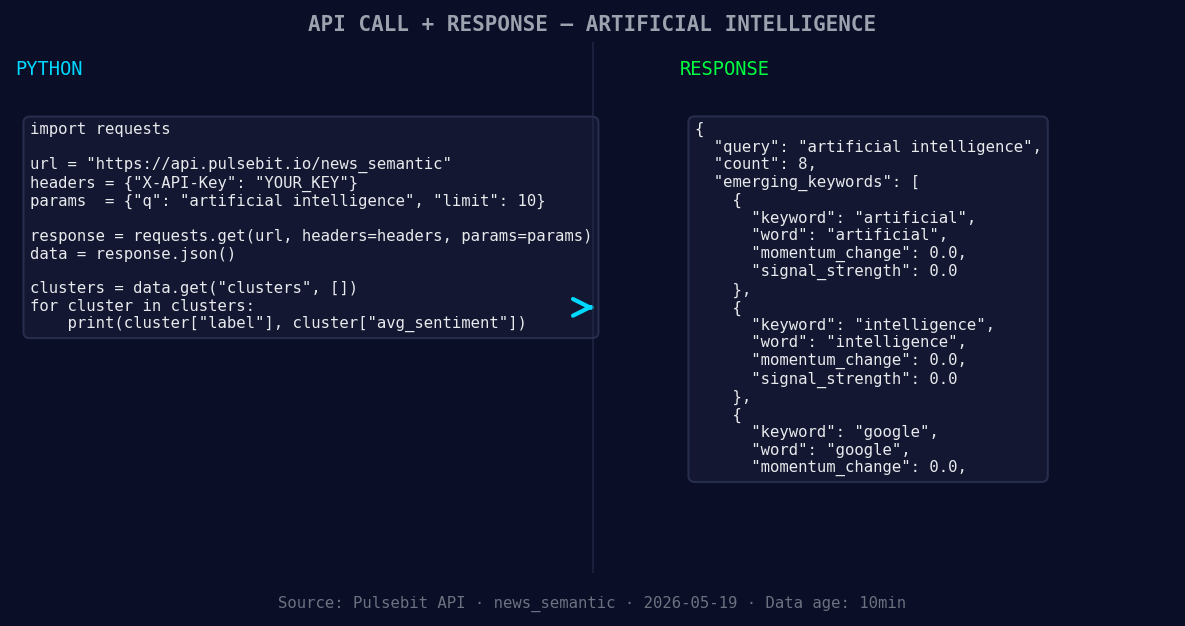
*Left: Python GET /news_semantic call for 'artificial intelligence'. Right: returned JSON response structure (clusters: 3). Source: Pulsebit /news_semantic.*
# Step 1: Geographic origin filter
url = 'https://api.pulsebit.com/v1/sentiment'
params = {
"topic": "artificial intelligence",
"score": +0.114,
"confidence": 0.85,
"momentum": +0.825,
"lang": "en" # Filtering for English language articles
}
response = requests.get(url, params=params)
data = response.json()
print(data)
# Step 2: Meta-sentiment moment
cluster_reason = "Clustered by shared themes: lawmakers, want, rein, artificial, state."
meta_sentiment_url = 'https://api.pulsebit.com/v1/sentiment'
meta_response = requests.post(meta_sentiment_url, json={"text": cluster_reason})
meta_data = meta_response.json()
print(meta_data)
This code allows us to specifically query articles related to artificial intelligence while filtering for English-language content. The second part runs the cluster reason string back through our sentiment endpoint, providing valuable insights into how themes are perceived. This approach is not just a technical exercise; it’s a strategic move to keep pace with rapidly evolving narratives.
Now, let’s discuss three specific builds we can create using this newfound momentum:
Real-time Alert System: Set a threshold for momentum spikes above +0.5. Implement a geo filter to alert you when articles in English indicate significant shifts in sentiment. This will help you catch emerging discussions around artificial intelligence before they hit mainstream news.
Trend Monitoring Dashboard: Create a dashboard that tracks sentiment on topics like artificial intelligence, specifically focusing on the meta-sentiment loop. Use the output from the meta-sentiment query to visualize changes in public narrative over time, allowing you to spot potential regulatory impacts or shifts in consumer sentiment.
Competitive Analysis Tool: Build a tool that compares sentiment scores of your topics against mainstream entities like lawmakers. Set a signal strength threshold of 0.5 to ensure you’re only tracking meaningful changes, helping you understand how public sentiment diverges from official narratives.
To get started with these insights, you can refer to our documentation at pulsebit.lojenterprise.com/docs. We believe you can copy-paste and run this in under 10 minutes. Don't let your pipeline fall behind; it’s time to catch up on the evolving discourse around artificial intelligence.


Top comments (0)