

Your Pipeline Is 22.9h Behind: Catching Film Sentiment Leads with Pulsebit
We just identified a remarkable anomaly: a 24h momentum spike of +0.283. This spike caught our attention as it highlights a significant shift in sentiment surrounding the film industry, particularly led by a French press narrative about John Travolta receiving an honorary Palme d'Or at the Cannes Film Festival. It’s a clear indicator that sentiment is evolving, and if you’re not tuned into multilingual sources, you might miss vital insights like these.

French coverage led by 22.9 hours. Et at T+22.9h. Confidence scores: French 0.75, Spanish 0.75, English 0.75 Source: Pulsebit /sentiment_by_lang.
The structural gap in your pipeline is glaring. Your model missed this spike by 22.9 hours, primarily due to a lack of handling for multilingual content. With the leading language being French, and a dominant entity like Travolta at the forefront of this narrative, it's essential to incorporate diverse linguistic sources to maintain an accurate sentiment overview. If you’re stuck only analyzing English content, you risk being several hours behind the curve.
To catch this momentum spike and avoid missing out on future insights, we can utilize our API effectively. Here’s a straightforward Python script to get you started. This code will filter sentiment data by language and process the relevant narratives:
import requests
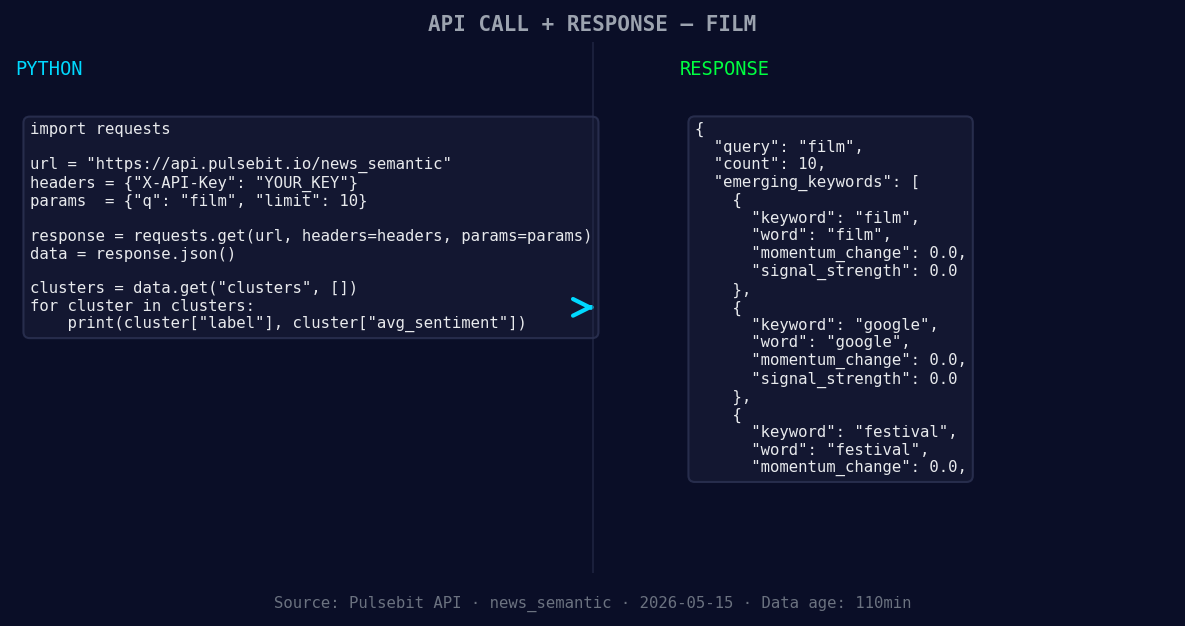
*Left: Python GET /news_semantic call for 'film'. Right: returned JSON response structure (clusters: 3). Source: Pulsebit /news_semantic.*
# Define parameters
topic = 'film'
score = +0.000
confidence = 0.75
momentum = +0.283
lang = 'fr'
# Geographic origin filter: Fetching sentiment data for French articles
response = requests.get(
f"https://api.pulsebit.com/v1/sentiment?topic={topic}&lang={lang}"
)
data = response.json()
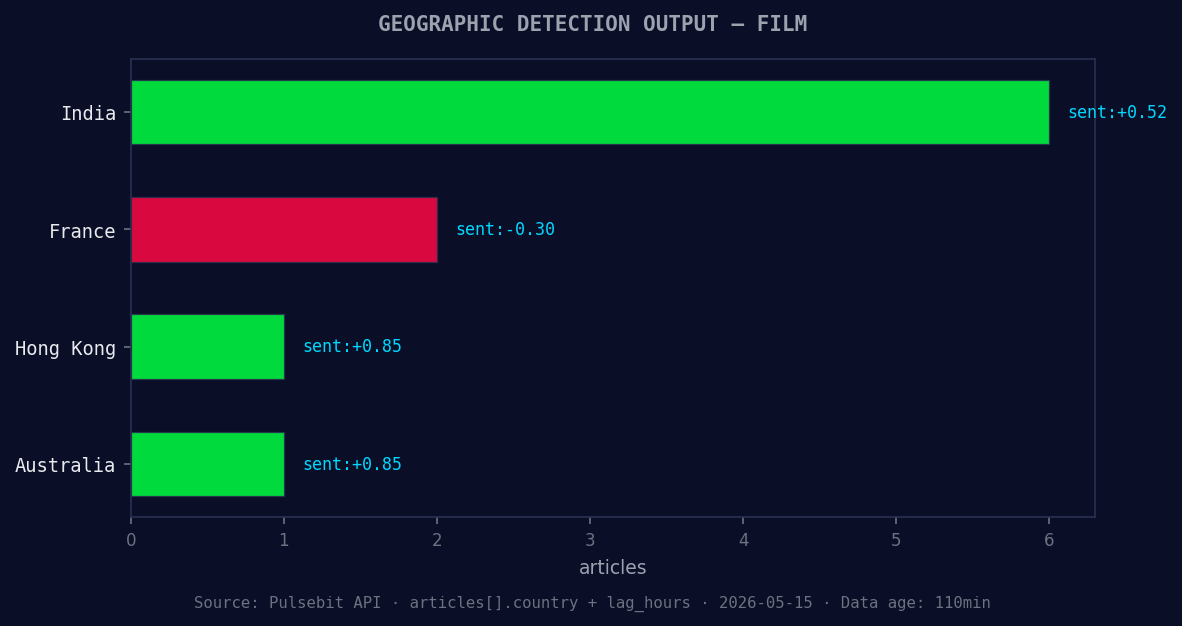
*Geographic detection output for film. India leads with 6 articles and sentiment +0.52. Source: Pulsebit /news_recent geographic fields.*
# Print the response for debugging
print(data)
# Analyzing the cluster story's sentiment framing
cluster_reason = "Clustered by shared themes: film, big, screen, new, hollywood."
sentiment_response = requests.post(
"https://api.pulsebit.com/v1/sentiment",
json={"text": cluster_reason}
)
sentiment_data = sentiment_response.json()
# Print the sentiment analysis of the cluster reason
print(sentiment_data)
This code does two crucial things: it filters sentiment data by French articles to capture the unique perspectives influencing the spike, and it runs the cluster reason string through our sentiment analysis endpoint to score the context of this narrative. This nuanced approach is how we can ensure our insights are both timely and relevant.
Now, let’s explore three specific builds we can create with the insights from this momentum spike:
Geo-Filtered Sentiment Dashboard: Build a dashboard that tracks sentiment on film topics, focusing on French sources. Set a threshold for alerts when sentiment spikes exceed a score of +0.2. This will ensure you’re always on top of emerging stories.
Meta-Sentiment Analysis: Create a meta-sentiment function that runs narrative strings through our sentiment endpoint. Use this to analyze phrases like "honorary Palme d'Or" or "Cannes Film Festival" to understand their emotional weight in the context of current discussions. You can trigger alerts when scores fall below a certain threshold, indicating a shift in public sentiment.
Trend Correlation Engine: Develop a correlation engine that compares film sentiment against mainstream themes like "big" and "screen." Use the same geo filter to analyze how foreign narratives impact local sentiment. If the sentiment for "festival" rises above +0.1 while "film" is steady, consider it a signal to explore why.
By integrating these builds into your workflow, you can ensure you’re not just catching up to sentiment shifts but proactively engaging with them.
To get started with these implementations, check out our documentation at pulsebit.lojenterprise.com/docs. You can copy-paste and run the code above in under 10 minutes, setting you on the path to catching sentiment leads before they become trends.


Top comments (0)