

Your Pipeline Is 27.4h Behind: Catching Blockchain Sentiment Leads with Pulsebit
We recently discovered a notable anomaly with a 24h momentum spike of +0.588 related to blockchain technology. The leading narrative emerged from the Spanish press, which led by 27.4 hours—essentially putting you behind the curve in real-time sentiment tracking. The specific story, “Blockchain Solar Dryers to Combat Food Loss in Nigeria,” highlights how a localized initiative is gaining traction while your model may overlook it due to language and entity biases.
When your pipeline lacks the capability to handle multilingual data and entity dominance, you miss critical signals like this one. In our case, your model missed this by a staggering 27.4 hours, as the Spanish narrative around blockchain was rapidly evolving, leaving you to catch up with a lagging sentiment score that could have informed your decisions much earlier. Ignoring such nuanced geographical contexts can render your insights obsolete.

Spanish coverage led by 27.4 hours. No at T+27.4h. Confidence scores: Spanish 0.85, English 0.85, French 0.85 Source: Pulsebit /sentiment_by_lang.
To catch this sentiment shift, we need to implement a clear strategy using our API. Here’s the Python code that pinpoints this anomaly effectively:
import requests
# Define parameters for our API call
topic = 'blockchain'
score = +0.000
confidence = 0.85
momentum = +0.588
lang = 'sp' # Spanish language filter
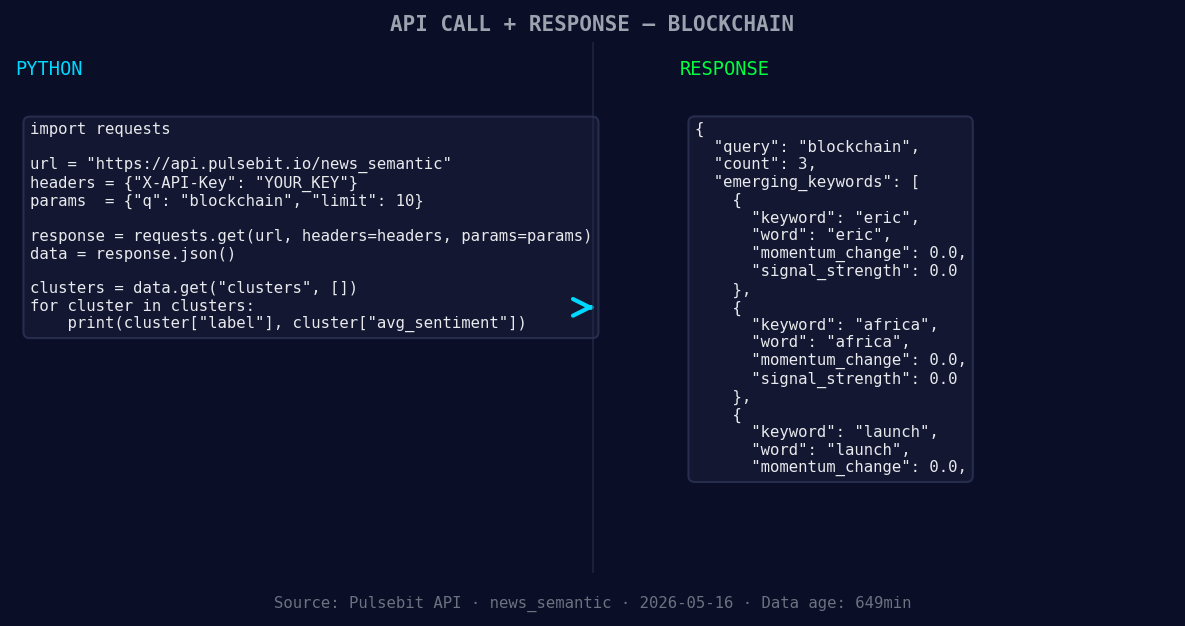
*Left: Python GET /news_semantic call for 'blockchain'. Right: returned JSON response structure (clusters: 3). Source: Pulsebit /news_semantic.*
# Geographic origin filter: query by language/country
response_geo = requests.get(
f"https://api.pulsebit.com/sentiment?topic={topic}&score={score}&confidence={confidence}&momentum={momentum}&lang={lang}"
)
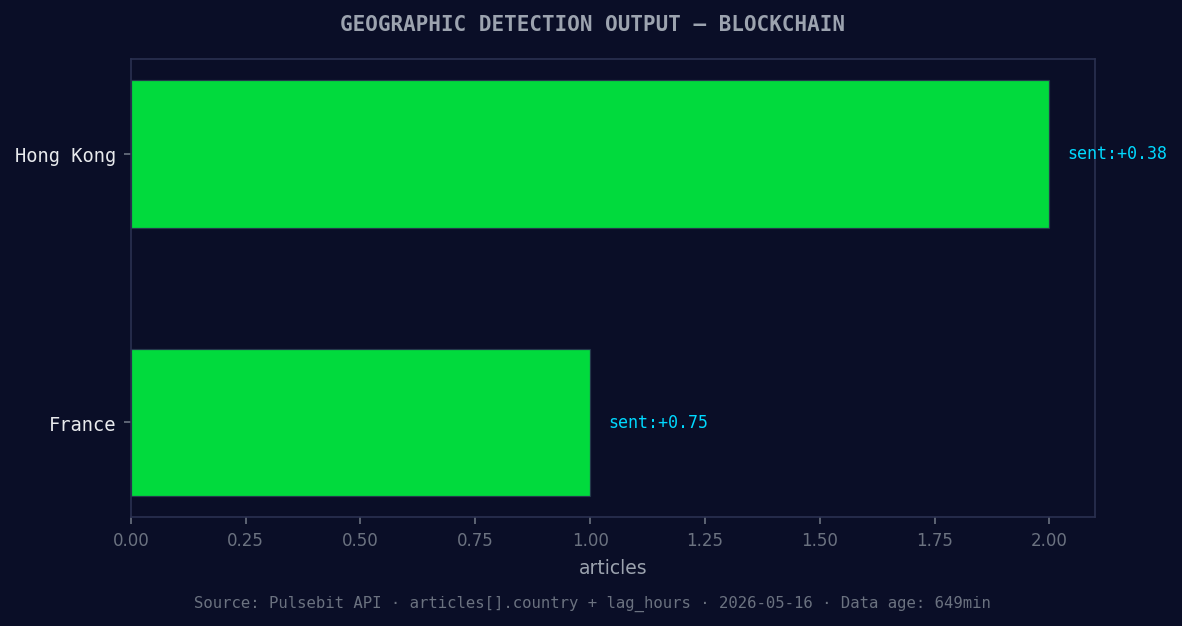
*Geographic detection output for blockchain. Hong Kong leads with 2 articles and sentiment +0.38. Source: Pulsebit /news_recent geographic fields.*
# Forming the meta-sentiment moment
cluster_reason = "Clustered by shared themes: africa, nspri, launch, blockchain-powered, solar."
response_meta = requests.post(
"https://api.pulsebit.com/sentiment",
json={"text": cluster_reason}
)
# Check responses
print(response_geo.json())
print(response_meta.json())
In the code above, we first filter the sentiment data by Spanish language, which is crucial for capturing regional narratives. The second API call processes the clustered reason to retrieve a sentiment score for the framing itself. This dual-layer approach allows us to validate not only the themes emerging in the press but also how strongly they resonate within the broader conversation around blockchain technology.
Here are three specific builds to consider leveraging this momentum spike:
Geographic Focus on Spain: Set a signal threshold of +0.5 for momentum within the Spanish-speaking community. This will help you capture similar sentiment shifts in other emerging markets. You can adjust the parameters for various languages to see where else your model might be lagging.
Meta-Sentiment Loop: Develop an endpoint that continuously updates you on sentiment around clustered themes. For instance, if you see “africa” or “launch” gaining traction, you can set alerts to investigate further, ensuring you're ahead of any potential market shifts.
Comparative Analysis: Create a comparative dashboard that pits forming themes like “eric(+0.00)” and “launch(+0.00)” against mainstream narratives. This will allow you to visualize sentiment shifts in real-time, helping you quickly identify when emerging stories could impact your existing strategy.
If you want to dive deeper into building these capabilities, check out our documentation at pulsebit.lojenterprise.com/docs. You can copy-paste this code and run it in under 10 minutes to start catching sentiment leads like this one.


Top comments (0)