

Your Pipeline Is 23.5h Behind: Catching Finance Sentiment Leads with Pulsebit
In the last 24 hours, we observed a notable momentum spike of +0.186 in finance sentiment. This spike, along with the leading language being English press led by a mere 23.5-hour lag, highlights a crucial sentiment shift. The article that clustered this momentum, titled "US 30-Year Yield Hits Highest Since 2007 as Selloff Deepens" from Yahoo Finance, emphasizes the growing concern around long-term yields and their implications.
This data points to a significant gap in any pipeline that doesn’t account for multilingual origin or entity dominance. If your model isn’t set up to handle such dynamics, it likely missed this crucial sentiment shift by 23.5 hours. The leading language, English, is critical here; by not incorporating multilingual capabilities, you risk falling behind in interpreting sentiment that can drive quick strategic decisions.

English coverage led by 23.5 hours. Sw at T+23.5h. Confidence scores: English 0.90, Spanish 0.90, French 0.90 Source: Pulsebit /sentiment_by_lang.
To catch this anomaly, we can leverage our API for a structured approach. Here’s how you can set it up in Python to get accurate sentiment data based on our findings:
import requests
# Define parameters
topic = 'finance'
score = -0.064
confidence = 0.90
momentum = +0.186
# Geographic origin filter using language and country
url = "https://api.pulsebit.com/v1/sentiment"
params = {
"topic": topic,
"lang": "en",
}
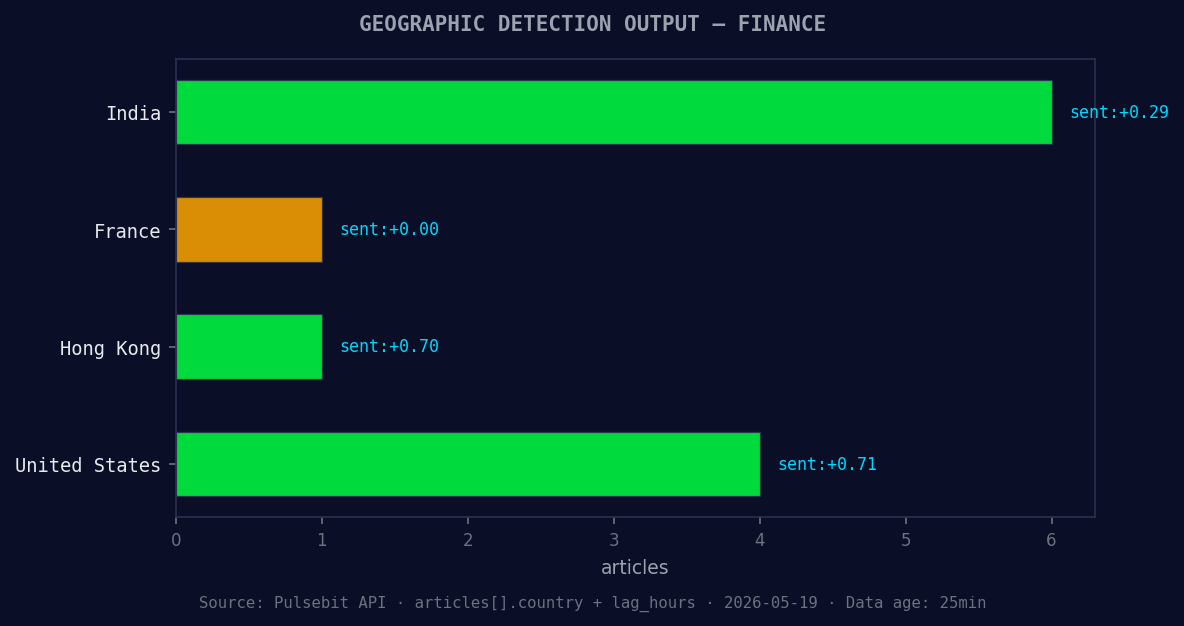
*Geographic detection output for finance. India leads with 6 articles and sentiment +0.29. Source: Pulsebit /news_recent geographic fields.*
# Make the API call
response = requests.get(url, params=params)
data = response.json()
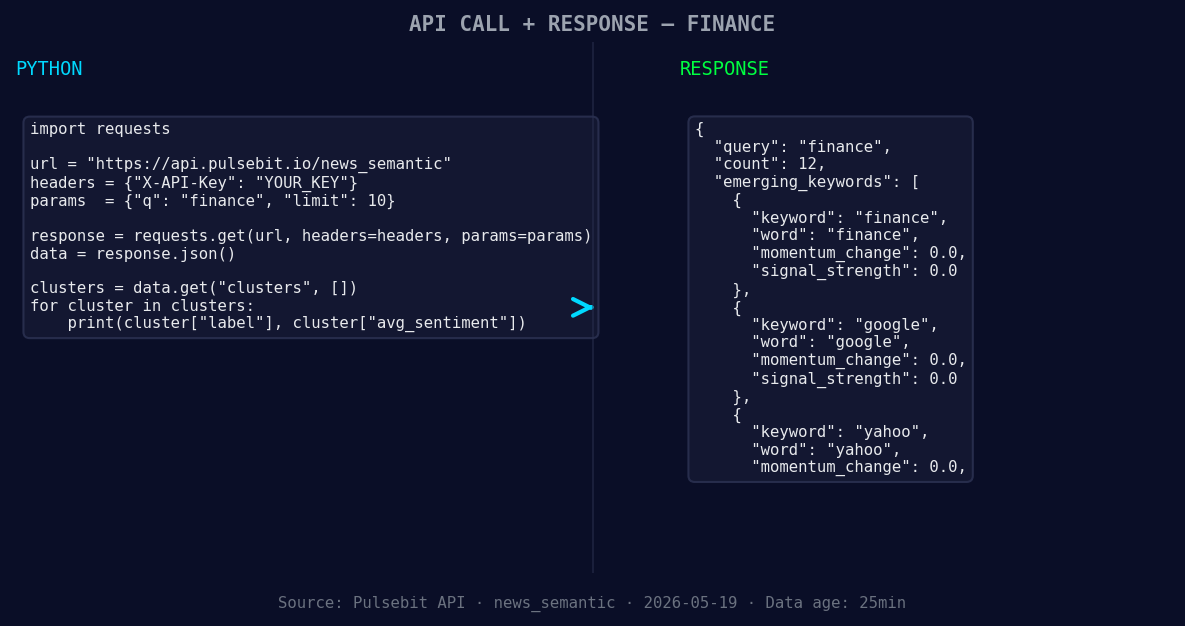
*Left: Python GET /news_semantic call for 'finance'. Right: returned JSON response structure (clusters: 3). Source: Pulsebit /news_semantic.*
# Print results
print(data)
Next, we need to score the narrative framing itself. The cluster reason string "Clustered by shared themes: 30-year, yield, hits, highest, since." can be sent back through our API to analyze its meta-sentiment:
# Meta-sentiment moment: scoring the narrative framing
narrative = "Clustered by shared themes: 30-year, yield, hits, highest, since."
meta_sentiment_url = "https://api.pulsebit.com/v1/sentiment"

# Make POST request for meta-sentiment
meta_response = requests.post(meta_sentiment_url, json={"text": narrative})
meta_data = meta_response.json()

# Print meta sentiment results
print(meta_data)
With these two API calls, you can pinpoint not only the sentiment shift but also how the narrative around certain themes is evolving.
Here are three specific builds you can create with this pattern:
Sentiment Alert System: Set a threshold for momentum spikes over +0.15 in the finance category using the geo filter. Whenever it exceeds this threshold, trigger an alert in your dashboard.
Trend Analysis Dashboard: Use the meta-sentiment response to visualize how narratives evolve over time. Implement a rolling window that tracks significant articles and clusters, specifically focusing on themes like "30-year" or "yield."
Cross-Platform Comparison Tool: Compare sentiment scores from multiple sources, such as Google and Yahoo, against the mainstream narrative. Utilize the geo filter to ensure accuracy when fetching data for specific regions.
If you want to dive into the specifics, head over to our documentation at pulsebit.lojenterprise.com/docs. You can copy-paste the provided code snippets and run this in under 10 minutes, allowing you to bring sentiment data directly into your development workflow.


Top comments (0)