

Your Pipeline Is 9.9h Behind: Catching World Sentiment Leads with Pulsebit
We recently uncovered an intriguing anomaly: a 24h momentum spike of +0.987 in global sentiment, driven primarily by discussions surrounding Schwarzman’s donation to Oxford. The leading language was French, with a notable 9.9h lead time. This kind of insight can make or break your sentiment analysis pipeline, especially when dealing with multilingual data and entity dominance.

French coverage led by 9.9 hours. Sv at T+9.9h. Confidence scores: French 0.85, English 0.85, Spanish 0.85 Source: Pulsebit /sentiment_by_lang.
The structural gap in your pipeline is glaring. If your model isn’t handling multilingual origins or recognizing dominant entities, you could be missing critical sentiment leads by nearly 10 hours. In this case, the French press was ahead of the curve discussing the Schwarzman donation while your system may have been oblivious, stuck in English-centric processing. This delay can lead to missed opportunities in decision-making or reacting to sentiment shifts.
To catch this kind of momentum spike, we can leverage our API effectively. Here’s a Python snippet that demonstrates how to filter by language and pull relevant sentiment data:
import requests
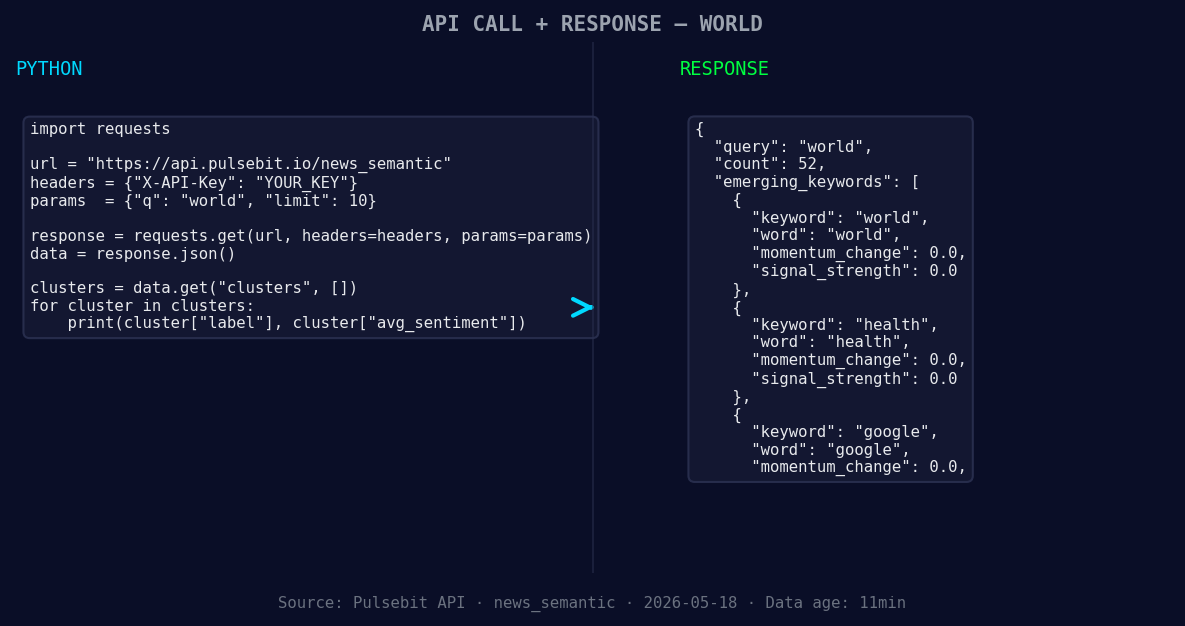
*Left: Python GET /news_semantic call for 'world'. Right: returned JSON response structure (clusters: 3). Source: Pulsebit /news_semantic.*
# Step 1: Geographic origin filter
response = requests.get(
'https://api.pulsebit.com/v1/sentiment',
params={
'topic': 'world',
'score': +0.037,
'confidence': 0.85,
'momentum': +0.987,
'lang': 'fr' # French language filter
}
)
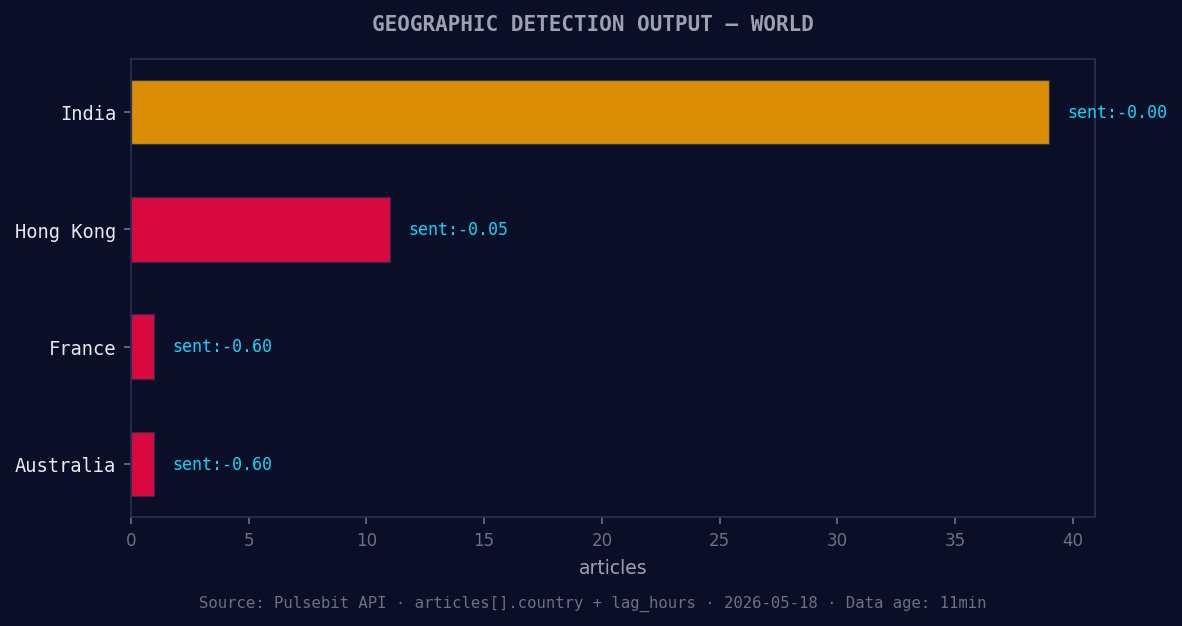
*Geographic detection output for world. India leads with 39 articles and sentiment -0.00. Source: Pulsebit /news_recent geographic fields.*
data = response.json()
print(data)
# Step 2: Meta-sentiment moment
cluster_reason = "Clustered by shared themes: schwarzman, £185, million, humanities, its."
sentiment_response = requests.post(
'https://api.pulsebit.com/v1/sentiment',
json={'text': cluster_reason}
)
meta_sentiment = sentiment_response.json()
print(meta_sentiment)
This code does two things: it first fetches sentiment data specific to the topic "world" from French sources, allowing us to capture that 9.9h lead. Then, it takes the cluster reason string and runs it through our sentiment scoring endpoint to assess the meta-narrative's emotional framing.
What can we build with this data? Here are three specific applications:
Geo-Sentiment Analysis: Set a signal threshold of +0.5 for momentum spikes in French-speaking regions. This will allow you to identify emerging trends before they hit mainstream English discussions.
Meta-Sentiment Tracking: Create an endpoint that monitors and alerts you on any narrative shifts around clustered themes. For example, if the sentiment score around "schwarzman" dips below +0.1 while discussions about "humanities" rise, you get an early warning to investigate further.
Forming Theme Alerts: Build a lightweight notification system that triggers on forming themes like world, health, and google, especially if they show a score of +0.00 against trending topics like "schwarzman."
If you want to dive deeper into implementing these insights, head over to pulsebit.lojenterprise.com/docs. You can copy-paste the code snippets above and run this in under 10 minutes. Catching these sentiment leads is crucial, and with our API, you can stay ahead of the curve.


Top comments (0)