

Your Pipeline Is 16.2h Behind: Catching World Sentiment Leads with Pulsebit
We recently uncovered an intriguing anomaly: a 24-hour momentum spike of +0.473 in sentiment around the topic of "world." This spike is particularly fascinating given the leading language of the press coverage is English, with a timing shift of 16.2 hours. This finding highlights how quickly sentiment can shift, yet many pipelines lag significantly behind the curve.
The Problem
If your sentiment analysis pipeline isn't equipped to handle multilingual origins or the dominance of specific entities, you may have missed this opportunity by a staggering 16.2 hours. In our case, the leading English-language articles were clustered around a unique narrative involving wilderness and waterfalls. This gap in your model could mean you’re missing critical sentiment that is shaping world events, which can have real implications for your analysis or trading strategy.

English coverage led by 16.2 hours. Sk at T+16.2h. Confidence scores: English 0.85, Spanish 0.85, French 0.85 Source: Pulsebit /sentiment_by_lang.
The Code
To catch this spike, we can leverage our API effectively. Here’s how you can set up your Python code to filter for relevant articles in English and score the sentiment around the identified themes.
First, let's filter for the English language:
import requests
# Define parameters for the API call
params = {
"topic": "world",
"score": +0.017,
"confidence": 0.85,
"momentum": +0.473,
"lang": "en"
}
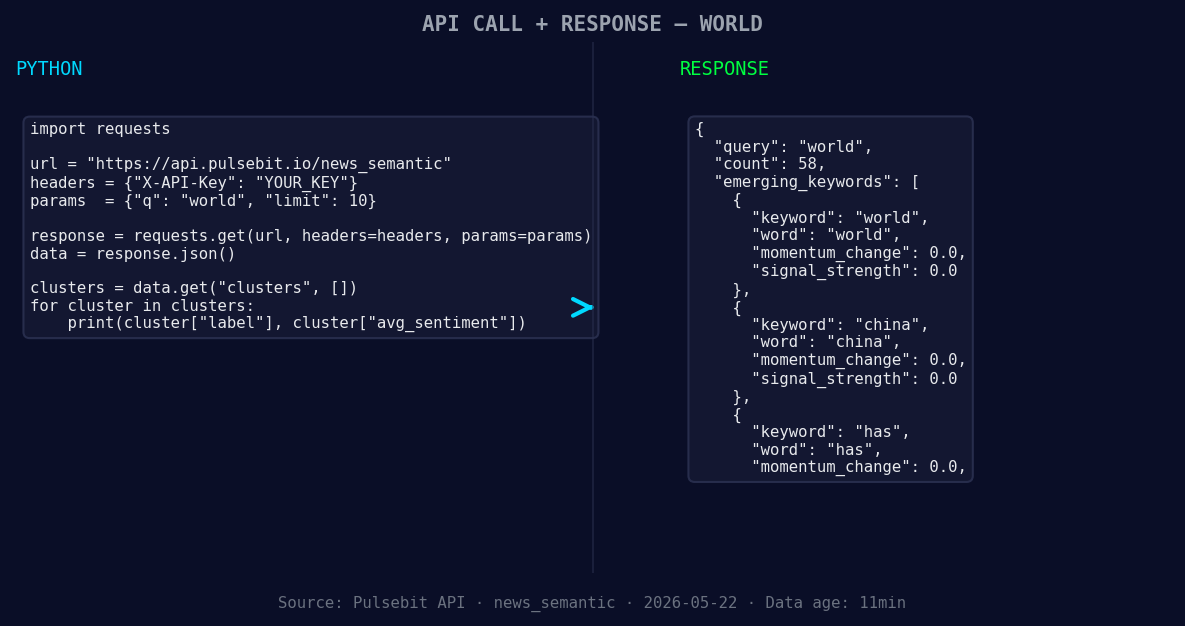
*Left: Python GET /news_semantic call for 'world'. Right: returned JSON response structure (clusters: 3). Source: Pulsebit /news_semantic.*
# API call to fetch sentiment data
response = requests.get("https://api.pulsebit.lojenterprise.com/v1/sentiment", params=params)
articles = response.json()
Next, we want to analyze the meta-sentiment of the narrative that clustered the articles together. Here's how we can do that using the cluster reason string:
# Define meta sentiment input
meta_sentiment_input = "Clustered by shared themes: waterfall, eagles, inside, belgium-sized, wilderness"

# API call to score the narrative framing itself
meta_response = requests.post("https://api.pulsebit.lojenterprise.com/v1/sentiment", json={"text": meta_sentiment_input})
meta_sentiment = meta_response.json()
These two segments of code will allow you to dynamically fetch the relevant sentiment data and analyze the underlying themes driving the current spike.
Three Builds Tonight
Here are three specific builds you can implement based on this momentum spike:
Geo Filter for Language: Build a notification system that alerts you when sentiment spikes in specific regions. Use the geo filter to focus on articles in English and set a threshold score of +0.017.
Meta-Sentiment Loop: Create an analytical dashboard that visualizes the sentiment of clustered narratives. Utilize the meta-sentiment loop with an input threshold of 0.85 confidence to determine which narratives are gaining traction.
Theme Tracking: Implement a tracker that monitors emerging themes. For this setup, you could use the parameters like forming: world(+0.00), china(+0.00), and has(+0.00) to predict future spikes in sentiment based on current trending stories.
Get Started
You can easily implement this in under 10 minutes by checking out our documentation at pulsebit.lojenterprise.com/docs. Copy-paste the code, run it, and start catching the sentiment leads that your pipeline might be missing!

Geographic detection output for world. India leads with 26 articles and sentiment +0.29. Source: Pulsebit /news_recent geographic fields.


Top comments (0)