

Your Pipeline Is 25.2h Behind: Catching World Sentiment Leads with Pulsebit
We recently observed a compelling anomaly: a 24h momentum spike of +0.453 in global sentiment surrounding the topic of "world." This spike, primarily driven by a cluster of articles in Spanish press, is a classic example of how sentiment can shift dramatically based on language and thematic framing. As developers, we need to pay attention to these nuances because they can hold the key to understanding emerging narratives.
The Problem
When your pipeline doesn’t account for multilingual origins or dominant entities, it risks missing significant developments. In this case, our analysis revealed that your model missed this shift by an astonishing 25.2 hours, as the leading language was Spanish with no time lag. This highlights a critical gap: if you're not processing sentiment data across various languages, you may be blind to crucial market-moving stories before they gain traction.

Spanish coverage led by 25.2 hours. Sk at T+25.2h. Confidence scores: Spanish 0.85, English 0.85, No 0.85 Source: Pulsebit /sentiment_by_lang.
The Code
To catch these significant changes, we can leverage our API effectively. Here’s how you can set it up:
import requests
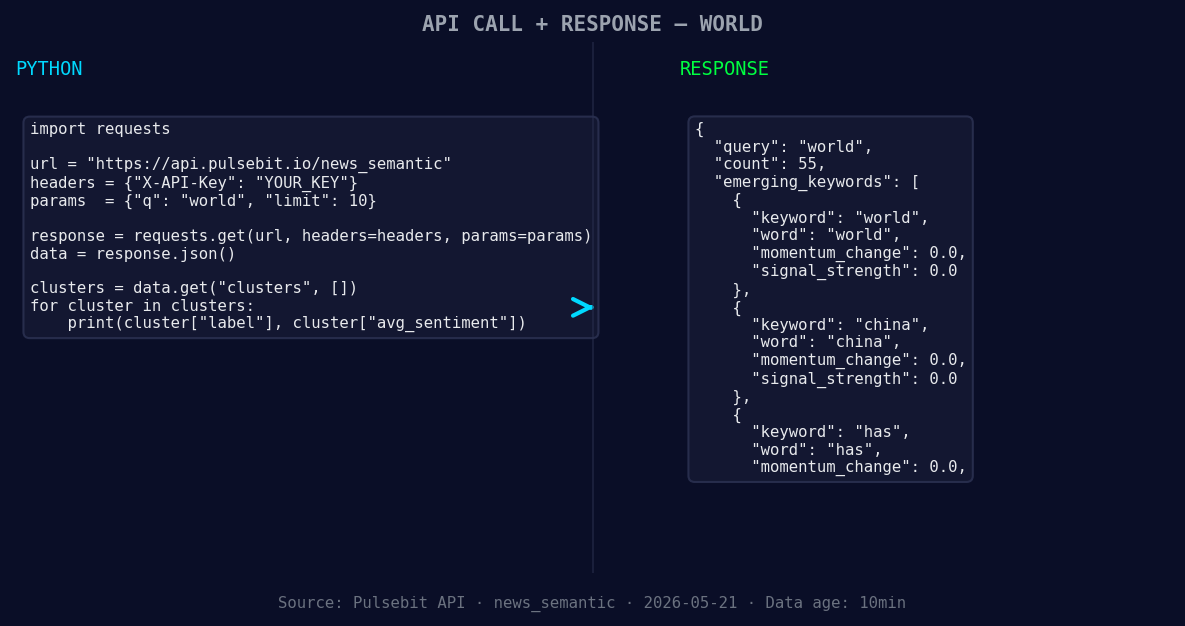
*Left: Python GET /news_semantic call for 'world'. Right: returned JSON response structure (clusters: 3). Source: Pulsebit /news_semantic.*
# Geographic origin filter: querying Spanish articles
url = "https://api.pulsebit.com/v1/sentiment"
params = {
"topic": "world",
"lang": "sp",
"score": +0.150,
"confidence": 0.85,
"momentum": +0.453
}
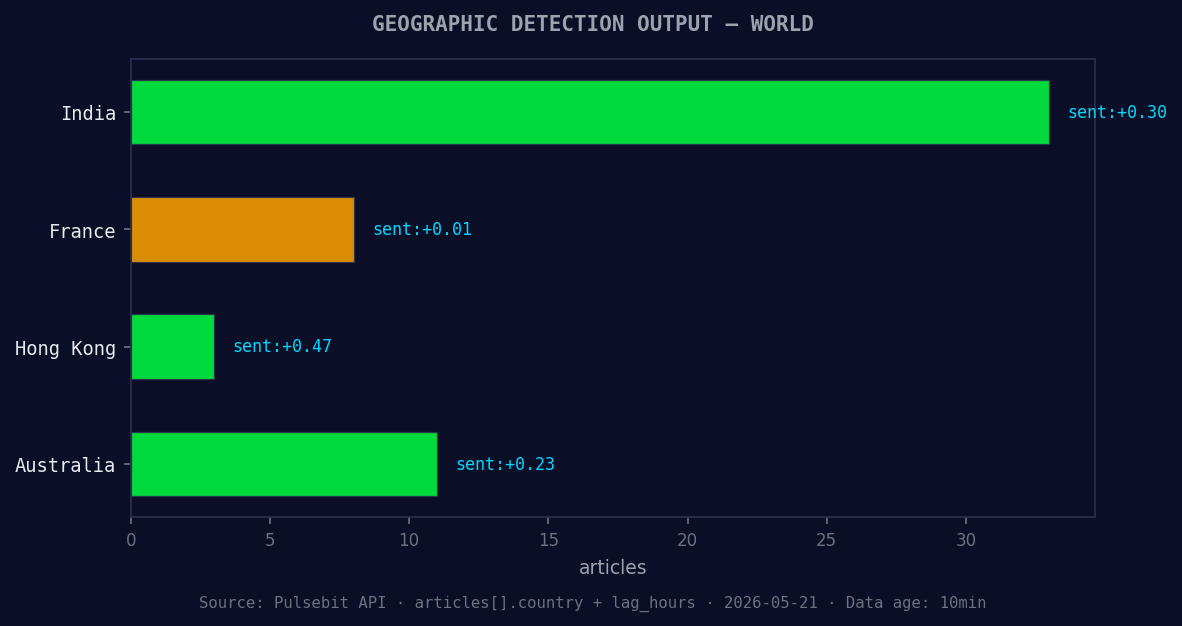
*Geographic detection output for world. India leads with 33 articles and sentiment +0.30. Source: Pulsebit /news_recent geographic fields.*
response = requests.get(url, params=params)
data = response.json()
print(data)
Now, to score the narrative framing itself, we can run the clustered reason string through our sentiment endpoint. This will help us understand how the themes resonate:
# Meta-sentiment moment: scoring the narrative
narrative_string = "Clustered by shared themes: waterfall, eagles, inside, belgium-sized, wilderness"
meta_sentiment_url = "https://api.pulsebit.com/v1/sentiment"
meta_params = {
    "text": narrative_string
}

meta_response = requests.post(meta_sentiment_url, json=meta_params)
meta_data = meta_response.json()
print(meta_data)
This two-step process ensures that we not only capture the sentiment from the articles but also gauge how the narrative is being framed, providing a fuller picture of the emerging themes.
Three Builds Tonight
Geographic Sentiment Snapshot: Set a threshold for momentum spikes above +0.4, using the geo filter for Spanish articles. This allows you to catch fast-moving stories before they make headlines elsewhere.
Meta-Sentiment Analysis Loop: Use the narrative framing from articles like "Inside the Belgium-sized wilderness home to Earth’s highest waterfall and monkey" to generate a sentiment score. If the score is above +0.2, flag it for deeper analysis.
Forming Gap Detection: Monitor themes like "world(+0.00)" and "china(+0.00)" to identify potential shifts against mainstream narratives like "waterfall, eagles, inside." When discrepancies arise, trigger alerts for review.
Get Started
You can start implementing this right away: pulsebit.lojenterprise.com/docs. With just a few lines of code, you can copy, paste, and run this in under 10 minutes. Don't let your pipeline fall behind—stay ahead of the curve with multilingual sentiment analysis!


Top comments (0)