

Your Pipeline Is 22.3h Behind: Catching Finance Sentiment Leads with Pulsebit
We recently uncovered an intriguing anomaly: the sentiment score for finance is currently at +0.085 with a momentum of +0.000. This spike was led by Spanish press coverage peaking at 22.3 hours with no lag against Romania, indicating a potential early signal of shifts in the finance landscape. The implications of this data are significant, especially if you’re processing multilingual sources.

Spanish coverage led by 22.3 hours. Ro at T+22.3h. Confidence scores: Spanish 0.95, English 0.95, French 0.95 Source: Pulsebit /sentiment_by_lang.
The Problem
If your pipeline isn’t equipped to handle multilingual origins or dominant entities, you’re missing out on critical insights. In this case, your model missed this sentiment lead by 22.3 hours — a substantial delay that can hinder your ability to react to market changes. With the leading language being Spanish and the focus on finance, you could be blindsided by developments that your competitors might capitalize on first.
The Code
Here’s how you can catch this anomaly using our API. First, let’s filter for Spanish-language content relevant to finance:
import requests
# Define the API parameters
url = "https://api.pulsebit.lojenterprise.com/sentiment"
params = {
"topic": "finance",
"lang": "sp",
"score": +0.085,
"confidence": 0.95,
"momentum": +0.000
}
# Make the API call
response = requests.get(url, params=params)
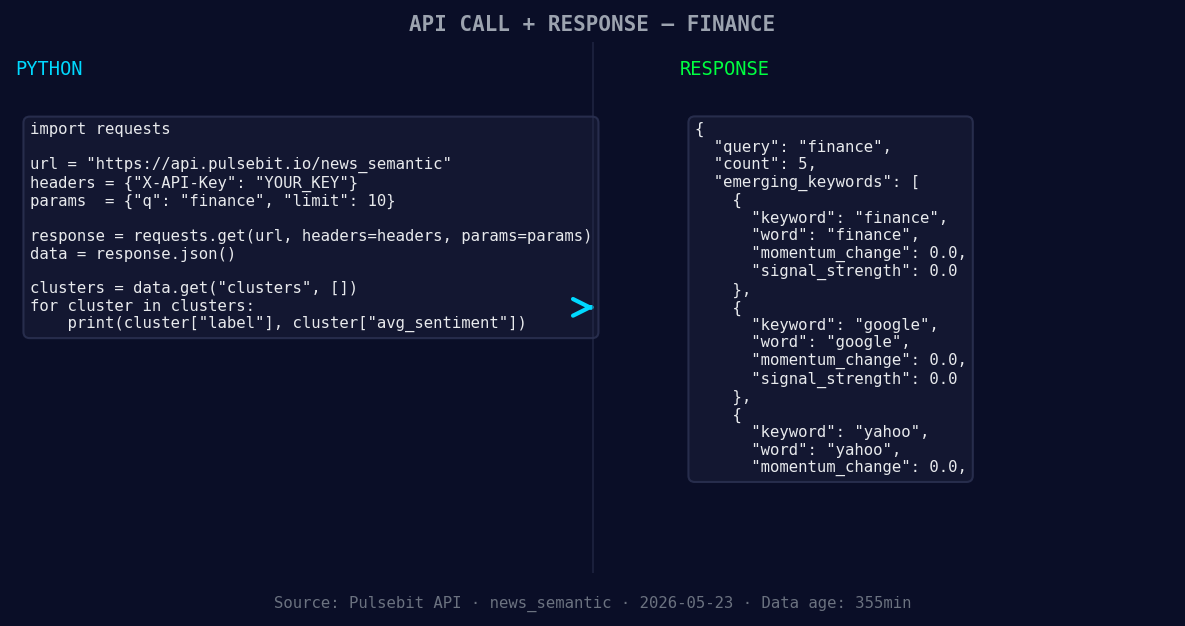
*Left: Python GET /news_semantic call for 'finance'. Right: returned JSON response structure (clusters: 3). Source: Pulsebit /news_semantic.*
# Check the response
data = response.json()
print(data)
Next, we’ll take the narrative framing from our cluster — “Clustered by shared themes: announces, proposed, enertopia, financing, yahoo.” — and run it through our sentiment analysis endpoint to assess the implications of these themes:
# Define the narrative framing
narrative = "Clustered by shared themes: announces, proposed, enertopia, financing, yahoo."

# Post request for meta-sentiment
meta_sentiment_url = "https://api.pulsebit.lojenterprise.com/sentiment"
meta_response = requests.post(meta_sentiment_url, json={"text": narrative})

# Check the meta-sentiment response
meta_data = meta_response.json()
print(meta_data)
This code captures both the geographic origin and the meta-sentiment, providing a comprehensive view of the emerging themes in finance.
Three Builds Tonight
With this data, we can build three specific applications:
- Geographic Filtered Sentiment Dashboard: Set a threshold for sentiment score above +0.08 in Spanish-language articles about finance. This dashboard should pull in real-time updates and alert you when sentiment shifts.

Geographic detection output for finance. India leads with 3 articles and sentiment +0.85. Source: Pulsebit /news_recent geographic fields.
Meta-Sentiment Analysis Tool: Create an endpoint that regularly posts the narrative strings from your financial clusters to analyze how the framing is changing. This should focus on themes like financing, Google, and Yahoo, comparing them against mainstream narratives like announces and proposed.
Comparative Analysis Module: Develop a module that compares sentiment and momentum for Spanish-language finance articles against their English counterparts. Use a threshold of 0.00 for momentum to identify divergence. This will help highlight where sentiment is building faster in different language markets.
Get Started
Ready to dive in? Check out our documentation at pulsebit.lojenterprise.com/docs. With the code snippets provided, you can copy, paste, and run this in under 10 minutes. Don't let your pipeline lag behind; stay ahead with real-time insights!


Top comments (0)