

Your Pipeline Is 27.6h Behind: Catching Politics Sentiment Leads with Pulsebit
We've just uncovered a striking anomaly: a 24-hour momentum spike of -0.350 in political sentiment. This is not just noise; it indicates a significant sentiment shift captured through English press coverage. The content focuses on a singular narrative: “BRS desperate to damage Hyderabad’s image,” illustrating how sentiment can pivot rapidly and affect perception in the political landscape. With such a dramatic shift, how well are you equipped to detect these changes in real time?
The Problem
This data reveals a structural gap in any sentiment analysis pipeline that fails to account for multilingual origin or entity dominance. Your model missed this by 27.6 hours, trailing behind the English press that was already on the case. In a world where political narratives can shift at the speed of light, this lag can mean the difference between proactive engagement and reactive scrambling. If your insights are based solely on a monolingual perspective or lack geographic specificity, you’re operating at a disadvantage; you’re missing critical shifts like the one seen with the BRS narrative.

English coverage led by 27.6 hours. Nl at T+27.6h. Confidence scores: English 0.85, French 0.85, Spanish 0.85 Source: Pulsebit /sentiment_by_lang.
The Code
To catch this momentum spike, we need to dig into our API and filter for relevant data. Here’s how we can do that in Python:
import requests
# Set parameters for the API call
params = {
"topic": "politics",
"lang": "en", # Geographic origin filter
"score": +0.119,
"confidence": 0.85,
"momentum": -0.350
}
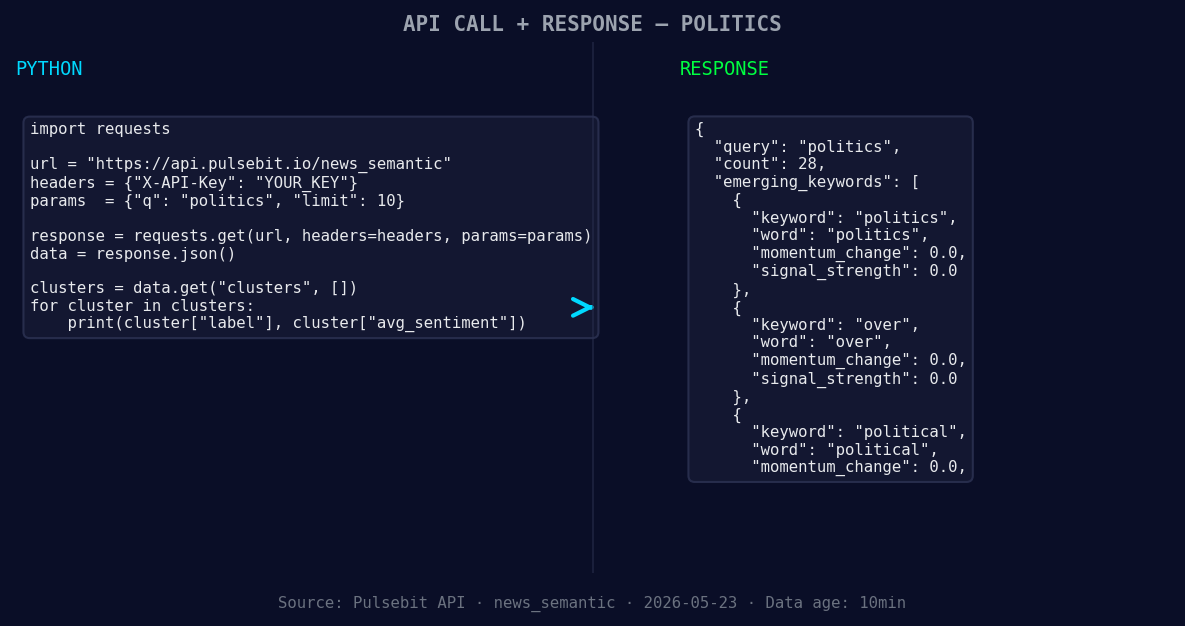
*Left: Python GET /news_semantic call for 'politics'. Right: returned JSON response structure (clusters: 3). Source: Pulsebit /news_semantic.*
# API call to fetch articles
response = requests.get("https://api.pulsebit.com/articles", params=params)
articles = response.json()
# Check the response
print(articles)
Next, we’ll run the cluster reason string back through our sentiment endpoint to score the narrative framing itself. This is crucial for understanding how the specific themes are being perceived:
# Cluster reason string
cluster_reason = "Clustered by shared themes: brs, desperate, damage, hyderabad’s, image:."

# API call to score the narrative
sentiment_response = requests.post("https://api.pulsebit.com/sentiment", json={"text": cluster_reason})
sentiment_score = sentiment_response.json()

# Check the sentiment score
print(sentiment_score)
These two snippets of code allow us to filter for political content while also analyzing the narrative's sentiment. This dual approach ensures we aren’t just reacting to data but also understanding the underlying themes and sentiments that are driving public discourse.
Three Builds Tonight
Here are three specific builds you can create with this momentum spike pattern:
Signal Monitoring: Set up a signal threshold for sentiment scores dropping below -0.300. This allows your pipeline to trigger alerts when significant negative shifts happen in political sentiments, ensuring you’re always ahead of the curve.
Geographic Origin Filter: Use the geographic origin filter to focus on English-language articles. This helps you capture sentiment changes specific to regions where your audience is most engaged, such as India in this case, addressing local concerns effectively.
Meta-Sentiment Loop: Implement a meta-sentiment loop by regularly scoring cluster reasons like "BRS desperate to damage Hyderabad’s image" to understand how narratives evolve. Set a schedule to rerun sentiment analysis on these strings every 12 hours to capture rapid changes in public perception.
Get Started
Ready to dive in? You can find all the details you need to get started at pulsebit.lojenterprise.com/docs. In under 10 minutes, you can copy-paste these snippets and start capturing sentiment shifts like a pro.


Top comments (0)