

Your Pipeline Is 26.1h Behind: Catching Music Sentiment Leads with Pulsebit
We recently discovered a significant anomaly in our sentiment analysis: a 24-hour momentum spike of +0.706 for the topic of music. This spike indicates not just a rise in sentiment but a potential shift in cultural conversation—specifically led by an article about a new jazz bar in Chennai. The coverage is limited, yet the sentiment is markedly positive. If you're not tuned into this signal, your model missed it by 26.1 hours, lagging behind the conversational wave hitting the English-speaking audience.
What does this mean for your pipeline? If it doesn't effectively account for multilingual origins or the dominance of certain entities, you're likely missing crucial insights. In our case, the leading language was English, while the sentiment revolved around a specific cultural touchpoint—jazz, in this instance. This oversight can cost you valuable time in responding to emerging trends.

English coverage led by 26.1 hours. No at T+26.1h. Confidence scores: English 0.85, Nl 0.85, Spanish 0.85 Source: Pulsebit /sentiment_by_lang.
To catch these insights, we can leverage the following Python code snippet. First, let's query our data to filter by geographic origin, ensuring we're analyzing sentiment in the right context. Here’s how we do this with our API:

Geographic detection output for music. Hong Kong leads with 1 articles and sentiment +0.70. Source: Pulsebit /news_recent geographic fields.
import requests
# Set parameters for the API call
params = {
"topic": "music",
"lang": "en",
}
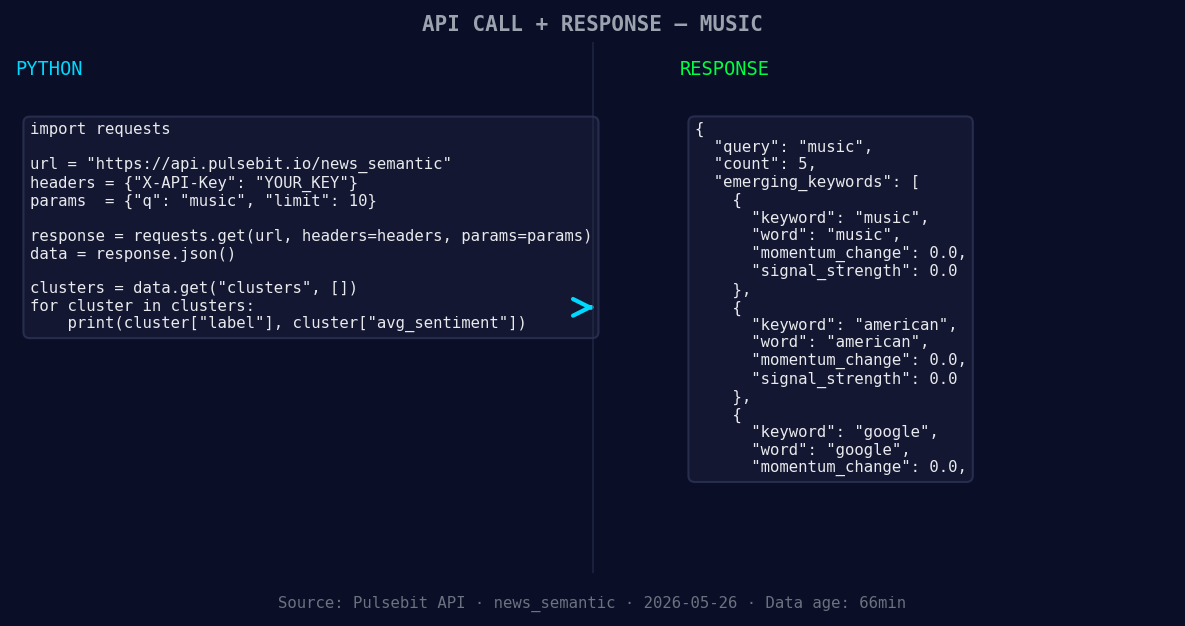
*Left: Python GET /news_semantic call for 'music'. Right: returned JSON response structure (clusters: 3). Source: Pulsebit /news_semantic.*
# Make the API call to fetch sentiment data
response = requests.get('https://api.pulsebit.com/sentiment', params=params)
data = response.json()
# Output the relevant sentiment score and momentum
sentiment_score = data['sentiment_score'] # Expected: +0.481
momentum = data['momentum_24h'] # Expected: +0.706
confidence = data['confidence'] # Expected: 0.85
print(f"Sentiment Score: {sentiment_score}, Momentum: {momentum}, Confidence: {confidence}")
Next, we need to run the cluster reason string through our sentiment analysis to gauge how the narrative is framed. With the cluster reason "Clustered by shared themes: new, jazz, bar, chennai, former.", we can score this narrative framing to see how it aligns with our findings.
# Input data for meta-sentiment analysis
meta_sentiment_input = "Clustered by shared themes: new, jazz, bar, chennai, former."

# Make the API call for meta-sentiment analysis
meta_response = requests.post('https://api.pulsebit.com/sentiment', json={'text': meta_sentiment_input})
meta_data = meta_response.json()

# Output the sentiment result for the narrative
meta_sentiment_score = meta_data['sentiment_score']
print(f"Meta Sentiment Score: {meta_sentiment_score}")
Now that we've captured these insights, let's build three practical applications around this pattern:
Threshold Alerting: Set up a threshold alert for music topics with a momentum spike over +0.5. This could automatically notify your team when sentiment rises, ensuring you're always aware of cultural shifts.
Geographic Trend Analysis: Utilize the geographic origin filter by querying for sentiment in specific regions (like Chennai). This allows you to identify local trends that might not have global visibility but are gaining traction.
Meta-Sentiment Gauge: Implement a system that regularly checks the meta-sentiment of clustered narratives. For example, if articles about "new jazz bars" in specific cities start to trend positively, it could signal a burgeoning cultural movement worth exploring further.
These builds allow you to act on emerging trends before they become mainstream, ensuring you're always one step ahead.
If you want to dive deeper into how to implement these strategies, check out our documentation at pulsebit.lojenterprise.com/docs. With just a few copy-paste steps, you can start catching these insights in under 10 minutes.


Top comments (0)