

Your Pipeline Is 25.0h Behind: Catching Finance Sentiment Leads with Pulsebit
We just uncovered a striking anomaly: a 24-hour momentum spike of +0.214 in sentiment around finance, specifically tied to a cluster of articles focusing on the overhaul of key finance bill clauses in Kenya. This spike isn't just a number; it indicates a significant shift in sentiment that you need to catch, especially if your pipeline is lagging behind. With the leading language being English and a 25.0-hour delay in reporting, this is a clear signal that something important is happening that you might miss if you're not tuned in.
Your model missed this by 25 hours. With the dominant entity being the finance bill in Kenya, it’s evident that pipelines that fail to handle multilingual origins or capture entity dominance are at a disadvantage. While you rely on mainstream narratives, you may be sidelining critical insights from non-English content. If you’re not accounting for this, your models risk being outdated the moment they process incoming data.

English coverage led by 25.0 hours. No at T+25.0h. Confidence scores: English 0.85, French 0.85, Spanish 0.85 Source: Pulsebit /sentiment_by_lang.
To catch this momentum spike, we can leverage our API for real-time sentiment analysis. Here’s how to do it:
import requests
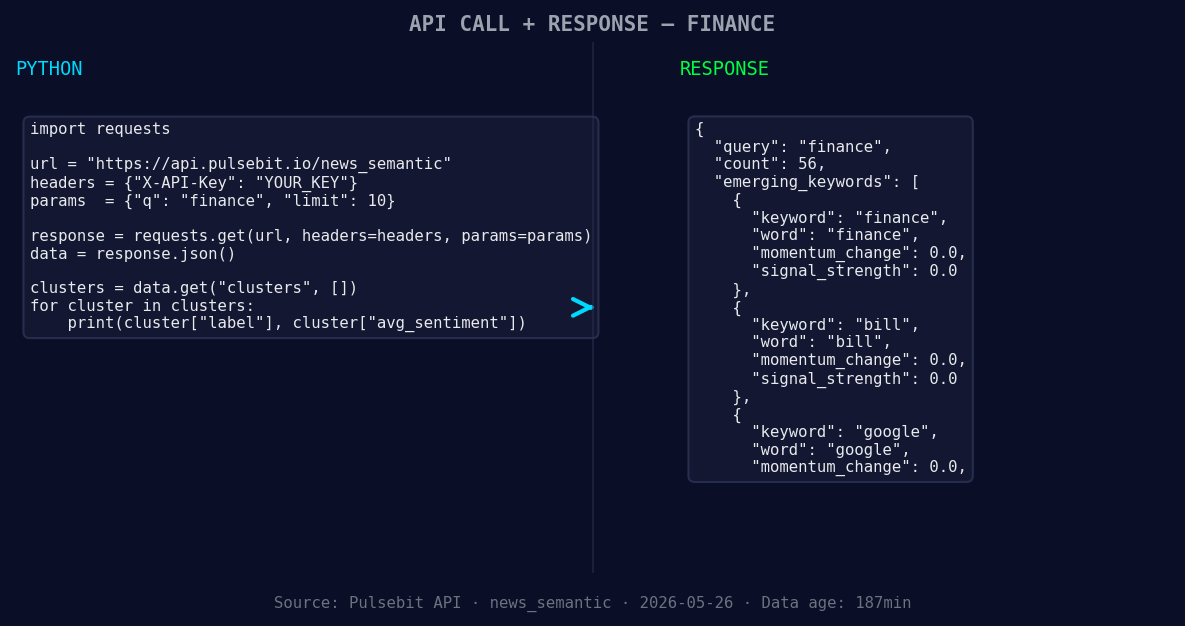
*Left: Python GET /news_semantic call for 'finance'. Right: returned JSON response structure (clusters: 3). Source: Pulsebit /news_semantic.*
# Step 1: Geographic origin filter for English articles
response = requests.get('https://api.pulsebit.com/topics',
params={
'topic': 'finance',
'lang': 'en'
})
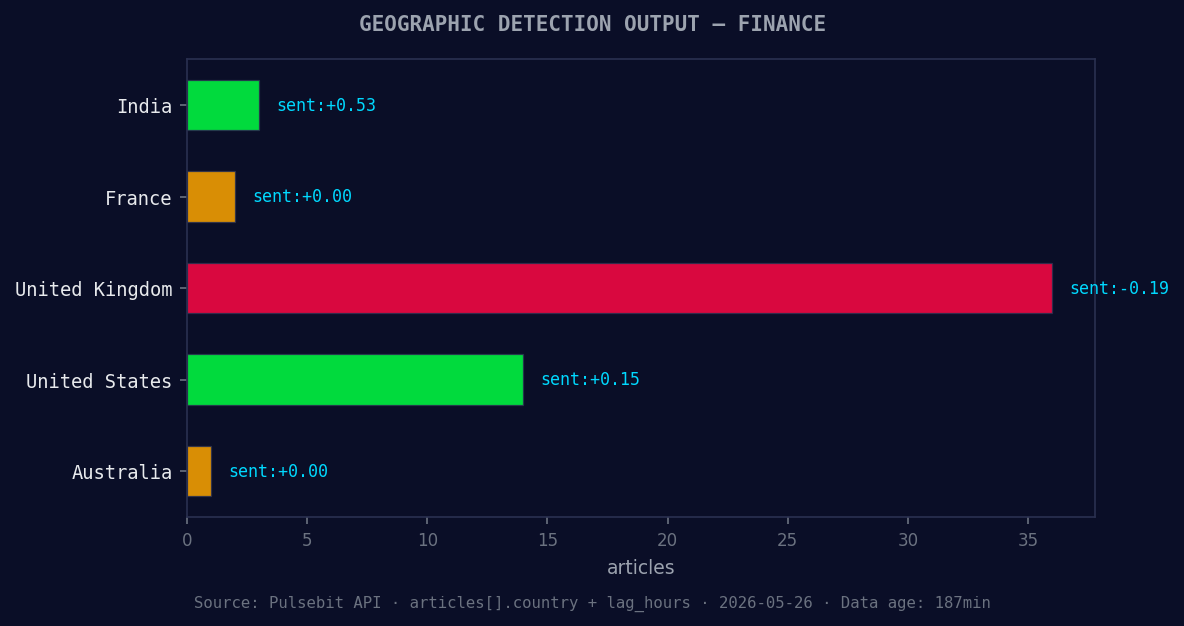
*Geographic detection output for finance. India leads with 3 articles and sentiment +0.53. Source: Pulsebit /news_recent geographic fields.*
data = response.json()
print(data) # Check the response
# Step 2: Meta-sentiment moment
cluster_reason = "Clustered by shared themes: xavier, budget, des, jean-luc, tavernier."
sentiment_response = requests.post('https://api.pulsebit.com/sentiment',
json={
'input': cluster_reason,
'score': -0.085,
'confidence': 0.85,
'momentum': +0.214
})
sentiment_data = sentiment_response.json()
print(sentiment_data) # Check the meta-sentiment response
In this code, we first filter articles by the finance topic, ensuring we only get English content. Then, we run the cluster reason string through our sentiment analysis endpoint to gauge how the narrative is being framed. This provides a richer context to understand the momentum spike — it’s not just about the numbers; it’s about the story behind them.
Here are three specific things we can build with this pattern:
Geo-Filtered Alerts: Set up a real-time alert system that triggers when the momentum score exceeds a threshold of +0.200 for finance-related articles in English. This helps you stay ahead of major shifts in sentiment without getting bogged down by noise.
Meta-Sentiment Dashboard: Create a dashboard that visualizes the meta-sentiment scores of clustered narratives around finance topics. Set a threshold of sentiment scores below -0.1 to flag potential negative sentiment trends, particularly when clusters of articles begin to spike.
Forming Theme Tracker: Implement a feature that analyzes forming themes, such as "finance" and "bill," against a backdrop of mainstream topics like "xavier" and "budget." Use a scoring mechanism to rate the relevance of these themes against historical sentiment baselines to identify emerging trends before they become widely recognized.
By leveraging our API effectively, you can ensure your models are not just reactive but proactive in capturing emerging sentiment trends. Don’t let your pipeline fall behind — you can start building these insights now.
Get started with our documentation at pulsebit.lojenterprise.com/docs. With just a few lines of code, you can have this running in under 10 minutes. Let's make sure you never miss a critical moment in sentiment again.


Top comments (0)