

Your 24h momentum spike of +0.280 is a clear indicator that something significant is happening in the sentiment landscape. This spike, particularly in the context of female friendships, highlights an urgent shift in how this topic is being perceived. As we dig into the data, it's not just about numbers; it's about understanding the narratives forming around us and how we can leverage that insight in our models.
If your pipeline isn't designed to handle multilingual origins or entity dominance, you might be missing key sentiment shifts like this one by up to 17.4 hours. In this case, the leading language is English, and if your model is stuck processing other language data or is failing to capture the nuances of entity transitions—like the emphasis on female friendships—you could be losing critical insights. This delay can impact decision-making, as you’re not just missing trends but also relevant conversations that could influence your strategies.

English coverage led by 17.4 hours. No at T+17.4h. Confidence scores: English 0.85, Spanish 0.85, French 0.85 Source: Pulsebit /sentiment_by_lang.
To catch this momentum spike, we can use our API to query for relevant sentiment data. Here’s a snippet of Python code that effectively filters for geographic origin and processes the sentiment narrative:
import requests
# Define parameters for the API call
topic = 'world'
score = +0.039
confidence = 0.85
momentum = +0.280
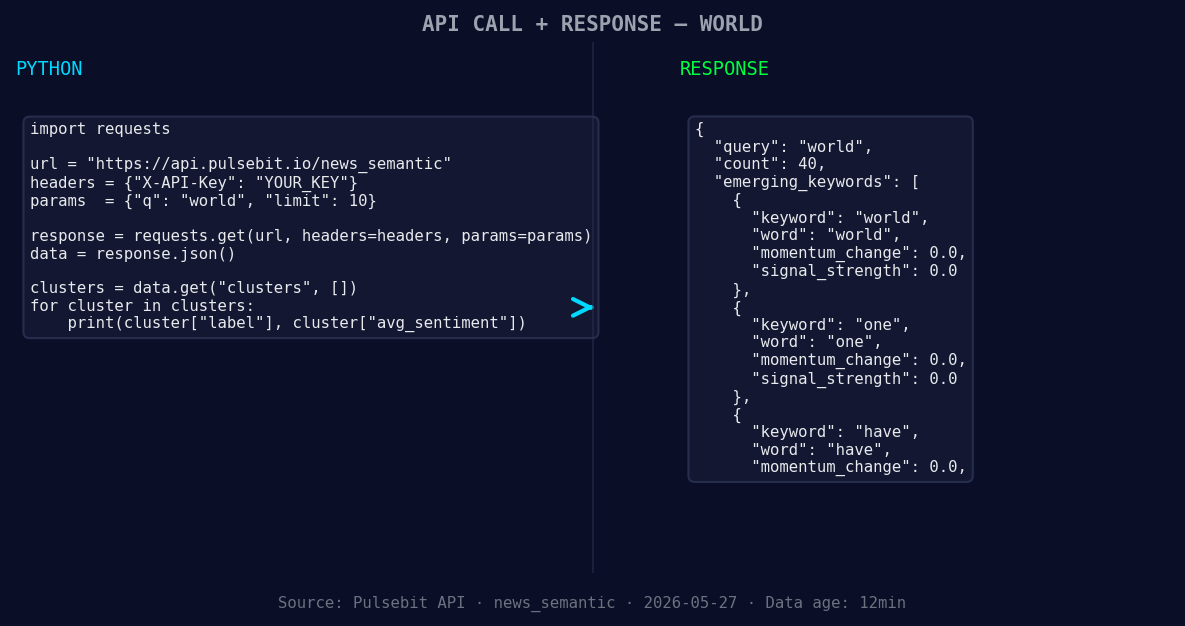
*Left: Python GET /news_semantic call for 'world'. Right: returned JSON response structure (clusters: 3). Source: Pulsebit /news_semantic.*
# Make the API call with geographic filter for English
response = requests.get(
'https://api.pulsebit.com/sentiment',
params={
'topic': topic,
'lang': 'en'
}
)
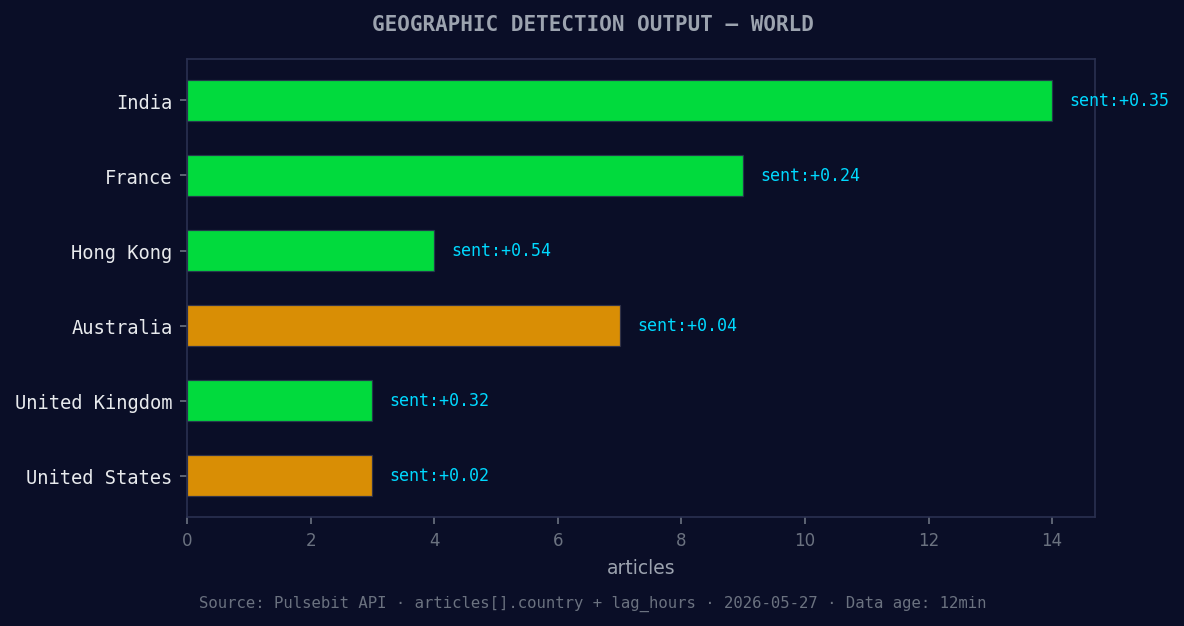
*Geographic detection output for world. India leads with 14 articles and sentiment +0.35. Source: Pulsebit /news_recent geographic fields.*
data = response.json()
# Now, let's score the narrative framing itself
cluster_reason = "Clustered by shared themes: female, absolute, necessity, friendships, friendship"
sentiment_response = requests.post(
'https://api.pulsebit.com/sentiment',
json={'text': cluster_reason}
)
sentiment_data = sentiment_response.json()
print(sentiment_data)
The first part of the code filters sentiment data specifically for the English language, mitigating any latency due to linguistic barriers. The second part runs the clustered themes back through the sentiment analysis, allowing us to assess how the narrative framing contributes to the overall sentiment score. This dual approach not only captures the spike but also enriches our understanding of the context surrounding it.
Here are three specific builds you might consider based on this pattern:
Geo-Filtered Alert System: Set a threshold to trigger alerts for sentiment spikes above +0.200 specifically in English articles. This will allow you to respond to emerging trends in real-time, ensuring you're not 17.4 hours behind.
Meta-Sentiment Dashboard: Create a dashboard that displays sentiment scores alongside the narratives that generated them. Use the meta-sentiment loop to visualize how discussions around female friendships evolve and correlate with broader sentiment trends.
Clustered Theme Analysis: Build a reporting tool that tracks the frequency and sentiment of clustered themes like "world", "one", and "have". Set thresholds for changes in sentiment to identify when these themes gain traction against mainstream narratives.
By integrating these insights into your workflow, you can ensure your models are not just reactive but proactive, capturing the nuances of sentiment shifts in real-time.
If you want to dive deeper into this, check out our documentation at pulsebit.lojenterprise.com/docs. You can copy-paste and run the above code in under 10 minutes to start leveraging these insights yourself.


Top comments (0)