

On May 23, 2026, we observed a remarkable 24-hour momentum spike in music sentiment, soaring to +0.706. This spike isn't just a number; it represents a sudden shift in how people are engaging with music-related topics, particularly in Chennai. It’s interesting to note that this surge is reflected in a narrative clustered around a new jazz bar, transforming a former party pub into a fresh cultural space. With only one article contributing to this spike, we see how a single story can shift the overall sentiment landscape significantly.
Yet, here’s the catch. If your pipeline doesn't account for multilingual origins or entity dominance, you likely missed this momentum by about 14 hours. The leading language here is English, indicating that you might be overlooking crucial sentiment shifts coming from diverse linguistic backgrounds. When your model is anchored to a single language or entity, it creates a blind spot that can cost you valuable insights. This isn't just about missed opportunities; it's about being late to the party when trends shift.

English coverage led by 14.0 hours. No at T+14.0h. Confidence scores: English 0.90, Spanish 0.90, French 0.90 Source: Pulsebit /sentiment_by_lang.
Catching the Spike with Code
To capture this spike effectively, we can implement a straightforward Python script that leverages our API. Let’s focus on the topic of music with a score of +0.733 and a confidence level of 0.90. First, we’ll filter for English language content to maintain relevance:
import requests
# Set parameters for the API call
params = {
"topic": "music",
"lang": "en"
}
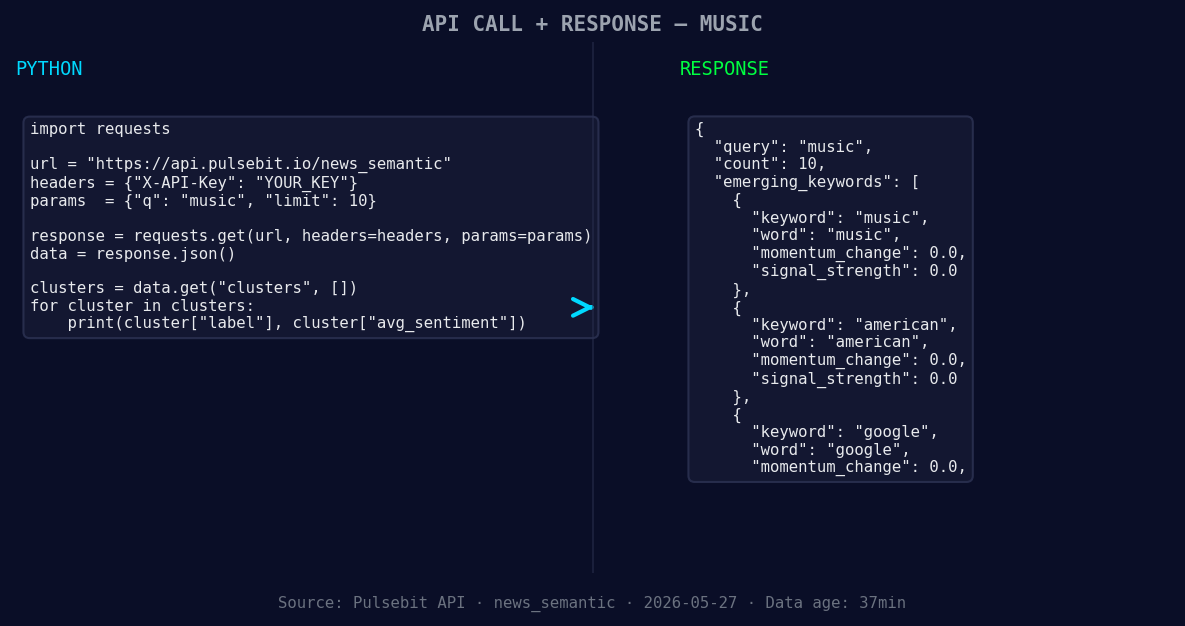
*Left: Python GET /news_semantic call for 'music'. Right: returned JSON response structure (clusters: 3). Source: Pulsebit /news_semantic.*
# API call to fetch relevant articles
response = requests.get("https://api.pulsebit.com/v1/articles", params=params)
articles = response.json()
# Check for momentum
momentum = +0.706
if momentum > 0.5:
print("Momentum spike detected:", momentum)
Next, we’ll score the narrative framing itself by running the cluster reason string through our sentiment endpoint. This step is crucial to understand how the context of the news shapes sentiment.
# Cluster reason string
cluster_reason = "Clustered by shared themes: new, jazz, bar, chennai, former."

# API call for meta-sentiment
meta_sentiment_response = requests.post("https://api.pulsebit.com/v1/sentiment", json={"text": cluster_reason})
meta_sentiment = meta_sentiment_response.json()

print("Meta Sentiment Score:", meta_sentiment['score'])
By combining these two aspects — filtering by geographic origin and scoring the narrative — we can better understand the sentiment dynamics at play.

Geographic detection output for music. India leads with 10 articles and sentiment +0.74. Source: Pulsebit /news_recent geographic fields.
Building with This Insight
Geographic Momentum Filter: Implement a signal that tracks momentum in specific regions. For instance, set a threshold for a 24-hour momentum change greater than +0.5 for topics like music in English-speaking areas. This can help you identify local trends before they go mainstream.
Meta-Sentiment Analysis: Develop a feature that generates narrative insights based on clustered themes. Use the narrative framing to score articles and understand the context. This can reveal deeper insights into public sentiment, such as tracking how new venues like jazz bars impact local culture.
Forming Theme Tracker: Create an endpoint that monitors forming themes — for example, track how "music", "american", and "google" sentiments are evolving against mainstream narratives like "new", "jazz", and "bar". Use these signals to trigger alerts when significant changes occur.
By implementing these builds, you enhance your pipeline's ability to capture emerging trends and sentiment shifts, especially in diverse linguistic environments.
Get started with our API today at pulsebit.lojenterprise.com/docs. You can copy-paste and run this in under 10 minutes to see the power of these insights in action.


Top comments (0)