

Your Pipeline Is 28.7h Behind: Catching Inflation Sentiment Leads with Pulsebit
We’ve recently observed a striking anomaly: a 24h momentum spike of +0.532 focused on inflation sentiment, specifically within the French-speaking community. This spike isn't just a number; it signals a significant uptick in conversations surrounding inflation, particularly highlighted by sentiments around rising CNG prices, which auto and taxi drivers are vocally opposing. With this kind of data, the question that arises is: how can we capitalize on this insight before it becomes mainstream?
Your model missed this by 28.7 hours. That's the lag time between the leading French press coverage and the broader sentiment landscape, which is particularly critical when dealing with multilingual content. When your pipeline doesn’t account for the dominance of certain languages or regions, you risk missing nuanced shifts in sentiment that could impact your strategies. In this case, the French narrative on inflation and CNG pricing is rich with potential insights that are simply not captured in a one-size-fits-all approach.

French coverage led by 28.7 hours. Sv at T+28.7h. Confidence scores: French 0.90, English 0.90, Spanish 0.90 Source: Pulsebit /sentiment_by_lang.
To catch this spike effectively, we can leverage our API's capabilities. Here’s how you can extract and analyze this specific sentiment:
import requests
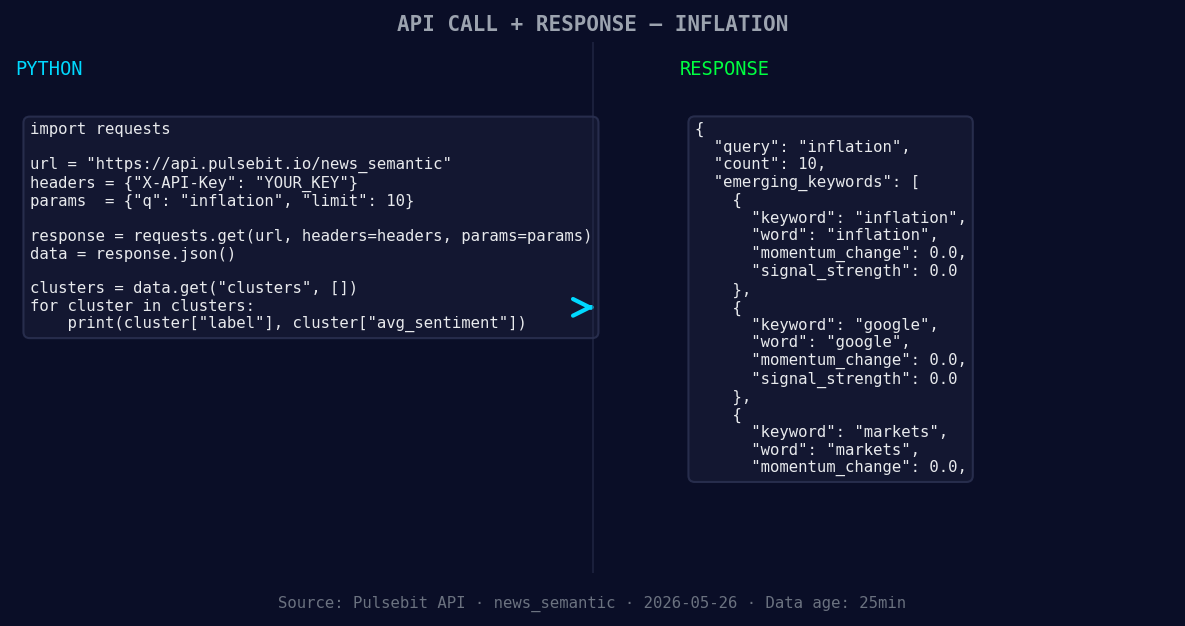
*Left: Python GET /news_semantic call for 'inflation'. Right: returned JSON response structure (clusters: 3). Source: Pulsebit /news_semantic.*
# Step 1: Geographic origin filter
response = requests.get('https://api.pulsebit.com/v1/sentiment',
params={"topic": "inflation",
"score": -0.298,
"confidence": 0.90,
"momentum": +0.532,
"lang": "fr"})
data = response.json()
print(data)
In this snippet, we utilize a geographic filter to ensure we're only processing French-language content about inflation. By focusing on this specific language, we can catch the narratives that might otherwise be overlooked.

Geographic detection output for inflation. India leads with 8 articles and sentiment -0.61. Source: Pulsebit /news_recent geographic fields.
Next, we need to run the cluster reason through the POST /sentiment endpoint to analyze how these narratives are framing the conversation. Here’s how we can do that:
# Step 2: Meta-sentiment moment
cluster_reason = "Clustered by shared themes: cng, auto, taxi, drivers, watch:."
sentiment_response = requests.post('https://api.pulsebit.com/v1/sentiment',
                                    json={"input": cluster_reason})

sentiment_data = sentiment_response.json()
print(sentiment_data)
This code sends the thematic cluster reason to our API, allowing us to gauge how the narrative shapes the sentiment toward inflation and its related themes. This dual approach of filtering by language and analyzing the framing provides a more nuanced understanding of sentiment dynamics.
Based on this pattern, here are three specific things we can build tonight:
Real-Time Alert System: Set a signal for when momentum spikes above +0.5 for the topic 'inflation' specifically in French. This could help you catch emerging trends before they hit the main media outlets.
Sentiment Flow Visualization: Create a visual representation of sentiment shifts over time for keywords like 'cng', 'auto', and 'taxi'. Use the meta-sentiment loop to show how the narrative evolves, particularly when sentiment changes are detected.
Competitive Analysis Dashboard: Monitor sentiment around inflation-related themes in different languages. Use the geographic filter to compare how sentiment varies in French versus other dominant languages — this could highlight market opportunities or risks that your competitors are missing.
To get started, visit pulsebit.lojenterprise.com/docs. You can easily copy-paste and run these snippets in under 10 minutes. Take advantage of our API's capabilities to stay ahead of the curve and ensure your sentiment pipeline is sharp and responsive.


Top comments (0)