

Your Pipeline Is 20.3h Behind: Catching Sports Sentiment Leads with Pulsebit
We recently uncovered a telling anomaly: a 24h momentum spike of -0.395 in sports sentiment. This isn't just a number; it highlights a critical gap in our understanding of how sentiment can shift rapidly, often influenced by regional narratives. In this case, the Spanish press was leading the charge with a 20.3-hour head start. It’s a stark reminder that if you’re not accounting for multilingual origin or dominant entities in your pipeline, you could be missing vital insights.

Spanish coverage led by 20.3 hours. Id at T+20.3h. Confidence scores: Spanish 0.75, English 0.75, French 0.75 Source: Pulsebit /sentiment_by_lang.
Imagine your model being 20.3 hours behind the curve. This lapse means you're not tapping into the rich vein of sentiment flowing from the Spanish articles focusing on "Equestrian talent show held in Srirangam." Your models may be processing English-centric narratives while overlooking emerging trends in other languages, which can skew your insights and decision-making. The leading language here is Spanish, a crucial factor we must consider in our sentiment analysis.
To catch this anomaly, we can leverage our API effectively. Below is the Python code to fetch the relevant sentiment data:
import requests
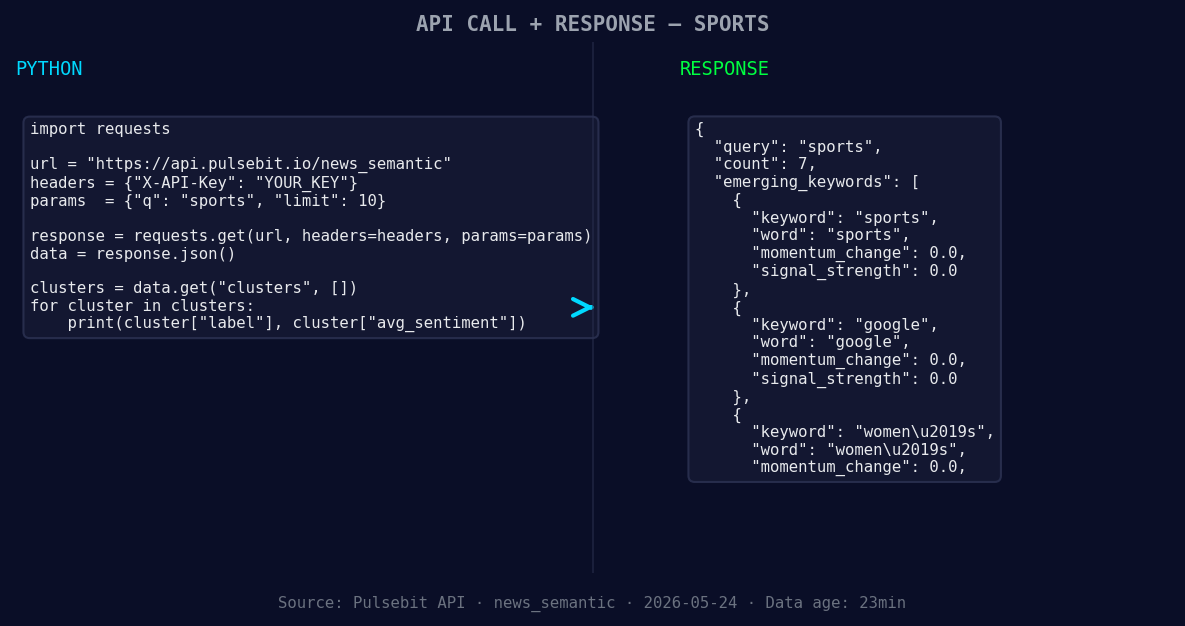
*Left: Python GET /news_semantic call for 'sports'. Right: returned JSON response structure (clusters: 3). Source: Pulsebit /news_semantic.*
# Setting parameters for the API request
topic = 'sports'
momentum = -0.395
score = +0.267
confidence = 0.75
# Geographic origin filter: query by language using param "lang": "sp"
response = requests.get("https://api.pulsebit.com/articles", params={
"topic": topic,
"lang": "sp",
"momentum": momentum,
"score": score,
"confidence": confidence
})
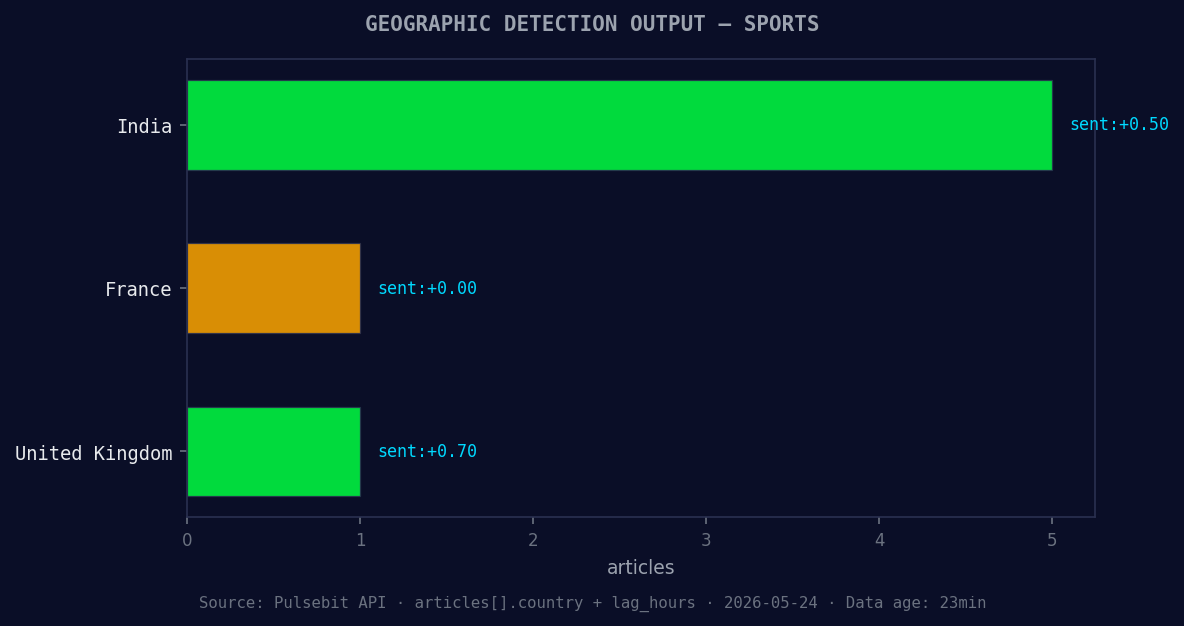
*Geographic detection output for sports. India leads with 5 articles and sentiment +0.50. Source: Pulsebit /news_recent geographic fields.*
articles_data = response.json()
print(articles_data)
# Meta-sentiment moment: scoring the narrative framing itself
cluster_reason = "Clustered by shared themes: equestrian, talent, show, srirangam, held."
sentiment_response = requests.post("https://api.pulsebit.com/sentiment", json={
"text": cluster_reason
})
sentiment_analysis = sentiment_response.json()
print(sentiment_analysis)
In this code, we first filter articles related to our topic in Spanish, ensuring we capture the relevant sentiment from that region. Then, we analyze the narrative framing around the cluster reason we identified earlier. This approach allows us to dig deeper into how the sentiment is being shaped by the context of the articles.
Now let’s consider three specific builds we can create based on this newly uncovered framework.
Geo-Filtered Sports Sentiment Signal: Build a model that raises alerts if sentiment momentum spikes above a certain threshold, say +0.3, for Spanish articles on sports. This will help you catch emerging trends early.
Meta-Sentiment Analysis Loop: Implement a routine that feeds back the cluster reason strings into our sentiment analysis endpoint. This can help refine the narrative context and provide you with deeper insights, especially useful when analyzing narratives around themes like women’s sports or Google-related trends.
Real-Time Alert System: Develop a system that triggers alerts whenever there's a significant discrepancy between mainstream narratives (like "equestrian, talent, show") and emerging sentiments in niche topics like sports, or even broader themes. Set thresholds to determine when these alerts should be sent out.
These builds can help you stay ahead of the curve, effectively leveraging the nuanced insights from our API to inform your strategies and decisions.
Get started with our API documentation at pulsebit.lojenterprise.com/docs. You can copy-paste the code above and run it in under 10 minutes to see for yourself how it all works. Don’t let your pipeline fall behind; catch those momentum spikes before they fade away!


Top comments (0)